A guide to Nutsche filters and agitated Nutsche filter dryers (ANFD): how they filter, wash and dry in one vessel, the pressure, vacuum and jacketed types, materials, GMP design and how to select one.

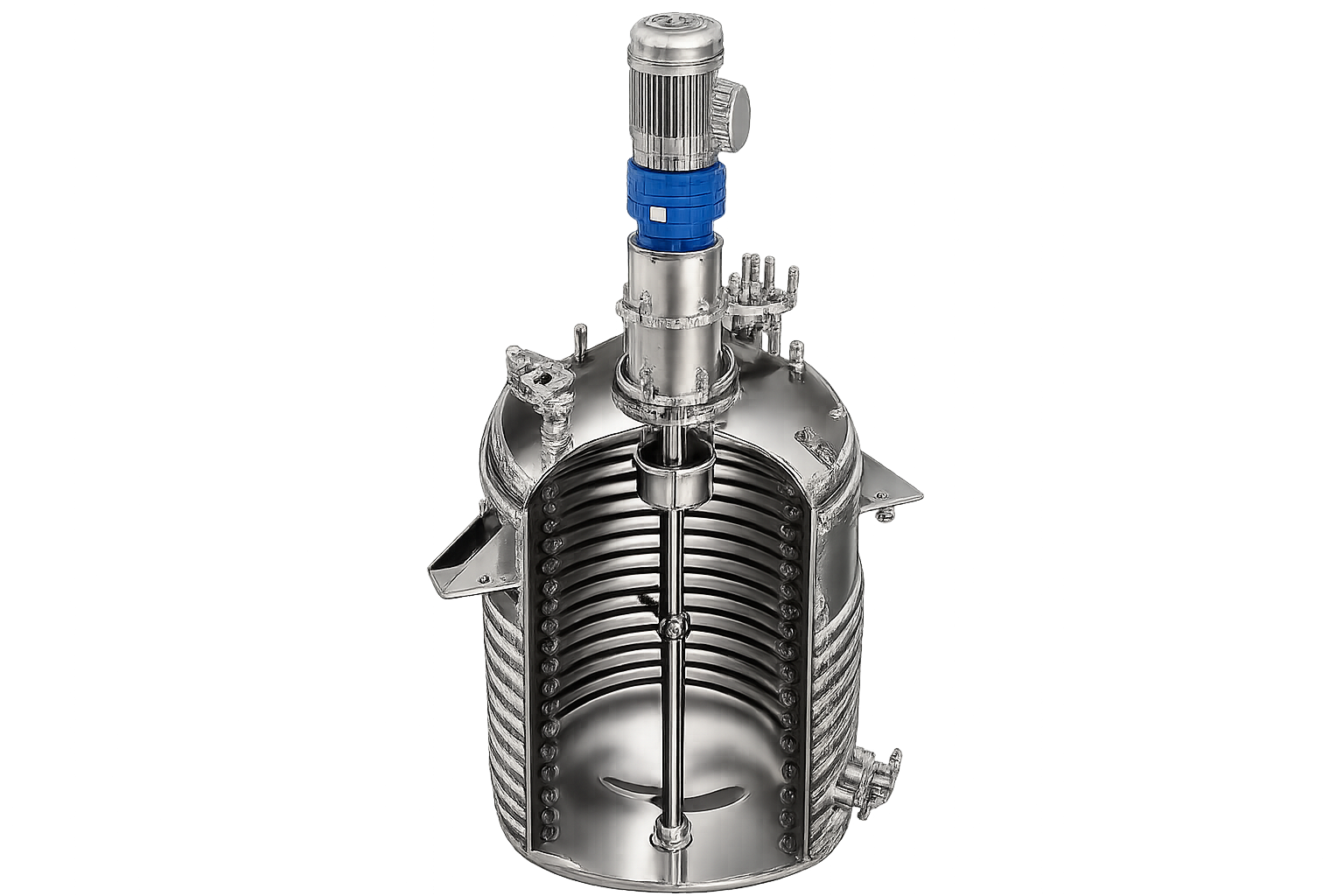
A Nutsche filter is a closed vessel with a filter plate or cloth at the bottom in which a slurry is filtered, the cake is washed, and, in a filter dryer, the cake is dried, all in one contained unit. Pressure or vacuum drives the liquid through the filter medium, and an agitator can smooth, wash and discharge the cake. It is widely used for API and fine chemical manufacture.
A Nutsche filter (also spelt Nutsch, Nutche or Nutsche pressure filter) is a closed filtration vessel that separates solids from a liquid slurry. The slurry is fed onto a horizontal filter medium (a perforated or sintered plate with a filter cloth or mesh); the liquid, called the filtrate, passes through, and the solids build up above the plate as a cake. The filter is closed, so solvent vapour stays contained and operators are protected from toxic or flammable products.
The same vessel can wash the cake with fresh solvent, squeeze it dry with gas pressure and, in its more advanced form, heat it to dry the product. This is why Nutsche filters, and especially agitated Nutsche filter dryers (ANFD), are a standard item in API, pharmaceutical intermediate, agrochemical and fine chemical plants, where isolating a pure, dry solid is the last step after reaction and crystallisation.
Creative Engineering manufactures Nutsche filters in Ankleshwar, Gujarat in stainless steel and alloys, in GMP-compliant finishes with polished internals. The product page on our site is spelt Nutsche filter.
Because filtering, washing and drying occur in one closed vessel, material handling between machines is eliminated, which cuts product loss, cross-contamination and operator exposure.
| Type | Principle | Typical use |
|---|---|---|
| Simple (manual) Nutsche filter | Gravity or vacuum, no agitator | Small batches, simple solids |
| Vacuum Nutsche filter | Vacuum applied below plate with filtrate receiver | Free-filtering solids, solvents sensitive to pressure |
| Pressure Nutsche filter | Nitrogen blanket and pressure above the cake | Fine, slow-filtering crystals, volatile solvents |
| Jacketed Nutsche filter | Double wall for heating or cooling | Temperature-sensitive filtration, hot filtration, drying |
| Agitated Nutsche filter dryer (ANFD) | Pressure or vacuum plus agitator and heated jacket | API, intermediates, high-value solids needing washing and drying |
| Custom / hybrid | Built to process spec | Special solvents, discharge and cleaning needs |
The filter-dryer is the most capable version because the heated agitated cake can be dried to a low residual solvent level inside the same vessel.
The wetted parts are normally SS 316L with a polished or mirror-finished interior for GMP duty, and the same MOC range as our other equipment is available: SS 304, 304L, 316, 316L, 316Ti, 321, Duplex, Super Duplex, Inconel, Hastelloy and other alloys for corrosive solvents. Polished internals and crevice-free welds help prevent product build-up and cross-contamination between batches, and they make cleaning validation easier.
The size of a Nutsche filter is set by filter area and cake height, not just batch volume. Filtration time rises sharply as the cake gets thicker, because liquid has to pass through more solids. A thin cake on a large plate filters fast but can crack, while a very thick cake on a small plate is slow and washes unevenly. Most designs balance these two so the batch is filtered, washed and dried within the cycle time the plant needs.
A filtration test on a small laboratory Nutsche (or a leaf test) gives the specific cake resistance and helps the designer pick the plate area and the pressure or vacuum level. If the solids are very fine or compressible, a higher pressure may make filtration worse by compacting the cake, which is why real data beats guesses.
| Variable | Effect on performance |
|---|---|
| Larger filter area | Shorter filtration time, higher vessel cost |
| Thicker cake | Longer filtration and washing, risk of cracking |
| Higher pressure or vacuum | Faster filtration for rigid solids; can compact soft solids |
| Finer particles | Slower filtration, may need a finer cloth or filter aid |
| Higher temperature | Lower liquid viscosity and faster filtering, but check solvent safety |
A smooth, polished interior with no crevices is not only a quality feature; it directly reduces the effort and time of cleaning validation in pharma plants.
| Symptom | Likely cause | What to check |
|---|---|---|
| Slow filtration | Fine or compressible solids, blinded cloth, thick cake | Cake height, cloth condition, pressure level |
| Cloudy filtrate | Cloth too open or damaged | Replace cloth with finer grade |
| Poor wash efficiency | Cake cracks or channels | Smooth cake with agitator, control wash flow |
| High residual solvent | Insufficient drying time or vacuum | Jacket temperature, vacuum level, agitation |
| Product loss at discharge | Cake sticking to plate | Agitator clearance, discharge procedure |
For custom requirements such as special discharge, high-temperature filtration or alloy construction, Creative Engineering builds the equipment from your drawing or process specification.
| Equipment | Strengths | Limitations |
|---|---|---|
| Nutsche filter / ANFD | Closed, washes and dries in one vessel, ideal for high-value or toxic solids | Batch operation, cake thickness limited by filter area |
| Centrifuge | Fast de-liquoring, high throughput | Separate dryer usually needed; open handling in some designs |
| Filter press | Large filter area for bulk slurry | Cake handling and cleaning more labour intensive, not as contained |
For fine chemical and API plants where solvents are valuable or hazardous, the contained operation of a Nutsche filter is usually the deciding factor.
Send these through our contact page. Creative Engineering serves API and chemical manufacturers in Bharuch, Vadodara and Ahmedabad and exports worldwide. See also reaction vessels and the API intermediates sector.
It is used to filter, wash and often dry solids from a slurry in a closed vessel, mainly in API, pharmaceutical intermediate, agrochemical and fine chemical manufacture.
An ANFD is a Nutsche filter fitted with an agitator and a heated jacket so the cake can be smoothed, washed, dried and discharged inside the same vessel.
A pressure filter pushes liquid through the cake with gas pressure above it, while a vacuum filter pulls the liquid through using vacuum below the plate. Pressure filters suit slow-filtering fine solids; vacuum suits free-filtering solids.
SS 316L with a polished interior is the standard for GMP use, and alloys such as Hastelloy or Duplex are used for corrosive solvents.
Yes. Nutsche, Nutsch and Nutche all refer to the same type of filter.
A Nutsche filter is a closed batch filter that can wash and dry the cake in the same vessel, whereas a centrifuge uses rotation to remove liquid quickly and usually needs a separate dryer.
Creative Engineering of Ankleshwar manufactures Nutsche filters, filter dryers and related pharma process equipment under ASME U and R stamp and ISO 9001:2015 quality systems.
Creative Engineering, Ankleshwar, Gujarat designs and manufactures process equipment to ASME and IBR codes. Share your drawing or process data and our team will respond with a technical offer.







 Reactor
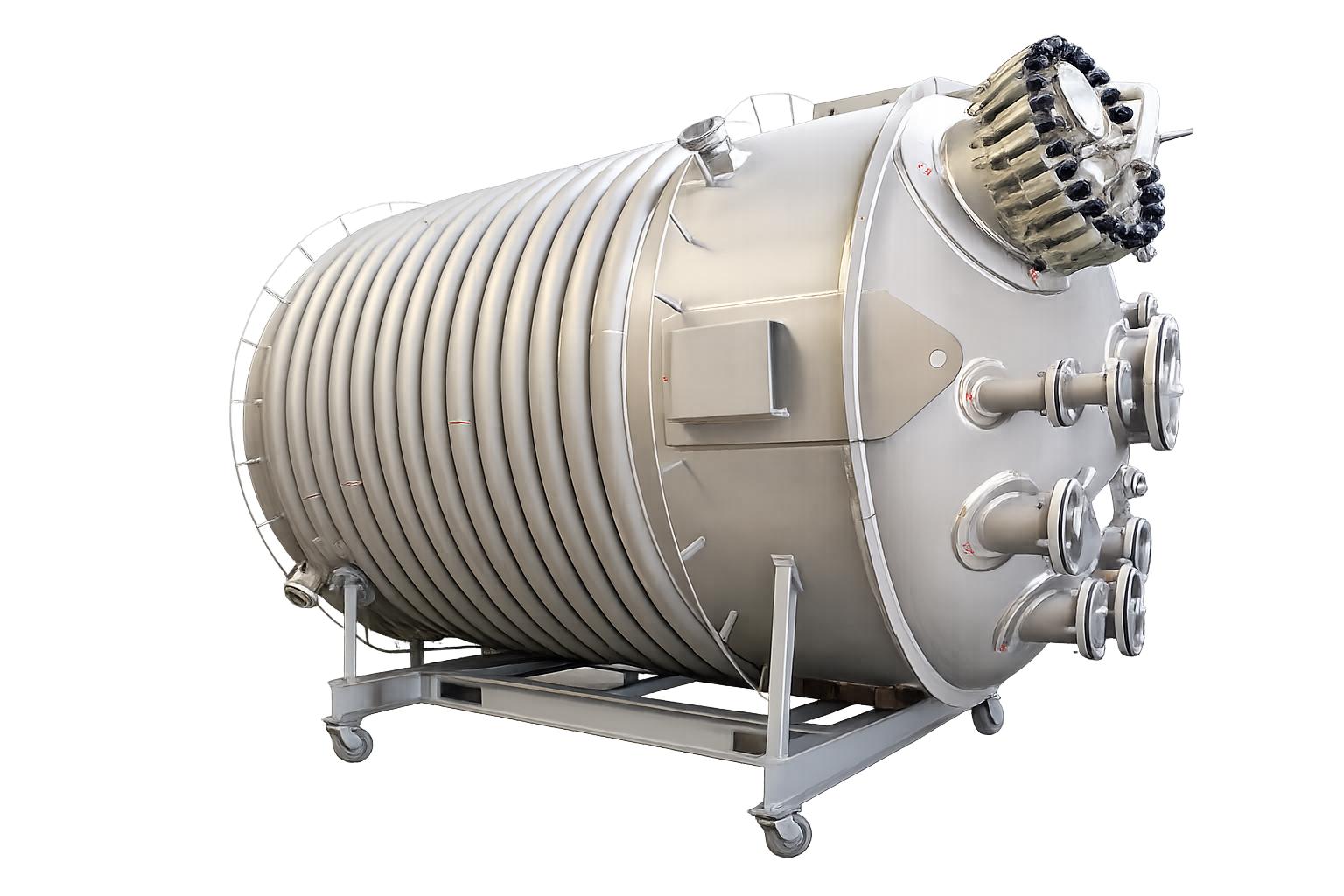 High Pressure Vessel
 Skid Equipment
 Receiver
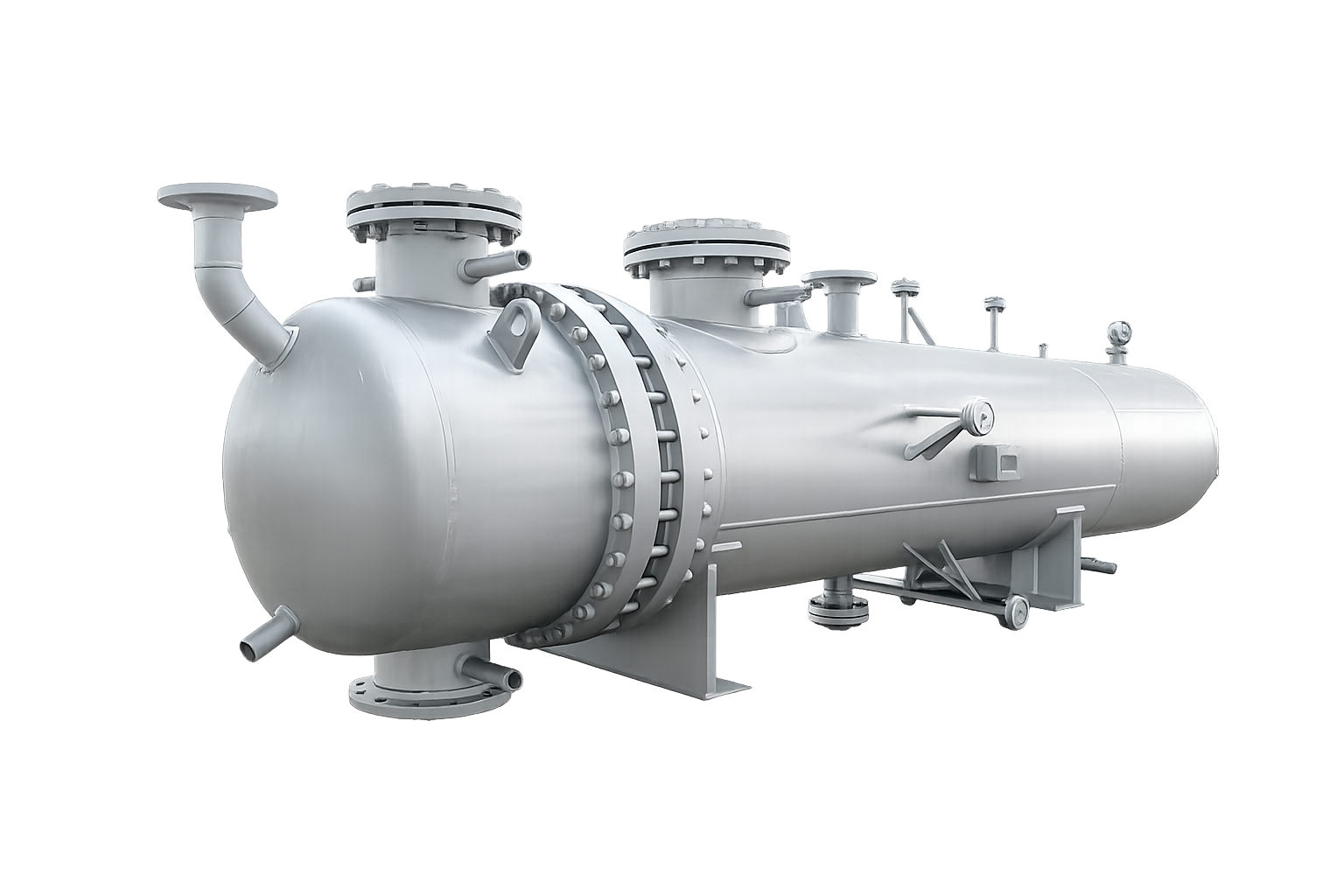 Heat Exchanger
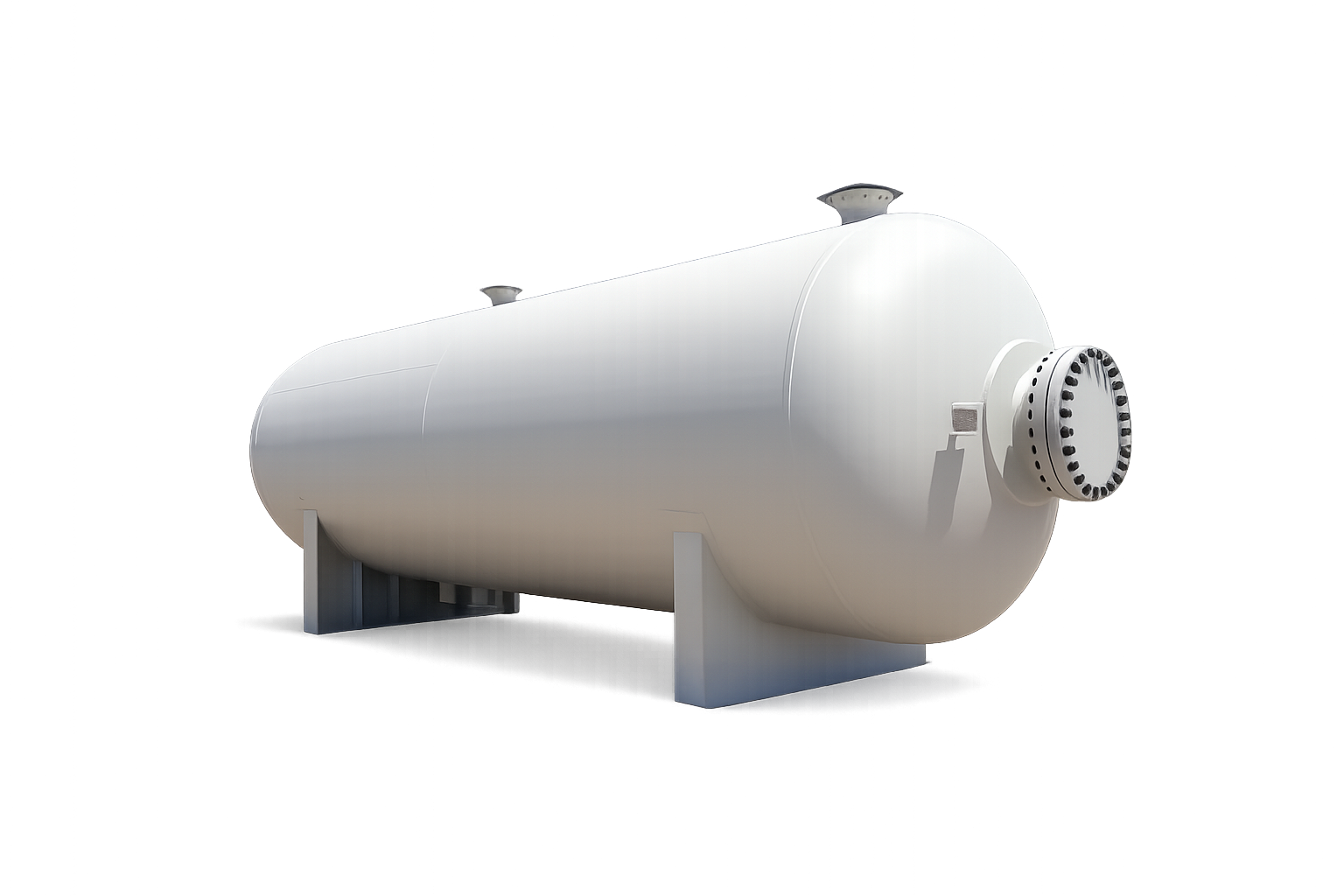 Pressure Vessel
 Silo
 Solvent Stripper
 Pharma Equipments