A practical guide to reaction vessels for pharma, API and specialty chemical plants: how they work, jacket and half-coil options, agitators, GMP design, materials and how to specify one.
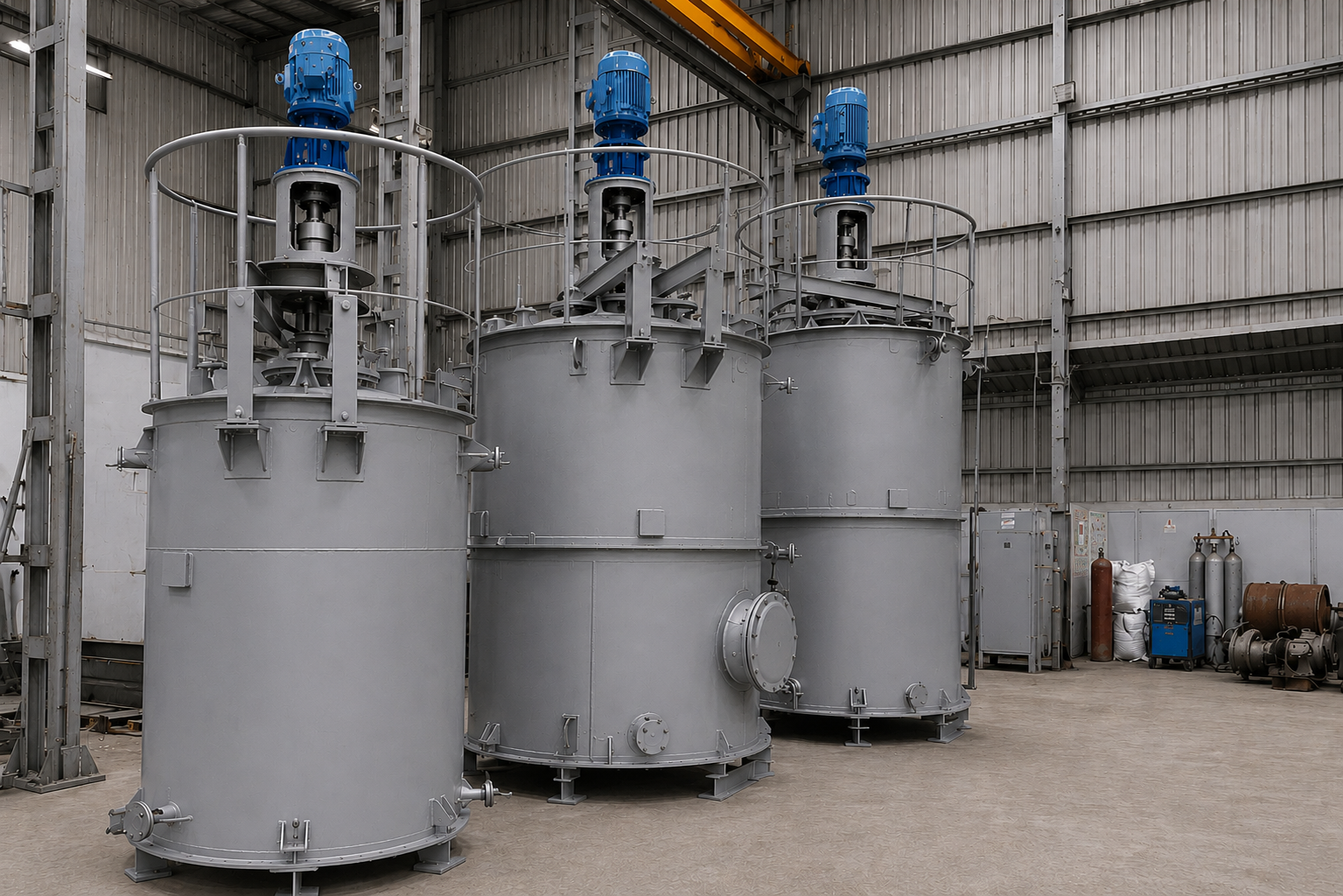
A reaction vessel is an agitated, usually jacketed vessel in which chemicals are mixed, heated or cooled and reacted in batches. It is engineered to the chemistry, batch size and heat-transfer requirement, with a full-body jacket, limpet or half-coil, a top-entry agitator with mechanical seal, and GMP-grade stainless steel for pharma duty.
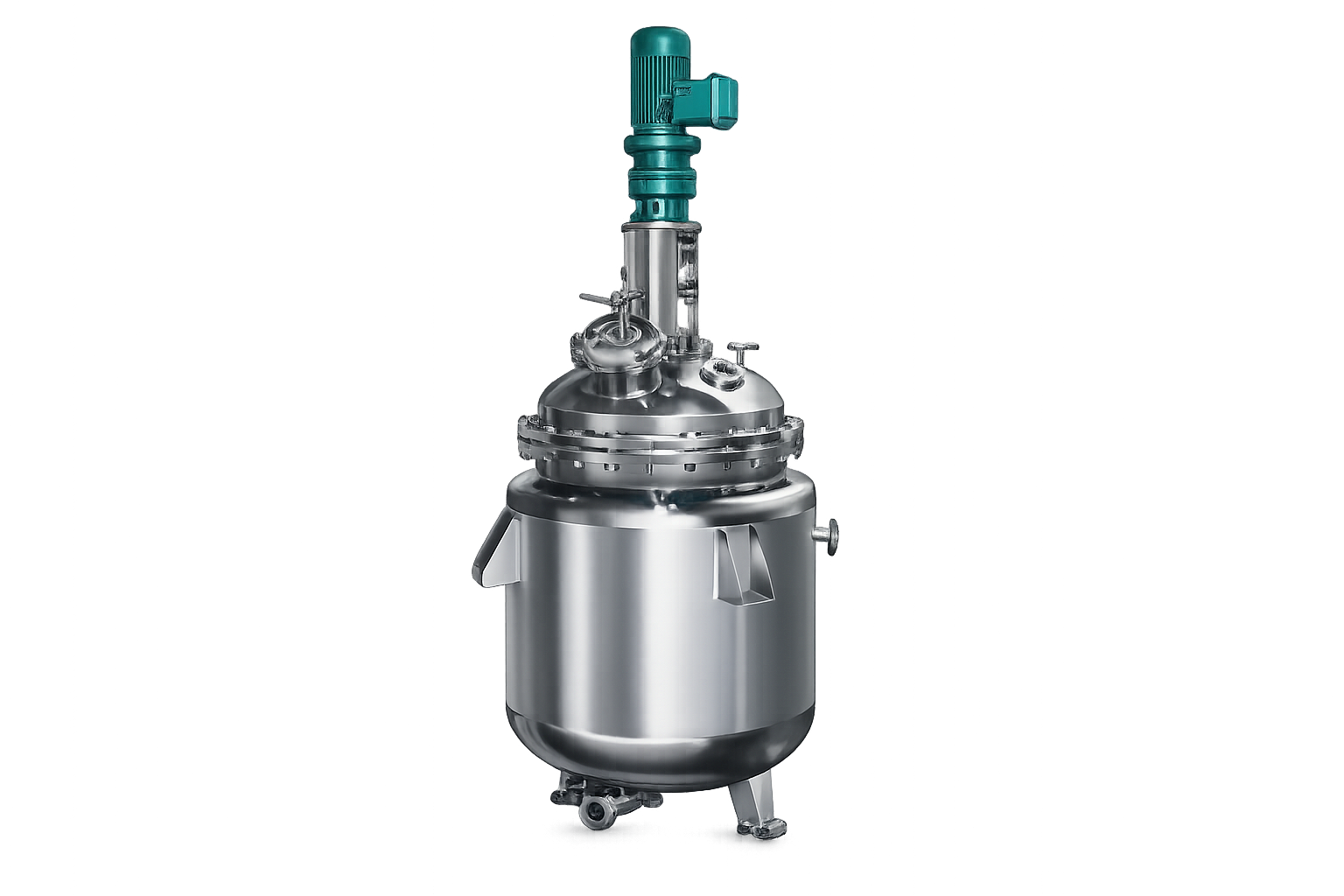
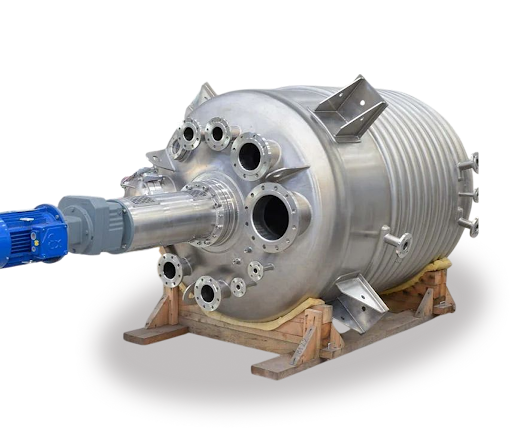
A reaction vessel is a closed, agitated container in which one or more chemical reactions are carried out in a controlled way. It is the workhorse of batch manufacturing in the pharmaceutical, API, fine chemical, dye, pigment and agrochemical industries. A reaction vessel combines four things in a single piece of equipment: a pressure-containing vessel, a heat transfer surface, an agitator and the instruments and nozzles needed to charge, sample, monitor and discharge a batch.
The name is used interchangeably with reactor and reaction kettle. Our guide to reactors explains the process side; this page concentrates on the vessel itself, the jackets and the agitators that make a reaction vessel suitable for a particular chemistry.
Creative Engineering builds reaction vessels to order in Ankleshwar, Gujarat. Every vessel is engineered against the customer's chemistry, batch size and heat-transfer requirement rather than picked from a fixed catalogue.
| Part | Role in the batch |
|---|---|
| Vessel body and dished heads | Contains the reaction at the design pressure and vacuum |
| Jacket, half-coil or limpet coil | Heats or cools the batch through the vessel wall |
| Agitator with gearbox and motor | Mixes the batch for uniform temperature and concentration |
| Mechanical seal | Seals the agitator shaft against leakage of vapour or gas |
| Baffles | Prevent swirling and improve mixing |
| Charging and discharge nozzles | Add reagents, sample, vent, condense and drain |
| Manhole | Entry for inspection and solids charging |
| Instrument nozzles | Temperature, pressure, level and sight glass or camera connections |
| Condenser and receiver connections | For reflux, distillation and solvent recovery |
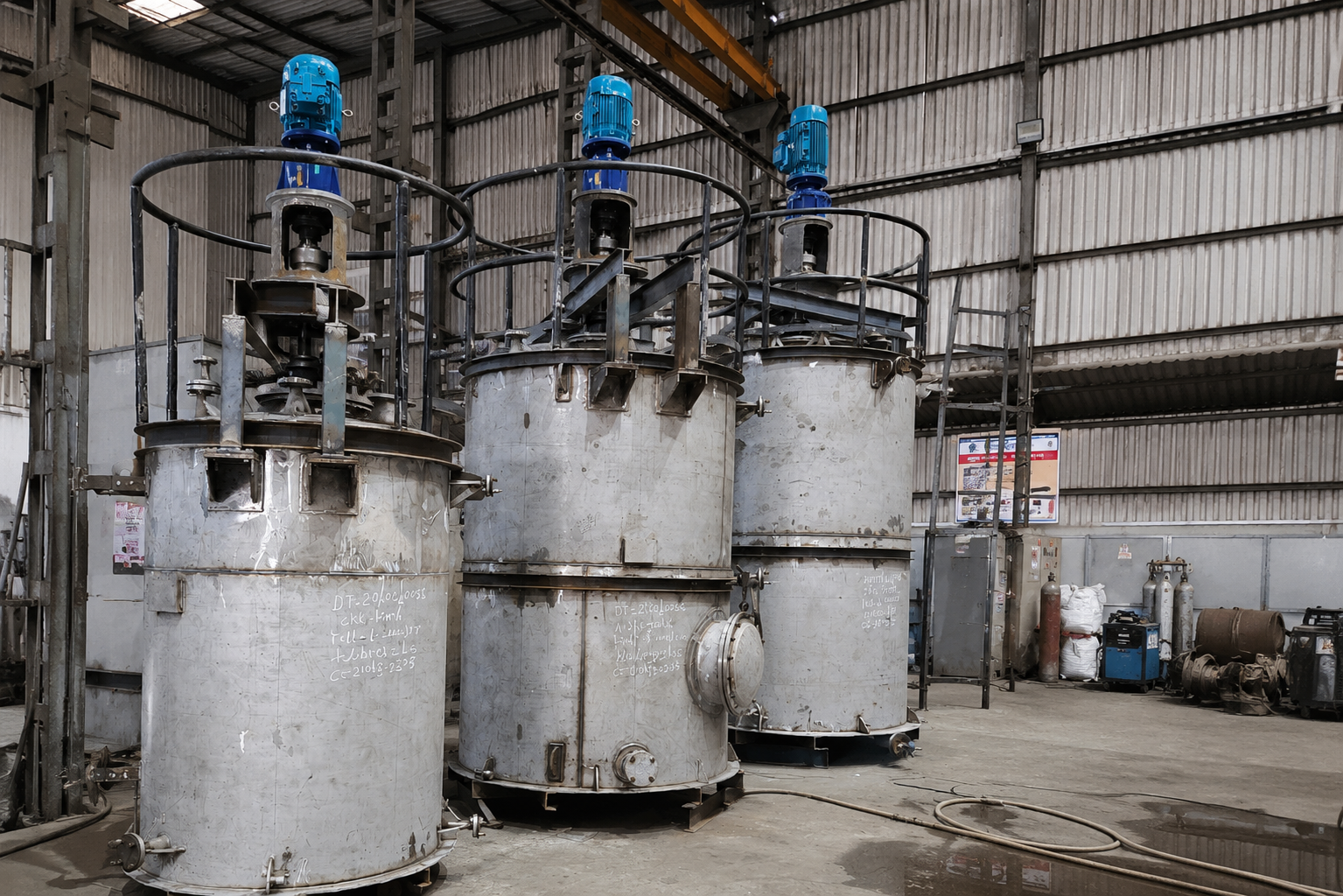

The heat-transfer arrangement is the most important choice after material. Reaction vessels from Creative Engineering are supplied with the following:
An outer shell welded around the body so the utility fluid flows through the annular space. It gives the largest heat-transfer area and is the standard for most batch work with steam, hot water or chilled water. Baffles inside the jacket (spiral or dimple) can raise fluid velocity to improve heat transfer.
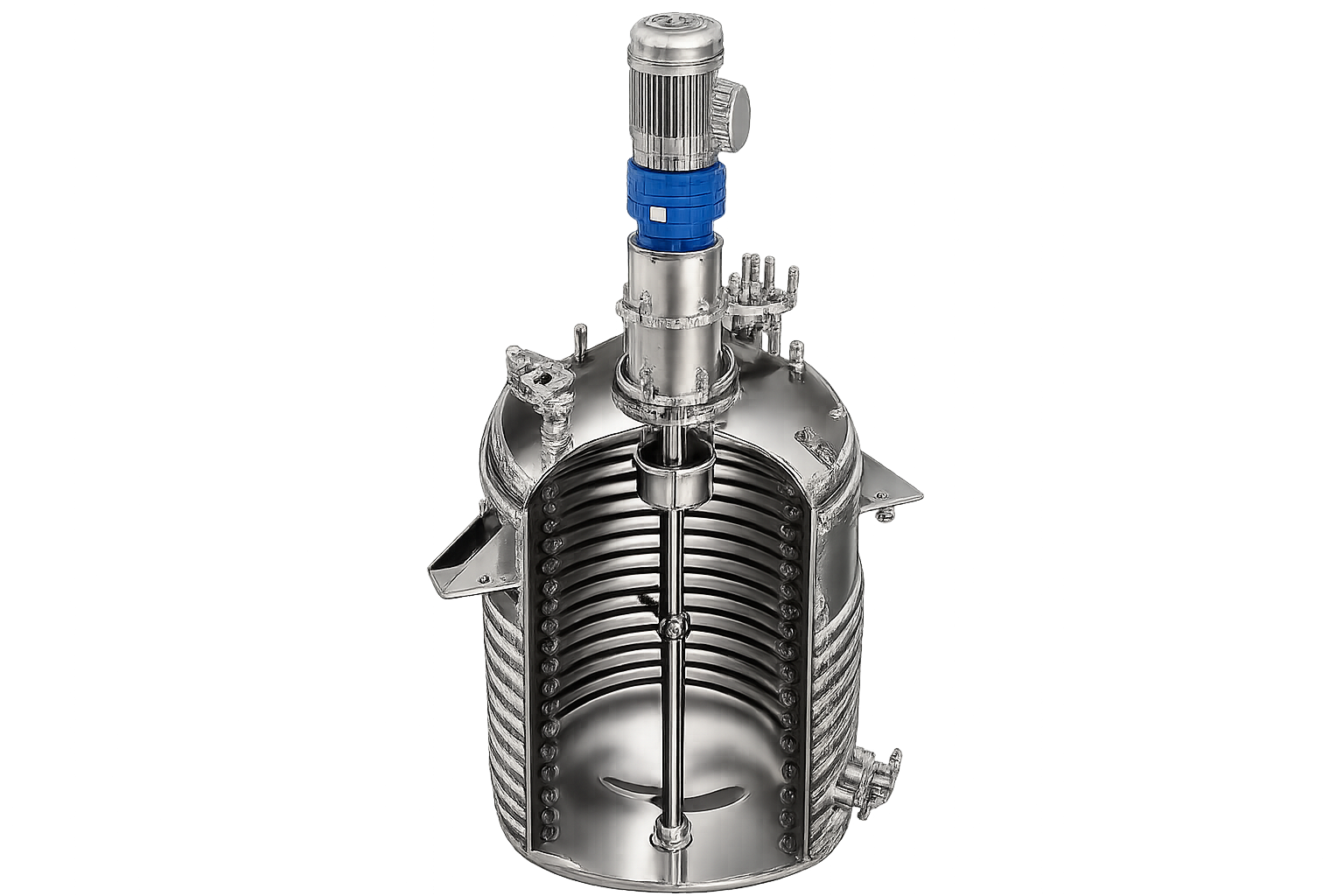
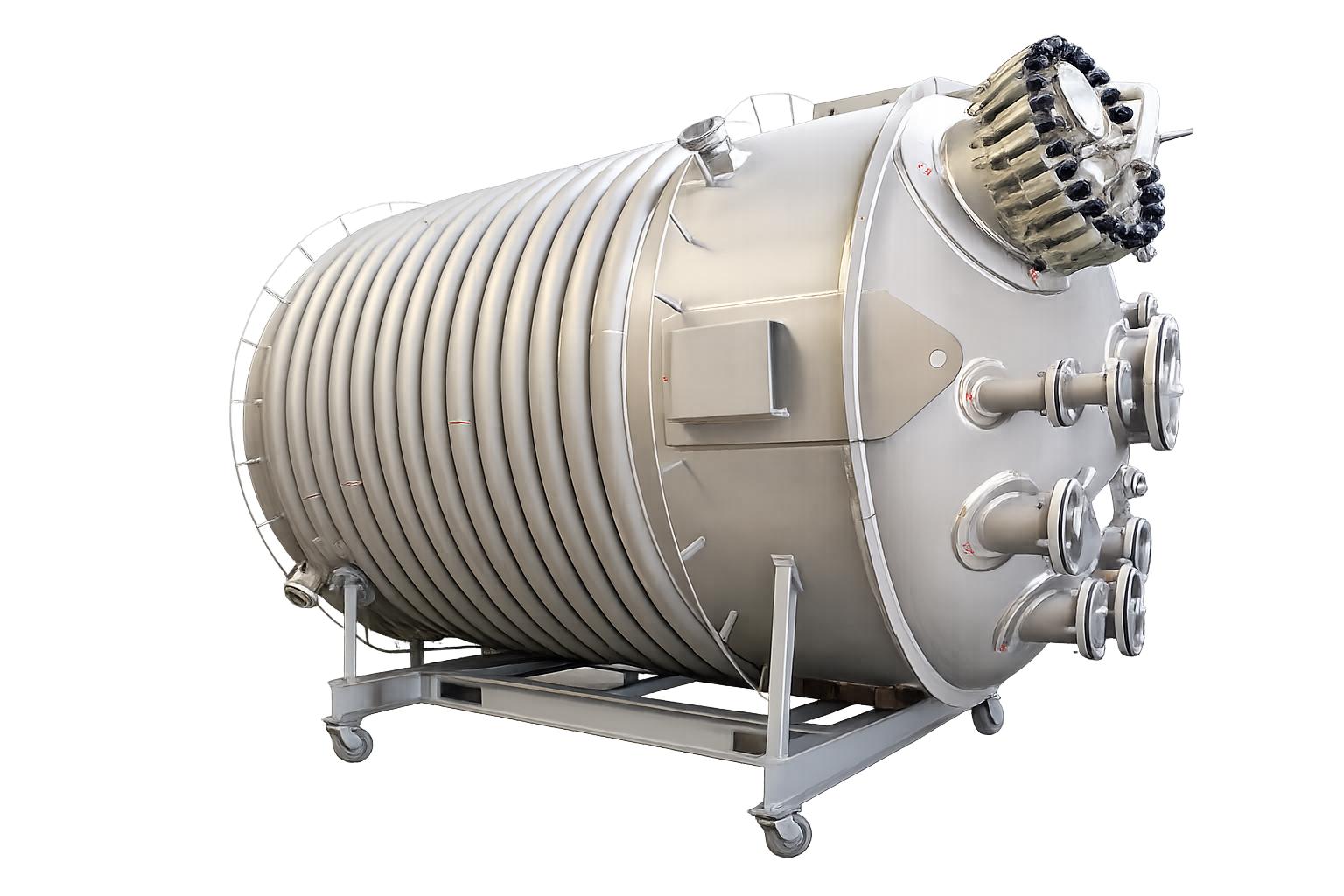
Half-round pipe or channel sections welded to the outside of the shell form a series of narrow passages. Because the channels are small, they withstand a much higher utility pressure than a wide jacket, which suits high-temperature thermic fluid and high-pressure steam. The fluid velocity is higher, which lifts the heat-transfer coefficient.
A helical or serpentine coil inside the vessel adds area for strongly exothermic reactions but is harder to clean, so it is limited to duties where cleaning is not critical.
| Jacket type | Utility pressure | Heat transfer area | Best use |
|---|---|---|---|
| Full-body jacket | Low to moderate | Large, uniform | General batch chemistry |
| Half-coil / limpet | High | Moderate, high velocity | Thermic fluid, high-pressure steam |
| Internal coil | Moderate | Added to jacket | Strong exotherms, non-GMP duty |
Good mixing is what makes a reaction vessel perform. Agitators are top-entry with a gearbox, mechanical seal and shaft, and large vessels can use multi-stage impellers. The common impeller families are:
Selection depends on viscosity, density difference between phases, need for gas dispersion and sensitivity to shear. Creative Engineering fabricates agitators and homogenisers in its own shop and dynamically balances rotating assemblies.
In pharmaceutical and API manufacturing, a reaction vessel must be cleanable and validatable. A GMP reaction vessel therefore features:
For the intermediate stages of API synthesis see our page on API intermediates equipment, and for the wider sector pharma equipment.
A reaction vessel is never filled to its brim. The total (geometric) volume is larger than the working volume to leave headspace for foaming, boiling, gas evolution and reagent addition. Many batch processes run at roughly 60 to 80 percent fill, with the lower end used for foaming or vigorously boiling mixtures and the higher end for quiet liquids. Your own process data decides the exact figure.
The vessel diameter and height ratio also matter. A taller, narrower vessel has more jacket area per unit volume and suits strongly heat-limited reactions, while a squat vessel has a larger liquid surface for evaporation and is easier to mix with a single impeller. Stating your batch size and the reaction heat load lets the designer optimise this ratio instead of guessing.
| Process situation | Design consequence |
|---|---|
| Foaming or vigorous boiling | More headspace, larger total volume, possibly a reflux condenser |
| Strong exotherm | More jacket or coil area, controlled dosing, emergency relief |
| High viscosity | Anchor or helical agitator, higher motor power, wall-scraping design |
| Solids charged by hand | Larger manway at a convenient height, safe charging arrangement |
| Frequent product change | Electro-polished interior, bottom discharge, CIP spray ball |
Chemical reactions can release heat and gas faster than expected, so a reaction vessel carries layers of protection. Typical features include a pressure relief valve or rupture disc sized for the credible overpressure case, a temperature and pressure instrument loop with alarms, an earthed (grounded) construction to dissipate static in solvent service, a nitrogen inerting connection, and a mechanical seal selected for the process fluid. The design pressure of the vessel and jacket is set higher than the highest credible operating pressure, and the hydrostatic test proves the margin before dispatch.
Where reactions involve toxic or flammable material, the agitator seal, flange gaskets and vent system are chosen to keep emissions to a minimum, and the vessel is integrated with the plant's scrubber or condenser train.
Creative Engineering provides emergency breakdown support, preventive maintenance programs and a round-the-clock technical helpdesk for equipment it supplies.
Customers often ask which construction to pick. The three most common options compare as follows.
| Option | Strength | Limitation |
|---|---|---|
| Stainless steel (304 / 316L) | Strong, good heat transfer, repairable, widely used in pharma | Can be attacked by hot strong acids and chlorides |
| Glass-lined steel | Excellent resistance to many acids | Brittle, damaged by impact and thermal shock, slower heat transfer |
| Exotic alloy (Hastelloy, Duplex, Inconel) | Handles very aggressive chemistry | Higher material cost |
| Lined carbon steel (ETFE, HALAR, rubber) | Low-cost corrosion protection | Temperature limits and lining care required |
Creative Engineering builds stainless steel, exotic alloy, cladded and fluoropolymer-lined reaction vessels. If you are replacing a damaged glass-lined reactor with a stainless or alloy vessel, send the existing drawing and process conditions so the replacement can match nozzles, supports and utilities.
Reaction vessels are made in SS 304, 304L, 316, 316L, 316Ti and 321, and in exotic alloys such as Duplex, Super Duplex, Inconel, Hastelloy, CuNi, 904L and SS-347 when the chemistry is aggressive. Carbon steel grades (SA 516 Gr.60/70, IS 2062, SA-333, SA-537) are used for non-corrosive duties and for jackets. Cladded or explosion-bonded construction gives an alloy surface on a carbon-steel body, and linings such as ETFE, HALAR and fluoropolymers protect against acids.
Reaction vessels that operate under pressure are designed to ASME Section VIII Division 1 with welding qualified to ASME Section IX. High-pressure reaction vessels use heavy-wall construction, pressure-relief protection, post-weld heat treatment where required, and radiography as specified. Creative Engineering holds ASME U and R stamps, NB registration and IBR approval, and each vessel ships with a documentation dossier and hydro-test certificate. Read more in our high-pressure vessel guide.
We serve customers in Bharuch, Vadodara and Ahmedabad and export internationally. Send your requirement through the contact page.
It is used to carry out chemical reactions in batches under controlled temperature, mixing and pressure, in pharma, API, specialty chemical, dye and agrochemical manufacturing.
They are largely the same. The word reactor often refers to the complete system including agitator, while reaction vessel emphasises the vessel and its jacket.
A half-coil or limpet jacket is made from half-round pipe sections welded to the outside of the vessel. It withstands higher utility pressure than a full jacket and gives higher fluid velocity.
SS 316L with an electro-polished, crevice-free interior is the usual choice, with higher alloys for aggressive chemistry.
Yes. Vessels are designed to ASME Section VIII Division 1 for internal pressure, external pressure (vacuum) or both.
It depends on viscosity and the mixing task: anchor for viscous masses, turbine or paddle for general blending, helical for shear-sensitive products and hydrofoil for solids suspension.
Creative Engineering, an ASME U and R stamp holder and ISO 9001:2015 certified manufacturer based in Ankleshwar, Gujarat, builds reaction vessels to order for chemical and pharma plants.
Creative Engineering, Ankleshwar, Gujarat designs and manufactures process equipment to ASME and IBR codes. Share your drawing or process data and our team will respond with a technical offer.




 Reactor
 High Pressure Vessel
 Skid Equipment
 Receiver
 Heat Exchanger
 Pressure Vessel
 Silo
 Solvent Stripper
 Pharma Equipments