How a distillation column separates liquid mixtures: principle, trays and packing, reflux, reboiler and condenser, types of columns, common problems like flooding, materials and how to order a column in India.
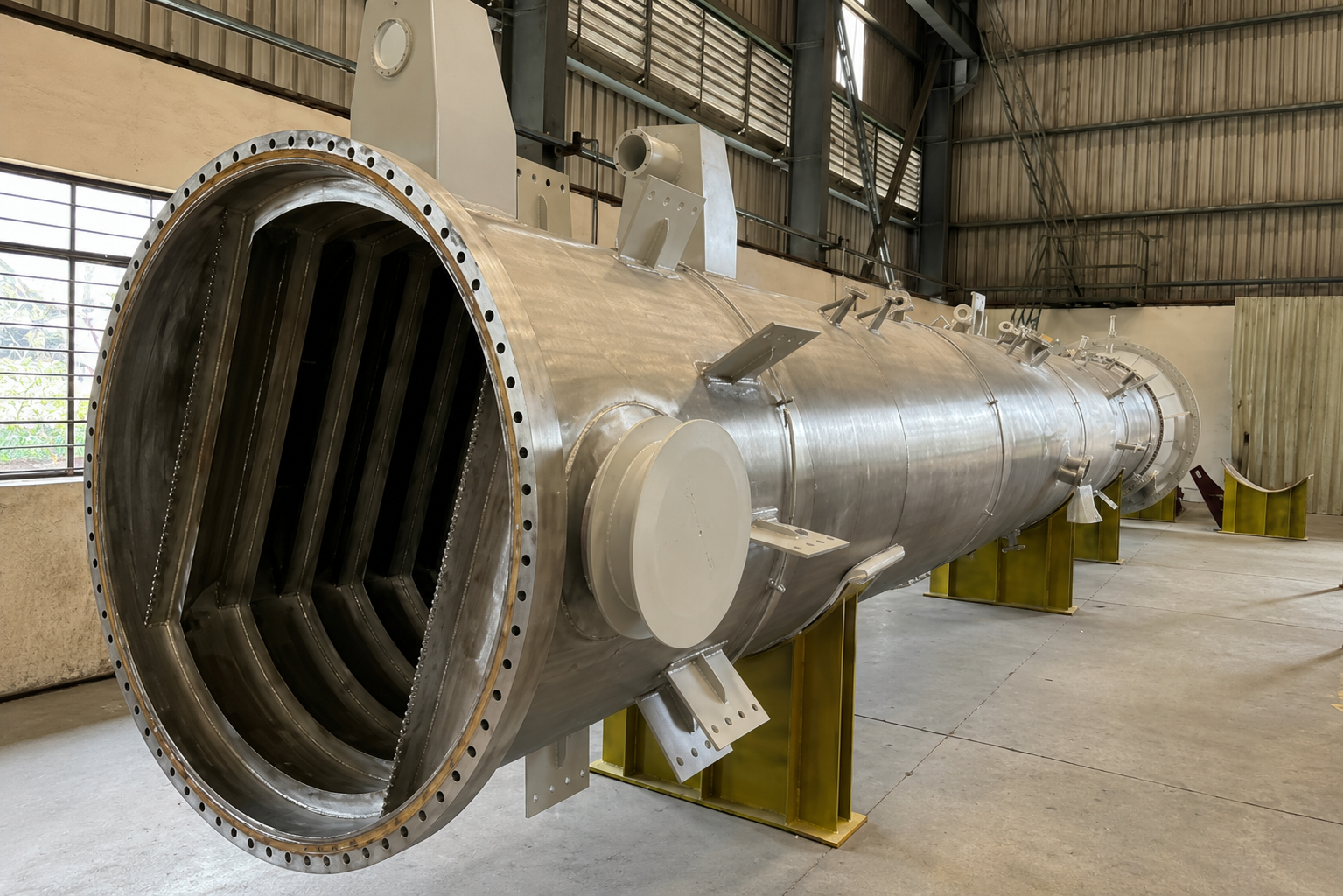
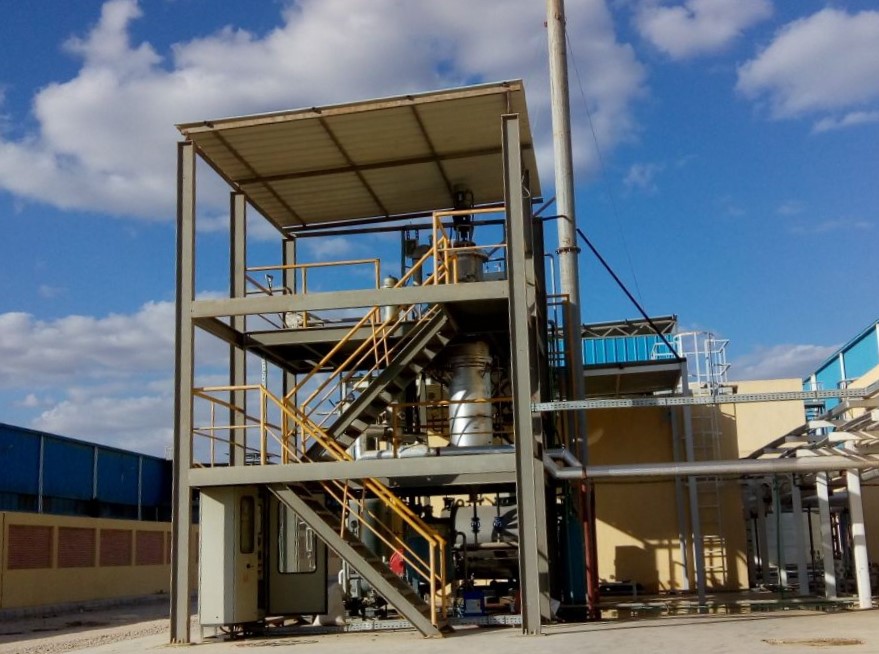
A distillation column is a tall vessel that separates a liquid mixture into components based on differences in boiling point. Heated vapour rises through trays or packing and contacts descending liquid reflux, so lighter components concentrate at the top and heavier ones at the bottom. A reboiler at the base and a condenser at the top complete the system.
A distillation column (also called a fractionating column, fractionator or distillation tower) is a vertical vessel used to separate a liquid mixture into its components by exploiting differences in volatility. It is one of the most important separation devices in the chemical, petrochemical, pharmaceutical and solvent-recovery industries, used to purify solvents, split hydrocarbons, and recover valuable products from reaction mixtures.
Inside the column, rising vapour and falling liquid meet on a series of trays or across a bed of packing. At every contact stage, the lighter (more volatile) components move into the vapour, and the heavier ones move into the liquid. After many such stages the top product is rich in light components and the bottom product is rich in heavy components. The more stages the column has, and the more liquid is returned as reflux, the sharper the separation.
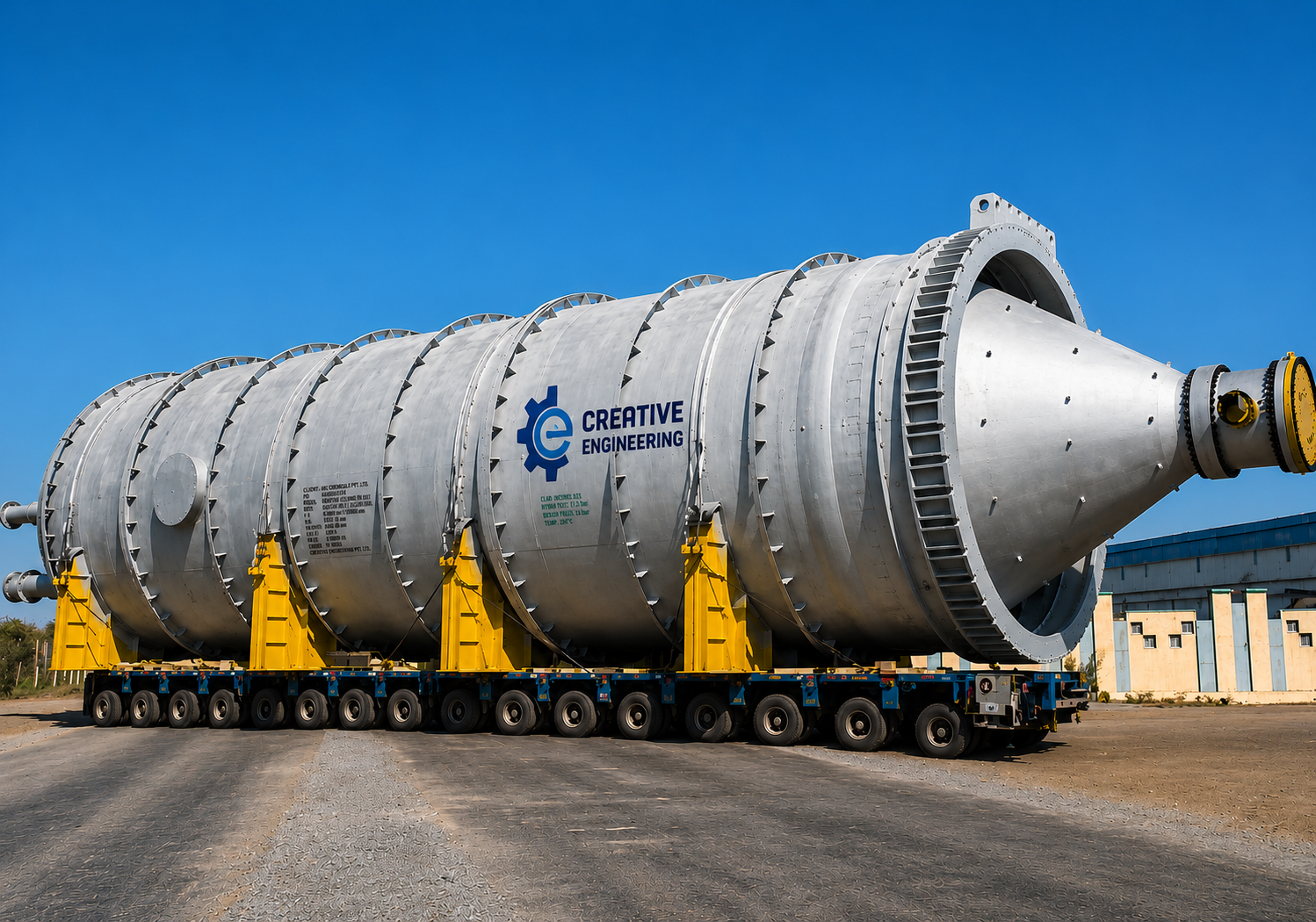
Creative Engineering fabricates columns in carbon steel, stainless steel and alloys, as tray columns, packed columns, absorbers, strippers and custom designs, to ASME Section VIII Div 1 and TEMA where heat exchangers are included.
The ratio of reflux returned to distillate taken is the reflux ratio. A higher ratio gives better purity but needs more heat in the reboiler and more cooling in the condenser, so designers find the best balance between column height and energy use.
Distillation design uses the idea of the theoretical stage: an ideal contact in which vapour and liquid reach equilibrium. Real trays are less than perfect, so the number of actual trays equals the theoretical stages divided by the tray efficiency. For packed columns, the equivalent figure is the height of packing equal to one theoretical stage (HETP).
Two limiting cases help to understand the trade-off. At total reflux all the overhead liquid returns and no product is withdrawn, giving the minimum number of stages. At minimum reflux the column needs an infinite number of stages. Real columns operate between the two, commonly at a reflux ratio somewhat above the minimum, where the total cost of column, reboiler and condenser is lowest.
| Design choice | More | Less |
|---|---|---|
| Number of stages | Better separation at lower reflux; taller column | Shorter column; more reflux and energy needed |
| Reflux ratio | Higher purity; larger reboiler and condenser duty | Lower energy; risk of off-spec product |
| Operating pressure | Higher boiling temperature, smaller vapour volume | Lower temperature for heat-sensitive products, larger column |
| Tray spacing | Less entrainment, taller column | Compact column, higher risk of flooding |
Multi-product pharma and fine chemical plants often use batch distillation: the mixture is charged to a still pot (usually a reaction vessel with a column on top), heated, and fractions are collected one after another. Large-volume plants use continuous distillation, where feed enters steadily and products leave continuously, which is more energy-efficient at scale.
Many solvents and heat-sensitive products are distilled under vacuum, which lowers the boiling temperature and protects the product from thermal degradation. Vacuum columns favour structured packing because its low pressure drop keeps the bottom pressure close to the top pressure. Nozzles, piping and condensers are sized generously in vacuum service because vapour volumes are large, and all joints are designed to be leak-tight so air does not enter the system.
Both internals provide the surface for vapour-liquid contact. The choice depends on throughput, pressure drop, fouling tendency and turndown.
| Aspect | Tray column | Packed column |
|---|---|---|
| Contact method | Liquid pools on each tray; vapour bubbles through | Liquid flows as a film over packing; vapour rises through voids |
| Pressure drop | Higher | Lower, ideal for vacuum |
| Fouling and solids | More tolerant | Less tolerant; packing can clog |
| Turndown | Good with valve trays | Narrower; needs good distribution |
| Large diameters | Common | Possible with structured packing and distributors |
| Corrosive service | Metals or alloys for trays | Plastic, ceramic or metal packing options |
| Typical use | Refinery and large chemical columns | Vacuum, solvent recovery, absorbers and strippers |
Common tray types are sieve, valve and bubble-cap; packing may be random (rings, saddles) or structured (corrugated sheets). Internals are supplied per the client's process design, with diameter, height and tray spacing built to specification.
Batch distillation in a still pot with a short column is common for multi-product plants, whereas continuous columns are used for large, steady products.
| Component | Function |
|---|---|
| Column shell | Pressure vessel enclosing the trays or packing |
| Trays or packing | Provide contact between vapour and liquid |
| Reboiler | Supplies heat to the bottom; see our reboiler guide |
| Condenser | Condenses overhead vapour |
| Reflux drum / receiver | Collects condensate; see receiver vessel |
| Reflux and product pumps | Return reflux and move products |
| Feed preheater | Adjusts feed temperature |
| Instrumentation | Temperature, pressure, level and flow control |
| Problem | What happens | Typical cause |
|---|---|---|
| Flooding | Liquid builds up and carries over; separation collapses | Vapour or liquid load too high, foaming, blocked downcomers |
| Weeping or dumping | Liquid leaks through tray holes instead of crossing the tray | Vapour rate too low, tray not level |
| Entrainment | Liquid droplets carried up with vapour | High vapour velocity, insufficient tray spacing |
| Foaming | Stable foam reduces efficiency | Surfactants or contaminants in feed |
| Fouling | Deposits on trays or packing | Polymerisation, solids, corrosion products |
| Channelling in packing | Uneven liquid distribution | Poor distributors, unlevel column |
See the related sector pages for petrochemicals, specialty chemicals and API intermediates.
Columns are made from carbon steel (SA 516 Gr.60/70, IS 2062), stainless steel (SS 304, 304L, 316, 316L, 316Ti, 321) and alloys (Duplex, Super Duplex, Inconel, Hastelloy, CuNi, 904L, SS-347) as the fluids demand. They are designed to ASME Section VIII Div 1, with TEMA applicable to attached exchangers, and with IBR where steam is involved. Welds are examined by NDT, shells are hydro-tested and documentation is supplied in a quality dossier. Creative Engineering holds ASME U and R stamps, NB registration and IBR approval.
Our distillation systems page describes complete systems, and the contact page is the fastest route to a quotation. Customers in Bharuch, Vadodara, Mumbai and abroad are served.
It separates liquid mixtures into components using differences in boiling point, for purifying solvents, splitting hydrocarbons and recovering products in chemical, pharma and petrochemical plants.
A tray column uses horizontal trays where liquid pools and vapour bubbles through, while a packed column has a bed of packing over which liquid flows as a film. Packed columns have lower pressure drop and are common in vacuum service.
Reflux is condensed overhead liquid returned to the top of the column. It provides the downflowing liquid needed for repeated vapour-liquid contact and sharper separation.
Flooding occurs when vapour or liquid loads exceed the column capacity, so liquid cannot flow down properly. Causes include high throughput, foaming and blocked downcomers or packing.
Carbon steel for non-corrosive duty, stainless steel for general chemical and pharma service, and Duplex or alloys for corrosive fluids.
A stripper removes volatile components from a liquid by contacting it with steam or gas, usually without a reboiler-condenser reflux section like a full distillation column.
Creative Engineering manufactures tray and packed distillation columns, absorbers, strippers and distillation systems with ASME U and R stamps in Ankleshwar, Gujarat.
The number of trays equals the theoretical stages divided by tray efficiency. Stages depend on how close the boiling points are, the required purity and the reflux ratio, so a process simulation or design package is needed to decide.
Yes. Packed or tray columns can be designed for vacuum with suitable nozzle sizes, leak-tight joints and external-pressure design checked under ASME Section VIII Div 1.
Yes. Creative Engineering can supply the column, reboiler, condenser, receiver, piping skid and supports as a complete system, or individual items to your design.
Creative Engineering, Ankleshwar, Gujarat designs and manufactures process equipment to ASME and IBR codes. Share your drawing or process data and our team will respond with a technical offer.

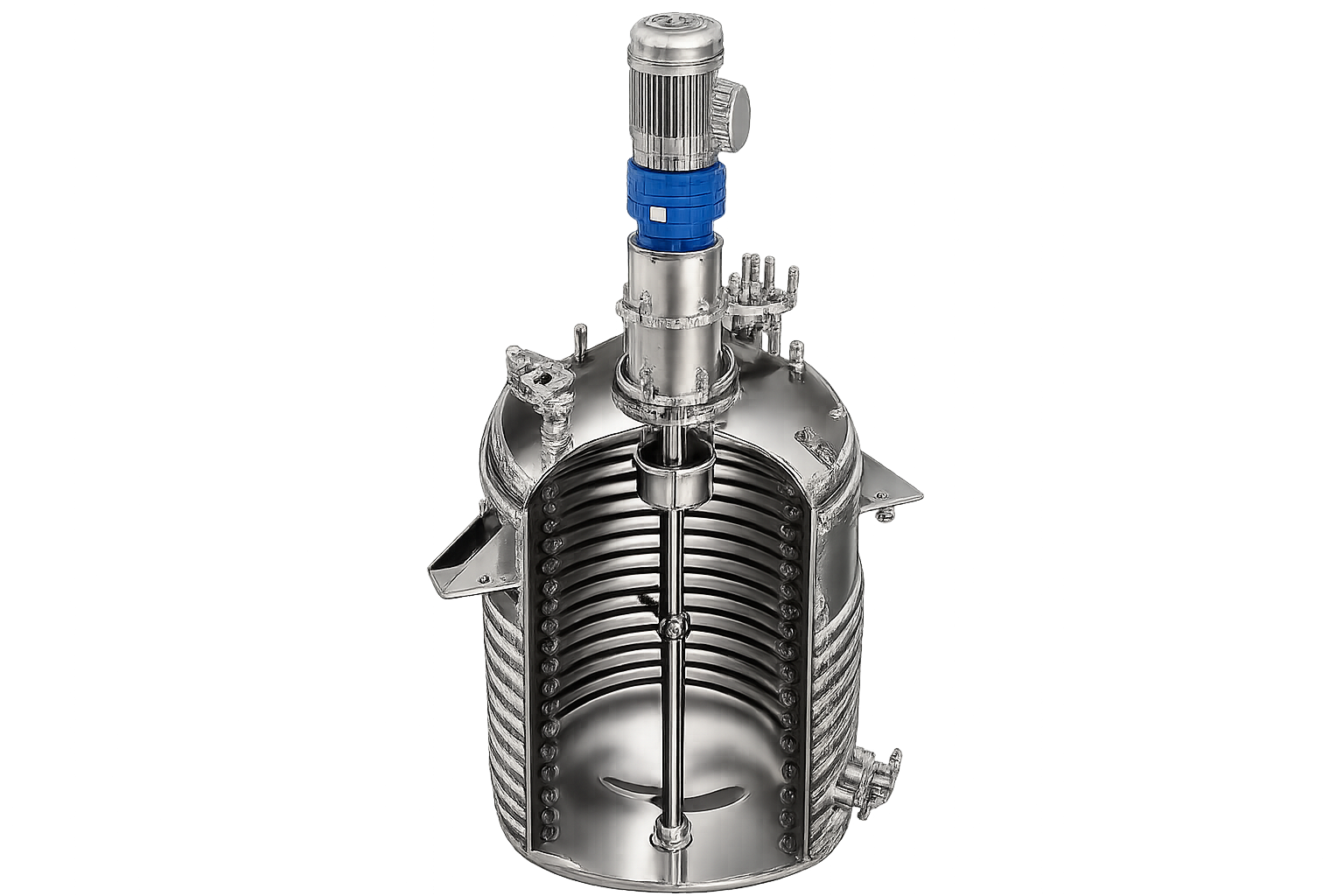



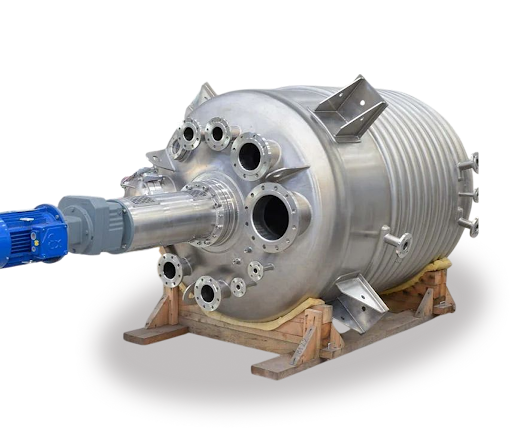 Reactor
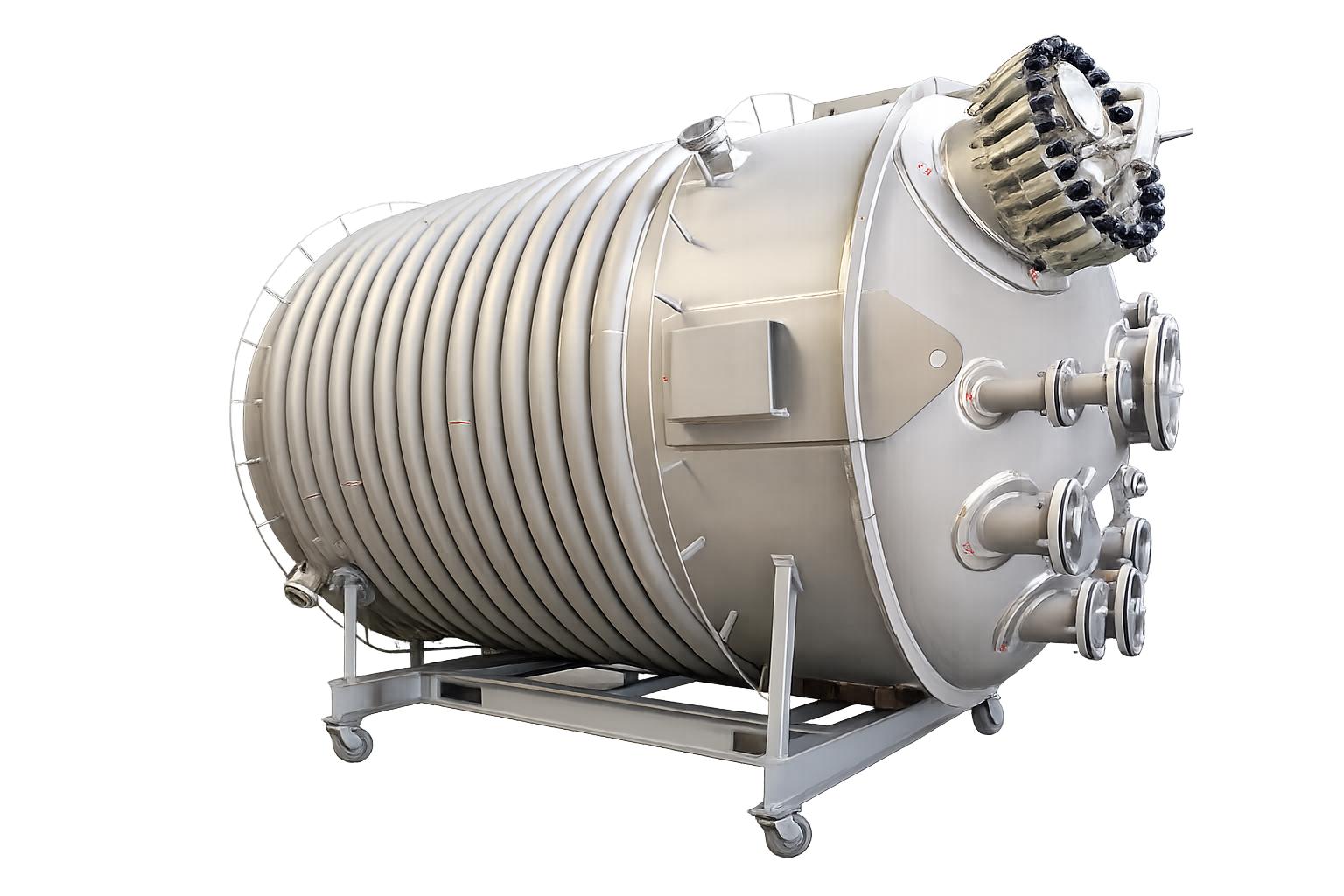 High Pressure Vessel
 Skid Equipment
 Receiver
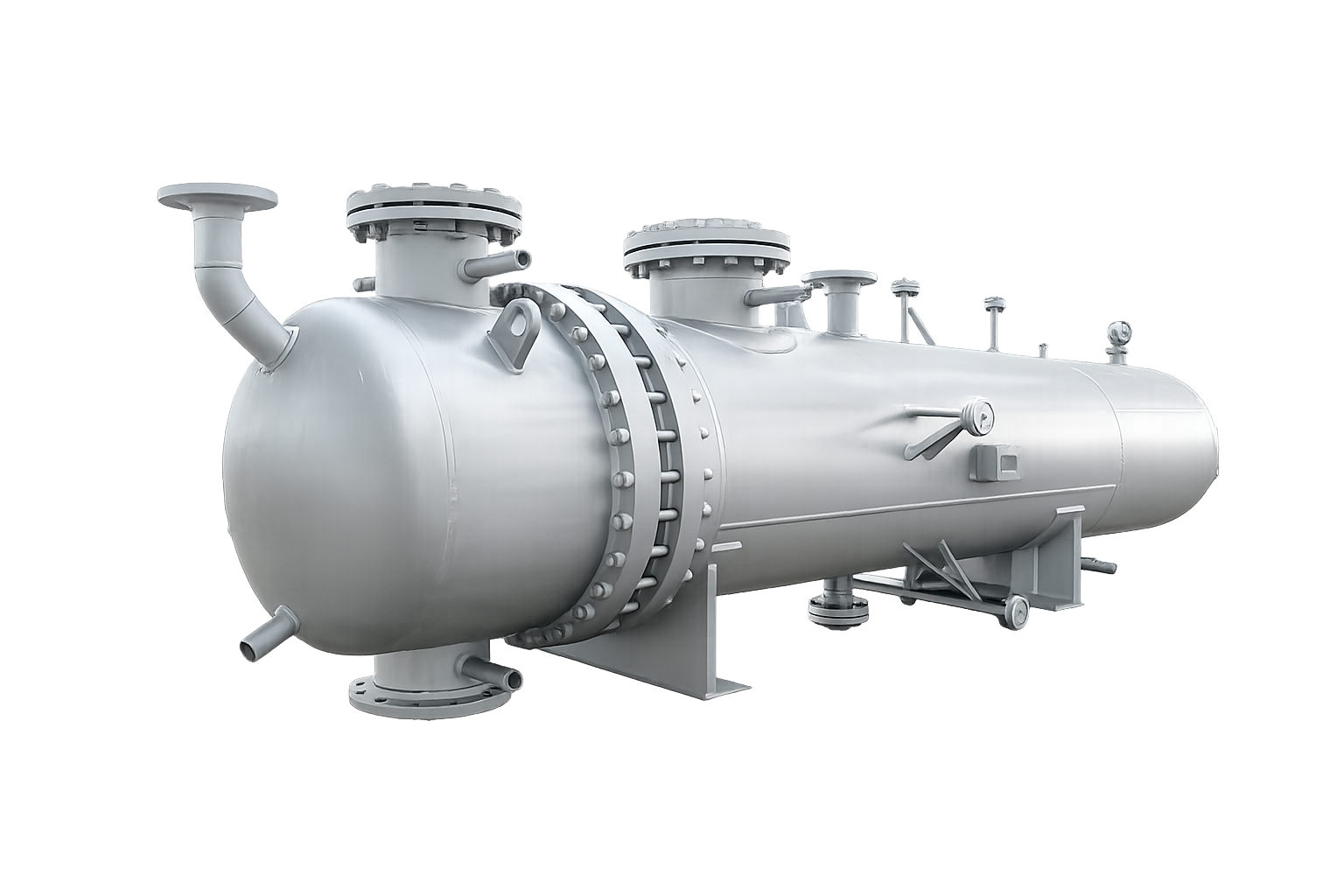 Heat Exchanger
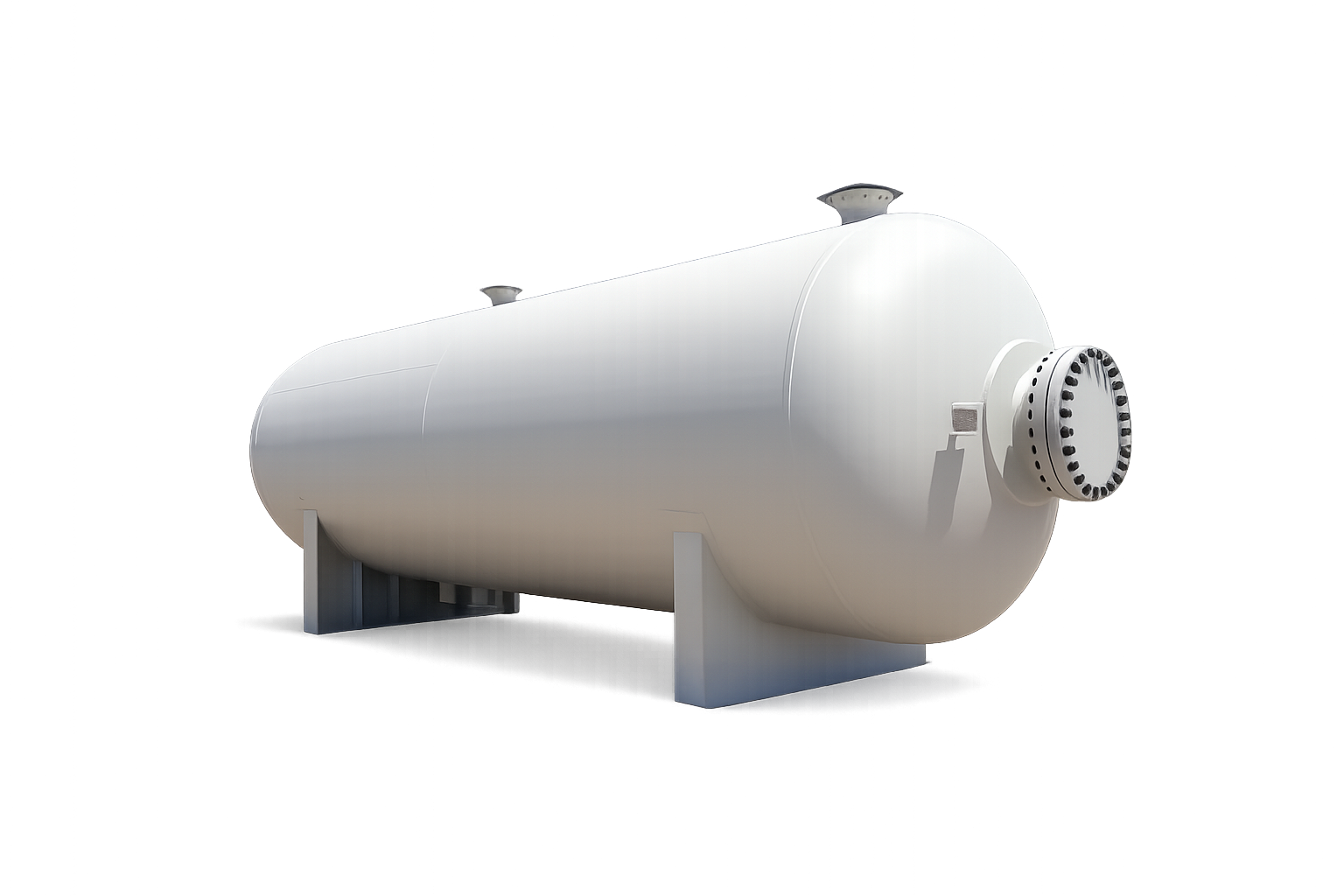 Pressure Vessel
 Silo
 Solvent Stripper
 Pharma Equipments