A practical guide to solvent strippers and stripping columns: how they remove solvents from water or process streams, packed and tray designs, vacuum stripping, materials and how to specify one.

A solvent stripper is a column in which a volatile solvent is removed from a liquid (such as wastewater or a product stream) by contacting it with steam or an inert gas, often under vacuum. The liquid flows down over packing or trays while the stripping vapour flows upward, carrying away the solvent, which is then condensed and recovered.
A solvent stripper (also called a stripping column, stripper tower or steam stripper) removes dissolved volatile solvents from a liquid stream. A typical case is wastewater from a pharma or chemical plant containing toluene, methanol, acetone or other solvents. Before the water can be treated or discharged, the solvent has to come out, and it is often valuable enough to recover and reuse.
Stripping is a mass-transfer operation, closely related to distillation. In distillation, vapour is created by a reboiler and the column both strips and enriches. In a stripper, the stripping agent (steam, nitrogen or air) is supplied from outside, and the column mainly removes the volatile component from the liquid, so it does not need a rectifying section above the feed in many simple cases. If you want the full picture of distillation, read our guide on what is a distillation column.
Heating the feed or adding live steam raises solvent volatility and improves removal. Applying vacuum lowers boiling points, so heat-sensitive products can be stripped at lower temperatures.
Random packing (rings or saddles) or structured packing provides a large wetted surface with low pressure drop, which suits vacuum operation and corrosive service. Liquid distributors and redistributors keep the liquid evenly spread so the packing works at full efficiency.
Sieve, valve or bubble-cap trays hold a liquid layer through which the stripping gas bubbles. Trays are more tolerant of solids and fouling, easier to clean, and suit larger duties.
Operated under reduced pressure to strip solvents at lower temperature, protecting heat-sensitive materials and cutting energy use.
| Type | Strength | Typical use |
|---|---|---|
| Packed tower | Low pressure drop, compact, corrosion options | Vacuum and corrosive solvents, wastewater stripping |
| Tray tower | Handles solids and fouling, easy maintenance | Larger flows, dirtier streams |
| Vacuum stripper | Low temperature operation | Heat-sensitive products, solvent recovery |
Three ideas drive stripper design. The first is volatility: the more volatile the solvent is relative to the carrier liquid, the easier it is to strip. The second is the stripping factor, which compares the amount of stripping gas supplied to the amount needed for equilibrium; a higher factor gives better removal but costs more steam or gas. The third is contact height: more packing height (or more trays) removes more solvent.
Designers also check hydraulic limits. Liquid and gas loads must stay inside the flooding limit for the chosen packing or trays, and above the minimum wetting rate for packing, so that the surface stays wet and efficient. A column diameter that is too small floods, while a diameter that is too large wets poorly and gives low efficiency, so the right diameter comes from the actual flows and not from a rule of thumb.
| Parameter | Effect | What to provide |
|---|---|---|
| Feed temperature | Higher temperature raises solvent volatility | Normal and maximum feed temperature |
| Stripping steam or gas rate | More gas improves removal | Utility availability and cost |
| Operating pressure / vacuum | Vacuum lowers required temperature | Available vacuum system |
| Packing or tray type | Sets efficiency and pressure drop | Fouling tendency and solids content |
| Target residual solvent | Sets the packing height | Discharge or reuse specification |
Several technologies can remove solvents from liquids; the best choice depends on concentration, volatility and the value of the solvent.
| Method | Best when | Limitation |
|---|---|---|
| Stripping | Volatile solvent in a less volatile liquid, low to moderate concentration | Needs steam or gas; solvent ends up in a vapour stream to be condensed |
| Distillation | High solvent concentration, need to separate several components | Higher energy, needs reboiler and condenser |
| Evaporation | Non-volatile product to be concentrated | Not selective for small solvent amounts |
| Adsorption (carbon) | Trace solvent removal | Spent carbon disposal and capacity limits |
In many plants a stripper is the first step to reduce solvent content, followed by a polishing step such as carbon adsorption or biological treatment. Recovering solvent from the condensate can also cut raw material costs.
| Symptom | Likely cause | Check |
|---|---|---|
| High solvent in bottoms | Not enough stripping gas, low temperature, fouled packing | Steam flow, feed temperature, pressure drop |
| Flooding | Excess gas or liquid load, foaming | Reduce rates, antifoam, check packing condition |
| Poor distribution | Blocked or unlevel distributor | Clean and level distributor |
| Unstable vacuum | Air leaks or condenser limits | Leak test, check vacuum pump and condenser |
| Corrosion | Wrong material for chlorides or acid | Review MOC and inspect internals |
A properly commissioned stripper is stable for years. Regular inspection of packing and distributors, plus a cleaning plan for fouling streams, preserves performance. Creative Engineering supports its customers with preventive maintenance programs and a technical helpdesk.
Solvent strippers are made in carbon steel for non-corrosive streams, SS 304, 304L, 316, 316L, 316Ti and 321 for general chemical service, and in alloys such as Duplex, Hastelloy C-276 or Inconel 625 when the solvent stream is corrosive (chlorinated solvents and acidic wastes are typical examples). Pharma strippers use SS 316L with electro-polished, crevice-free internals so the column can be cleaned and validated. The same MOC range applies to internals and packing supports.
A solvent stripper does two jobs at once. It cleans the liquid so that it can meet effluent limits, and it recovers solvent that can be sold or reused. In plants that use large amounts of expensive solvent, the recovered solvent often pays for a good part of the equipment cost. The stripped vapour passes through a condenser and then a receiver or decanter, where the solvent is separated from the water if the two are immiscible.
Environmental rules on volatile organic compounds (VOCs) and wastewater quality are tightening, so stripping is a practical pretreatment step before an effluent treatment plant. A well-designed stripper also keeps solvent emissions low by sending vent gases through a vent condenser or scrubber. For a complete system, Creative Engineering can supply the column, condenser, receiver, pumps and skid together, as described on our skid-mounted process equipment page.
Strippers are designed to ASME Section VIII Div 1 with external pressure (vacuum) checked, and welded to qualified procedures under ASME Section IX. Fabrication includes NDT of welds and hydrostatic testing, and documentation includes drawings, calculations, material certificates and test reports. Creative Engineering is an ASME U and R stamp holder and IBR approved, with ISO 9001:2015 certified quality systems.
We serve customers in Bharuch, Vadodara and Mumbai and export to the Middle East, Germany, the USA and Australia. See our agro, pharma and specialty chemical sector pages.
Send your data to sales@creative-engineering.in or through the contact page.
A solvent stripper is a column that removes volatile solvents from a liquid by contacting it with steam or gas, usually to recover the solvent or clean wastewater.
A stripper removes a volatile component using an external stripping gas or steam, while a distillation column uses a reboiler and condenser to create internal vapour and reflux for sharper separation.
A vacuum stripper operates at reduced pressure so the solvent boils off at a lower temperature, protecting heat-sensitive products and saving energy.
Packed strippers have lower pressure drop and suit vacuum and corrosive duty; tray strippers handle solids and fouling better and are easier to clean.
SS 316L is common; Duplex, Hastelloy C-276 or Inconel 625 are used for corrosive solvents; carbon steel suits non-corrosive streams.
Creative Engineering of Ankleshwar manufactures packed and tray solvent strippers, vacuum strippers and distillation equipment to ASME standards.
Yes. The solvent-rich vapour is condensed and collected in a receiver or decanter, and can often be reused directly or after further purification.
Low-pressure steam is most common, with nitrogen or air used where steam would harm the product or where the solvent is flammable and needs inerting.
Creative Engineering, Ankleshwar, Gujarat designs and manufactures process equipment to ASME and IBR codes. Share your drawing or process data and our team will respond with a technical offer.





 Reactor
 High Pressure Vessel
 Skid Equipment
 Receiver
 Heat Exchanger
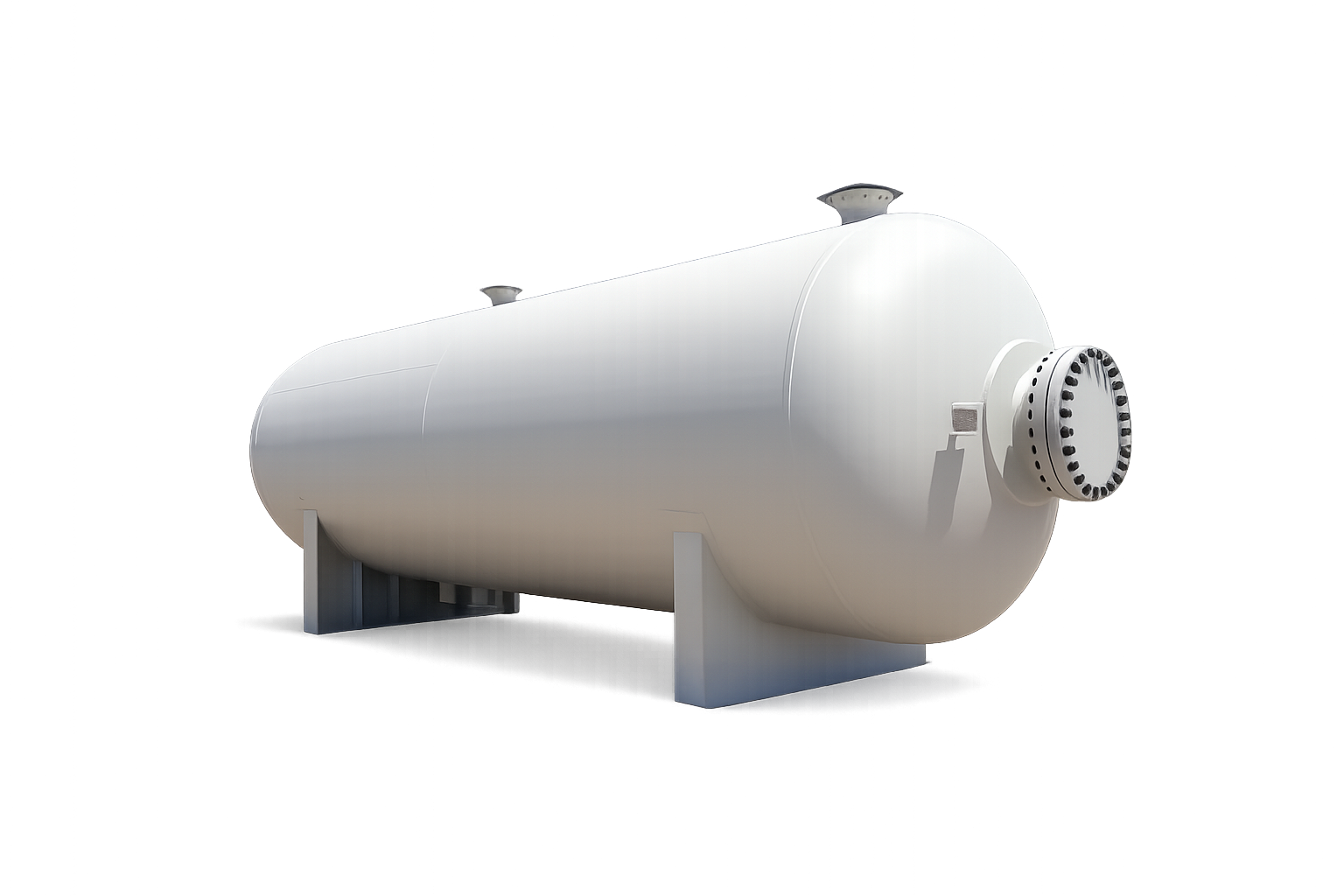 Pressure Vessel
 Silo
 Solvent Stripper
 Pharma Equipments