How receiver vessels work in process plants: vertical and horizontal receivers, condensate, gas and air receivers, surge and knock-out drums, reflux and distillate drums, design to ASME Section VIII, sizing, materials and how to order one.
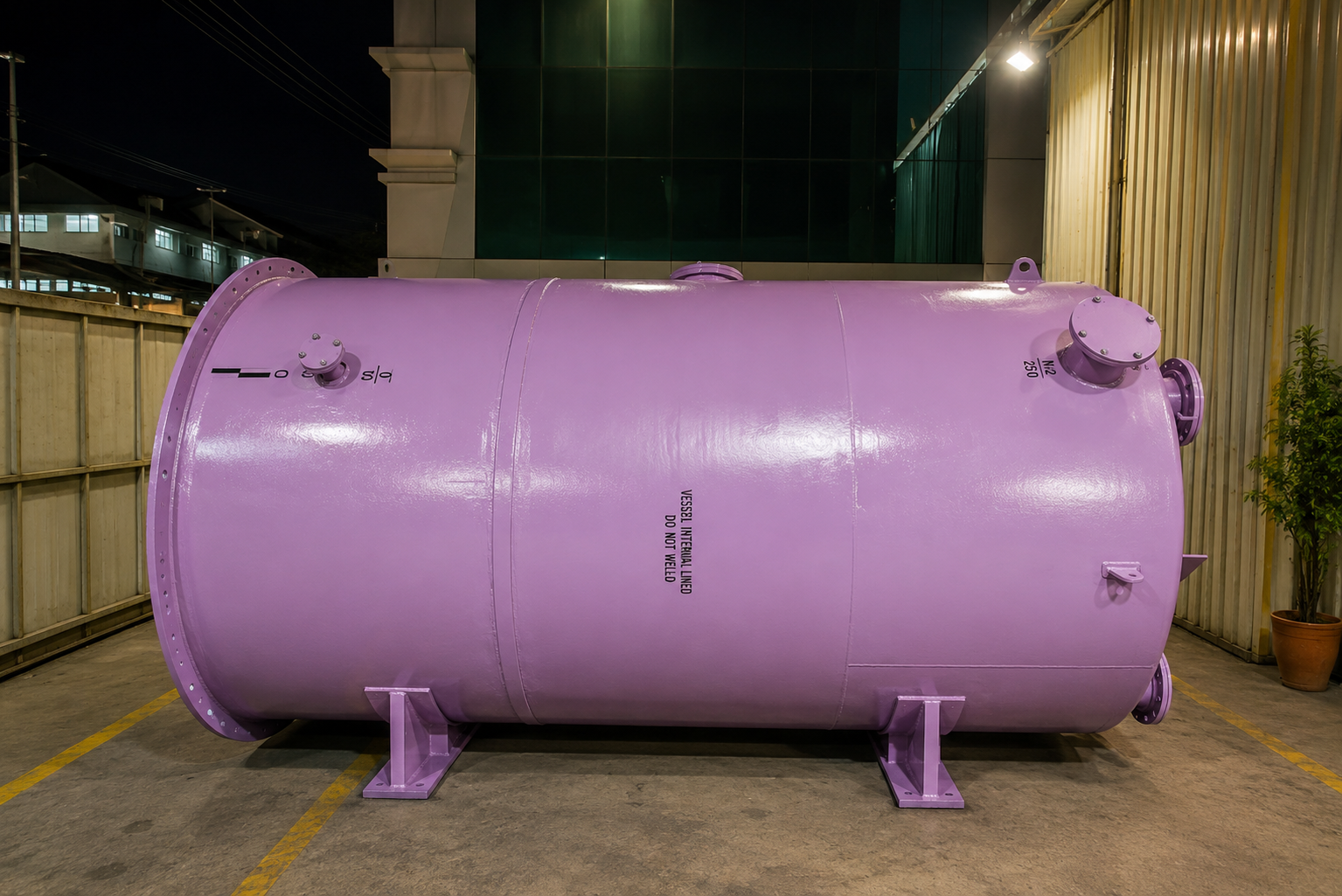
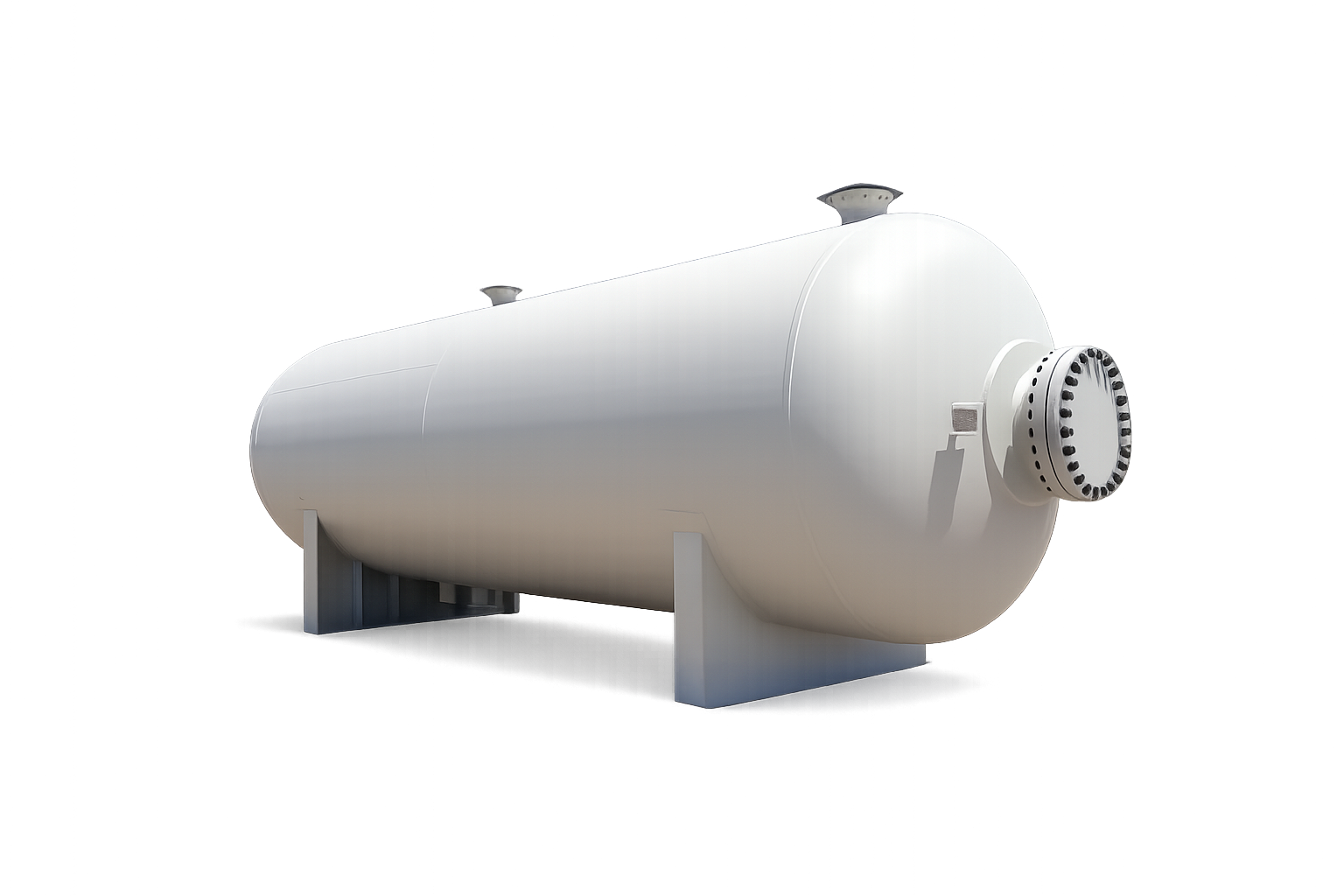
A receiver vessel is a pressure vessel that collects and temporarily holds a process fluid, such as condensate, gas, compressed air, distillate or reflux liquid, so that downstream equipment gets a steady supply. It is built to ASME Section VIII Div 1 as a vertical or horizontal vessel with trims like demister pads, vortex breakers and baffles.
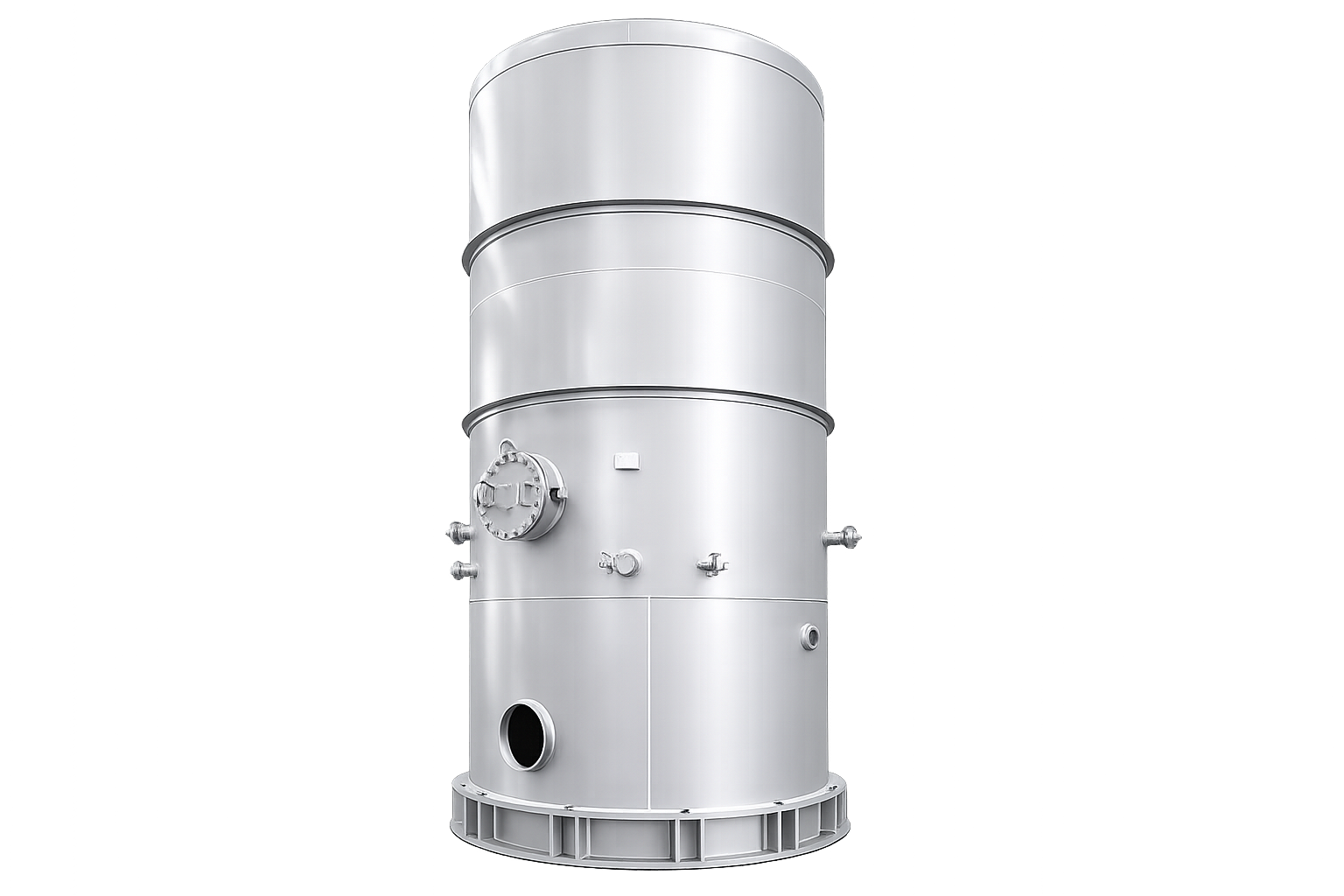
A receiver vessel (receiver tank or receiver drum) is a process vessel whose main job is to receive and hold a fluid for a time. It acts as a buffer between two parts of a process that do not run at exactly the same rate. A compressor delivers air in pulses while the plant draws it continuously, so an air receiver smooths the supply. A condenser produces liquid steadily while a pump withdraws it in batches, so a receiver holds the difference.
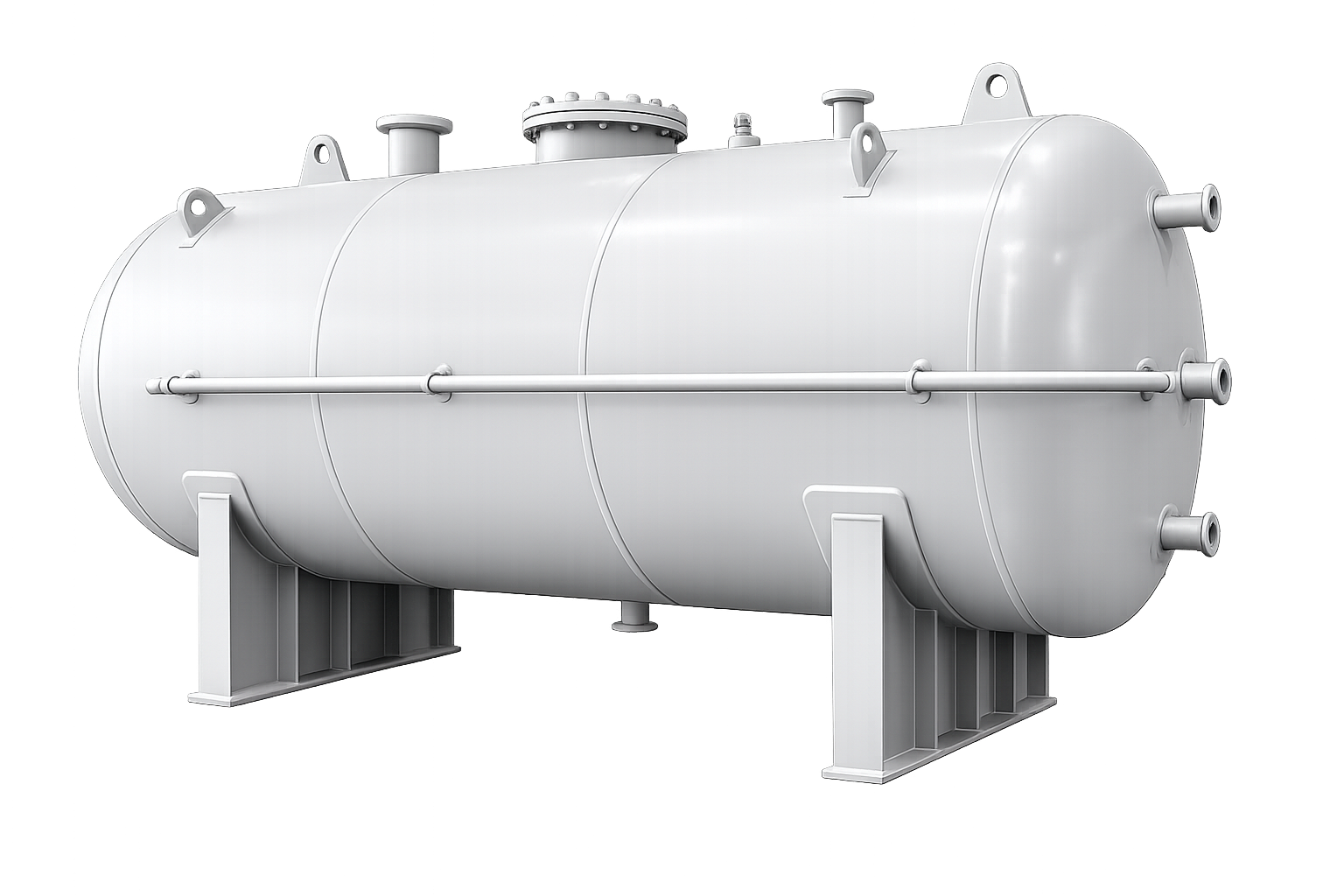
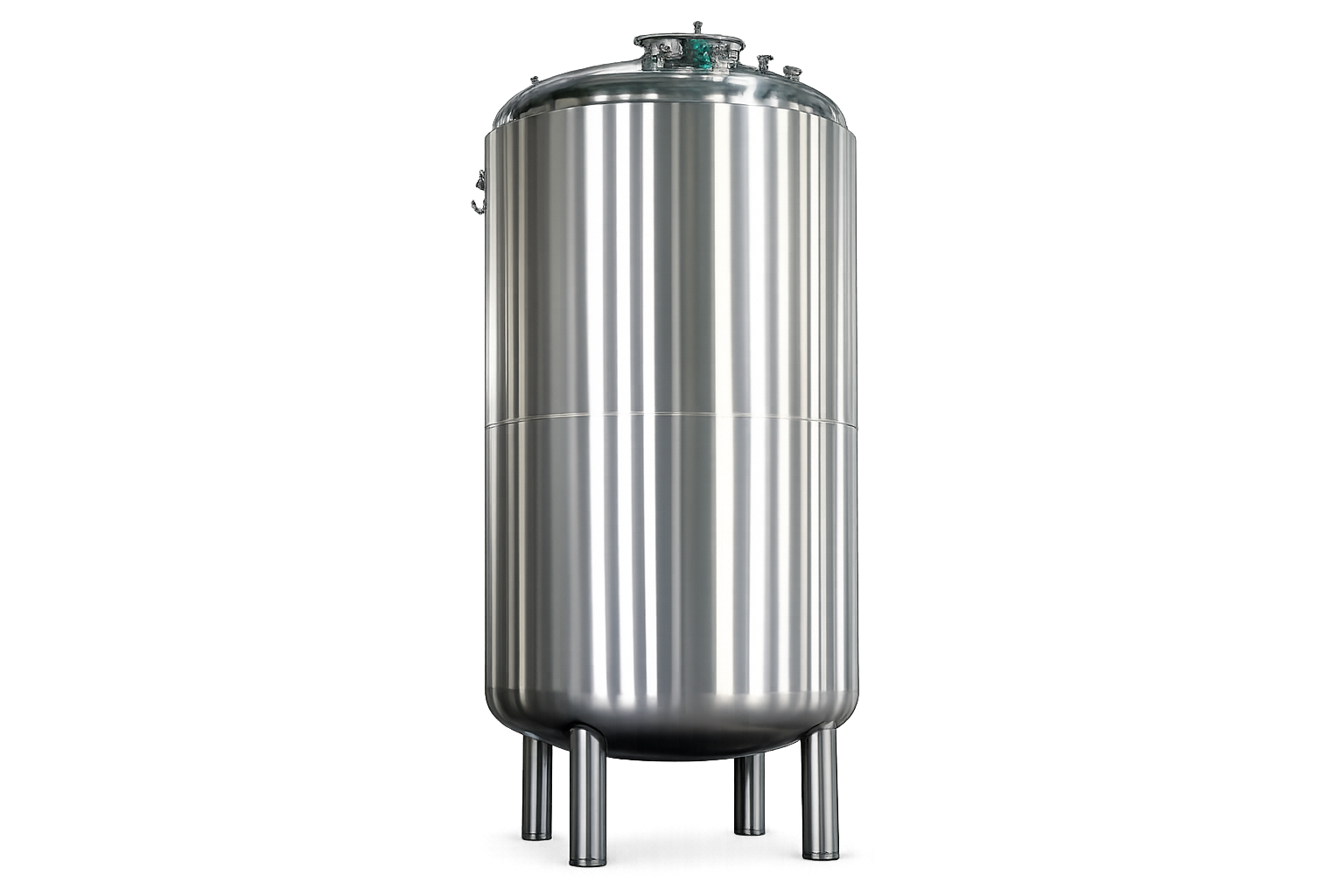
Receivers are among the most common vessels in any chemical, pharma or refinery plant. Although the principle is simple, design details such as volume, residence time, nozzle position, internals and pressure rating decide whether the receiver works trouble-free. Creative Engineering fabricates receivers in vertical and horizontal configurations, designed to ASME Section VIII Div 1, in stainless steel, carbon steel and exotic alloys.
| Type | Purpose | Typical trims |
|---|---|---|
| Condensate receiver | Collects condensate from steam systems or condensers | Level gauge, pump-out nozzle, vent |
| Gas or air receiver | Stores compressed gas or air, smooths pressure pulses | Safety relief valve, pressure gauge, drain |
| Surge drum | Absorbs flow fluctuations between process units | Level instruments, inlet baffle |
| Knock-out drum | Separates liquid droplets from a gas stream | Demister pad, vortex breaker |
| Reflux / distillate drum | Holds condensed overhead liquid before reflux and product draw-off | Boot for free-water separation, level controls |
| Flash drum | Allows pressure let-down and vapour-liquid separation | Inlet device, demister, level control |
You can read about the equipment that feeds receivers in our guides on the distillation column and heat exchanger.
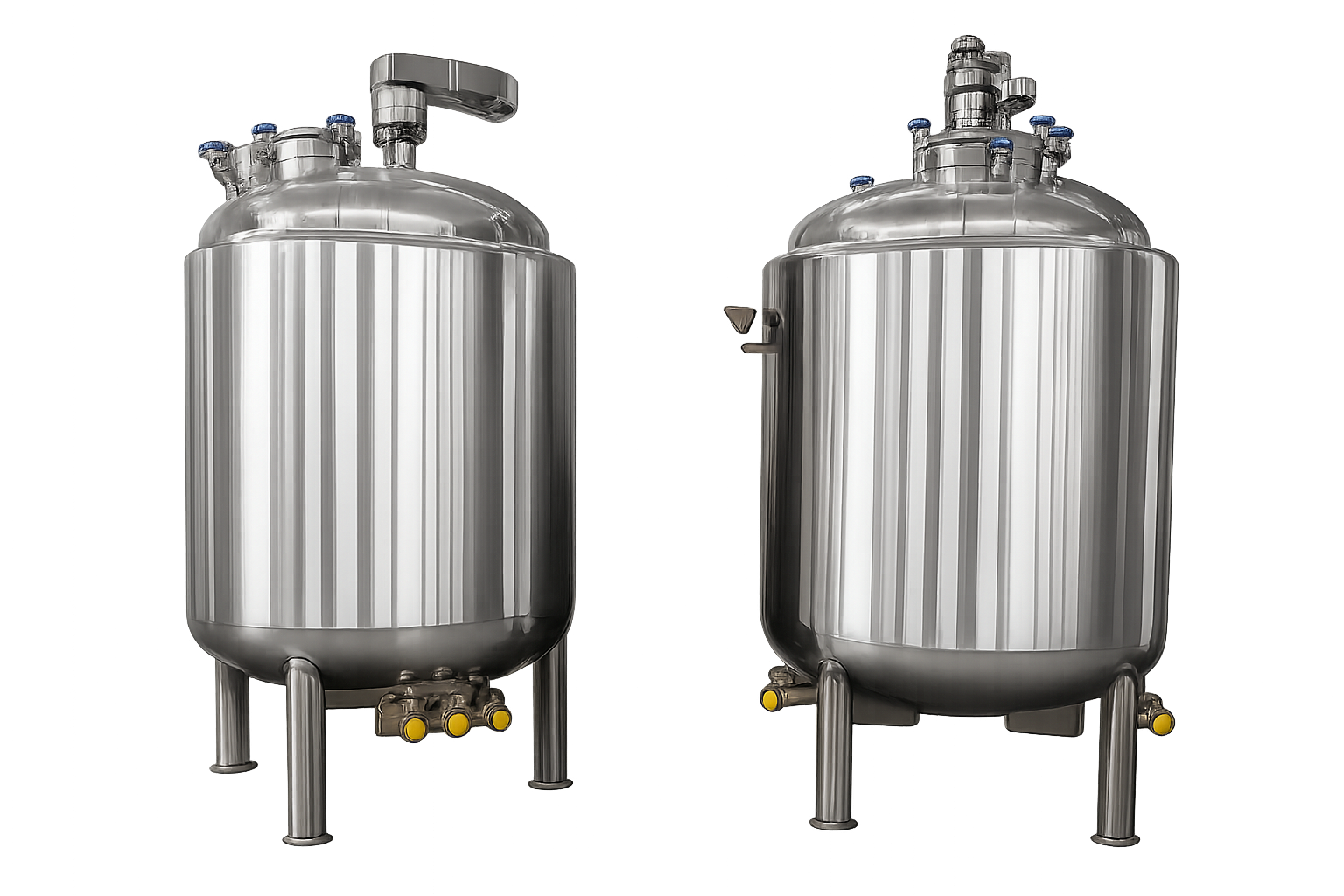
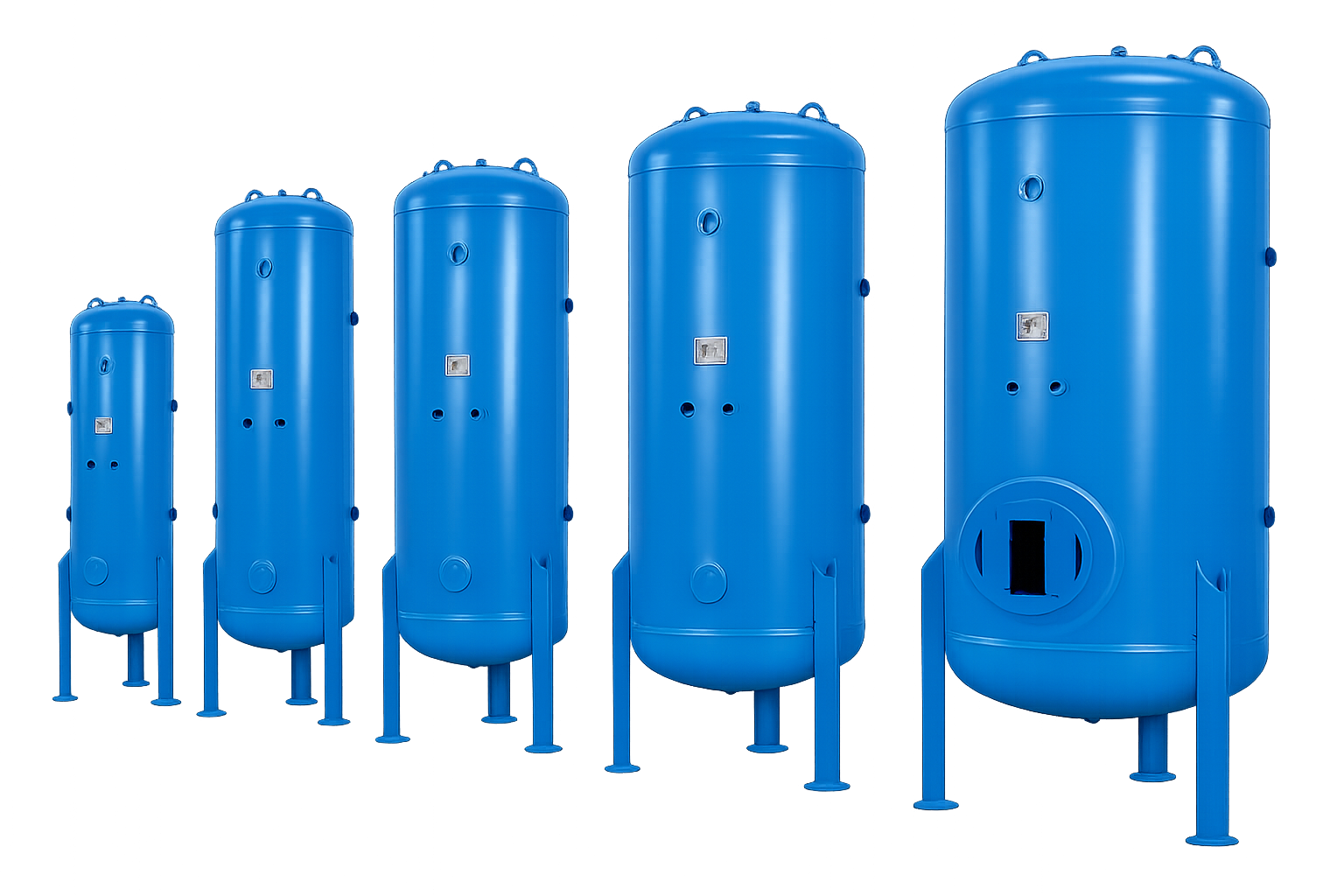
| Feature | Vertical receiver | Horizontal receiver |
|---|---|---|
| Footprint | Small | Larger |
| Liquid surface area | Small | Large, good for gas disengagement |
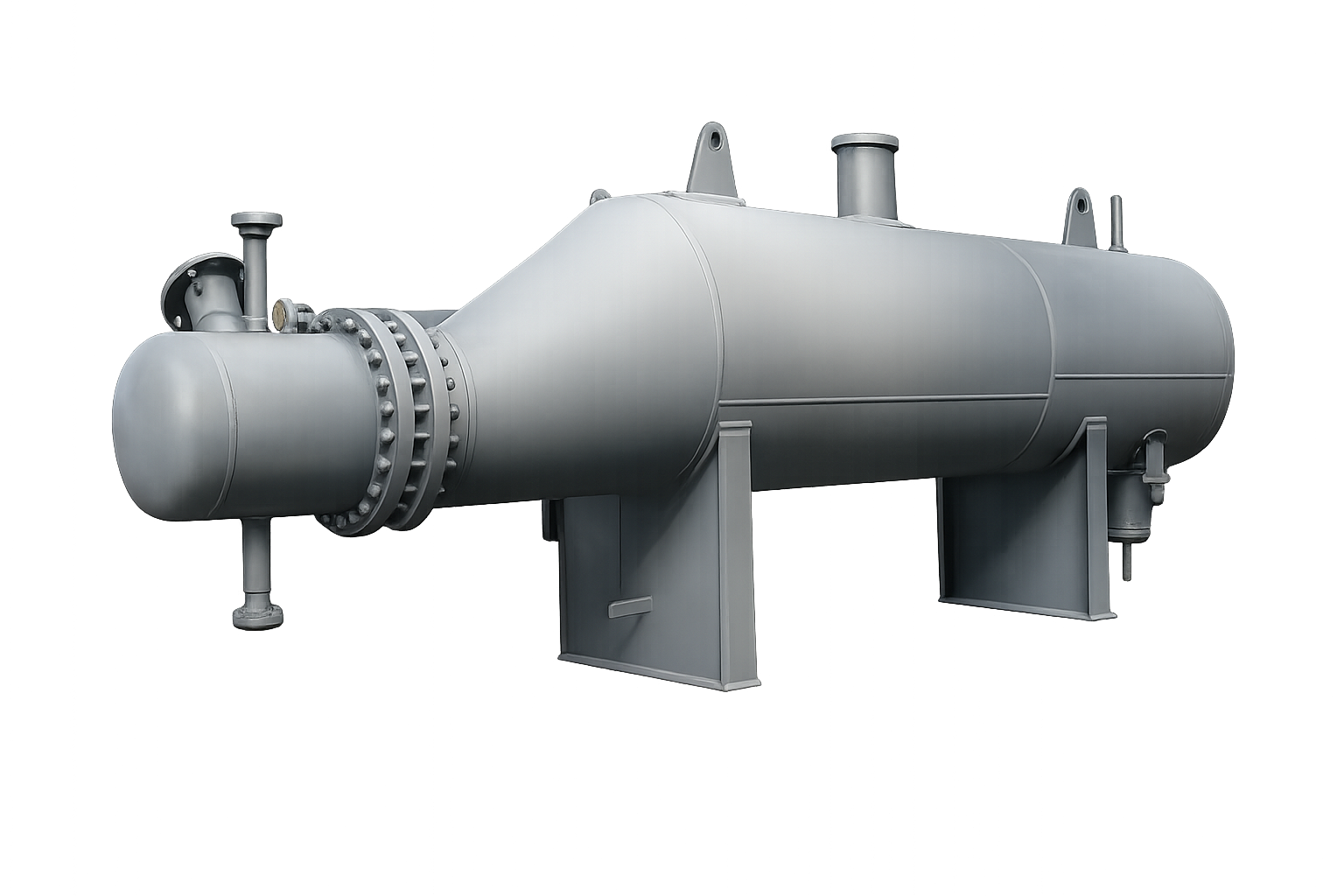
| Support | Legs, skirt or lugs | Saddles |
| Best for | Limited floor space, small surge volume | Large volume, two-phase separation, long residence time |
| Level control | Large level change for a small volume | Gradual level change |
Heads can be torispherical, ellipsoidal or hemispherical. As with any pressure vessel, the head choice trades forming cost against thickness; ellipsoidal 2:1 heads are the usual compromise.
Sizing begins with the flow rate and the residence (hold-up) time needed. For example, a reflux drum might be sized to hold five minutes of liquid flow between the low and high level, and a condensate receiver to hold enough liquid for the pump to run in steady cycles. The volume between the low and high operating levels is the working volume; the total vessel volume is larger to include the zones below the low level and above the high level.
| Input | Example | Effect on the vessel |
|---|---|---|
| Liquid flow | 6 m³/h | Sets the volume for a given residence time |
| Residence time | 5 minutes | 6 m³/h × 5/60 h = 0.5 m³ working volume |
| Level range | Low to high | Sets diameter and length |
| Design pressure | Process dependent | Sets wall thickness and flange class |
| Fluid | Condensate, solvent, gas | Selects material and trims |
An air receiver is the most familiar type of receiver. A compressor does not deliver air steadily; it loads and unloads. The receiver stores compressed air so that the compressor can run in efficient cycles, so that peak demand can be met without a pressure drop, and so that moisture can settle and be drained before the air reaches tools and instruments. A larger receiver gives smoother pressure and fewer compressor starts, which saves energy and wear.
Practical points for air receivers include a drain valve at the lowest point (automatic drains are common), a safety relief valve set at or below the design pressure, a pressure gauge, and a nameplate showing design pressure and test date. Because the stored air is a pressurised, compressible fluid, air receivers carry a real hazard if corroded or poorly maintained, so periodic thickness checks and pressure testing are part of good practice. In India the rules for such vessels depend on the pressure and application, so check the requirements that apply to your site.
A condensate receiver collects hot condensate returning from steam users. Because the condensate is at or near its boiling point, the pump drawing from it needs enough liquid head (NPSH) to avoid cavitation, and the vessel needs a vent so that flashed steam can escape safely. The receiver is therefore often mounted above the pump, and its outlet has a vortex breaker.
A reflux drum receives condensed vapour from the column condenser. From here a reflux pump returns part of the liquid to the column and another pump sends the rest to storage as product. If the overhead is a mixture of solvent and water, the drum often includes a boot, a small vertical pot at the bottom where the heavier water phase settles and can be drained, so only the solvent phase is refluxed. Level control at the drum keeps the column stable. Read more about how reflux works in our guide on the distillation column.
| Problem | Cause | Prevention |
|---|---|---|
| Pump cavitation | Gas drawn in at outlet or low NPSH | Vortex breaker, adequate liquid level and elevation |
| Liquid carry-over in gas line | No demister or too high velocity | Demister pad, larger diameter or lower gas velocity |
| Corrosion at the bottom | Water or condensate accumulates | Drain, suitable MOC, internal coating if required |
| Overpressure | Blocked outlet or runaway process | Correctly sized relief valve |
| Unstable level | Poor nozzle arrangement or controls | Stilling baffles and correct instrument location |
Receivers are manufactured in SS 304, 304L, 316, 316L, 316Ti and 321, in carbon steel SA 516 Gr.60/70 and IS 2062, and in alloys such as Duplex, Super Duplex, Inconel, Hastelloy and others for corrosive service. They are designed to ASME Section VIII Div 1, with welding qualified to Section IX, and are NDT examined and hydro-tested as the specification requires. Where the unit is part of a steam system, IBR approval may apply. Creative Engineering holds ASME U and R stamps, NB registration and IBR approval.
See also pressure vessel basics and the oil and gas and pharma sector pages.
Contact us via the contact page or email sales@creative-engineering.in. We respond within 24 hours.
A receiver vessel is a vessel that receives and temporarily holds a fluid, such as condensate, gas, air or distillate, to smooth flow differences between parts of a process.
They are very similar. A surge drum is a receiver sized to absorb flow fluctuations between units, while a receiver may also simply collect and store fluid.
A reflux drum, also called a distillate receiver, collects condensed overhead liquid from a distillation column before part is returned as reflux and the rest is taken as product.
A knock-out drum separates liquid droplets from a gas stream, using a demister pad or gravity settling to protect compressors and downstream equipment.
ASME Section VIII Division 1 is the usual code, with IBR where steam or boiler duty applies.
A vortex breaker prevents a whirlpool at the outlet nozzle that can draw gas into the pump or line and cause cavitation.
Creative Engineering of Ankleshwar manufactures vertical and horizontal receivers, surge drums and knock-out drums to ASME standards.
Work out the liquid or gas flow, decide the hold-up time you need between the low and high operating levels, and add space above and below those levels. State this clearly as working or total volume in your enquiry.
Yes. Receivers on vacuum condensers and distillation systems are designed for full vacuum together with positive pressure, and the external-pressure case is checked under ASME Section VIII Div 1.
Yes. Receivers are often built into process skids with pumps, piping and instruments so that the unit arrives pre-assembled and tested.
Creative Engineering, Ankleshwar, Gujarat designs and manufactures process equipment to ASME and IBR codes. Share your drawing or process data and our team will respond with a technical offer.








 Reactor
 High Pressure Vessel
 Skid Equipment
 Receiver
 Heat Exchanger
 Pressure Vessel
 Silo
 Solvent Stripper
 Pharma Equipments