Everything about industrial pressure vessels: definition, vertical and horizontal types, heads and supports, ASME Section VIII design, materials, inspection and how to buy a pressure vessel in India.
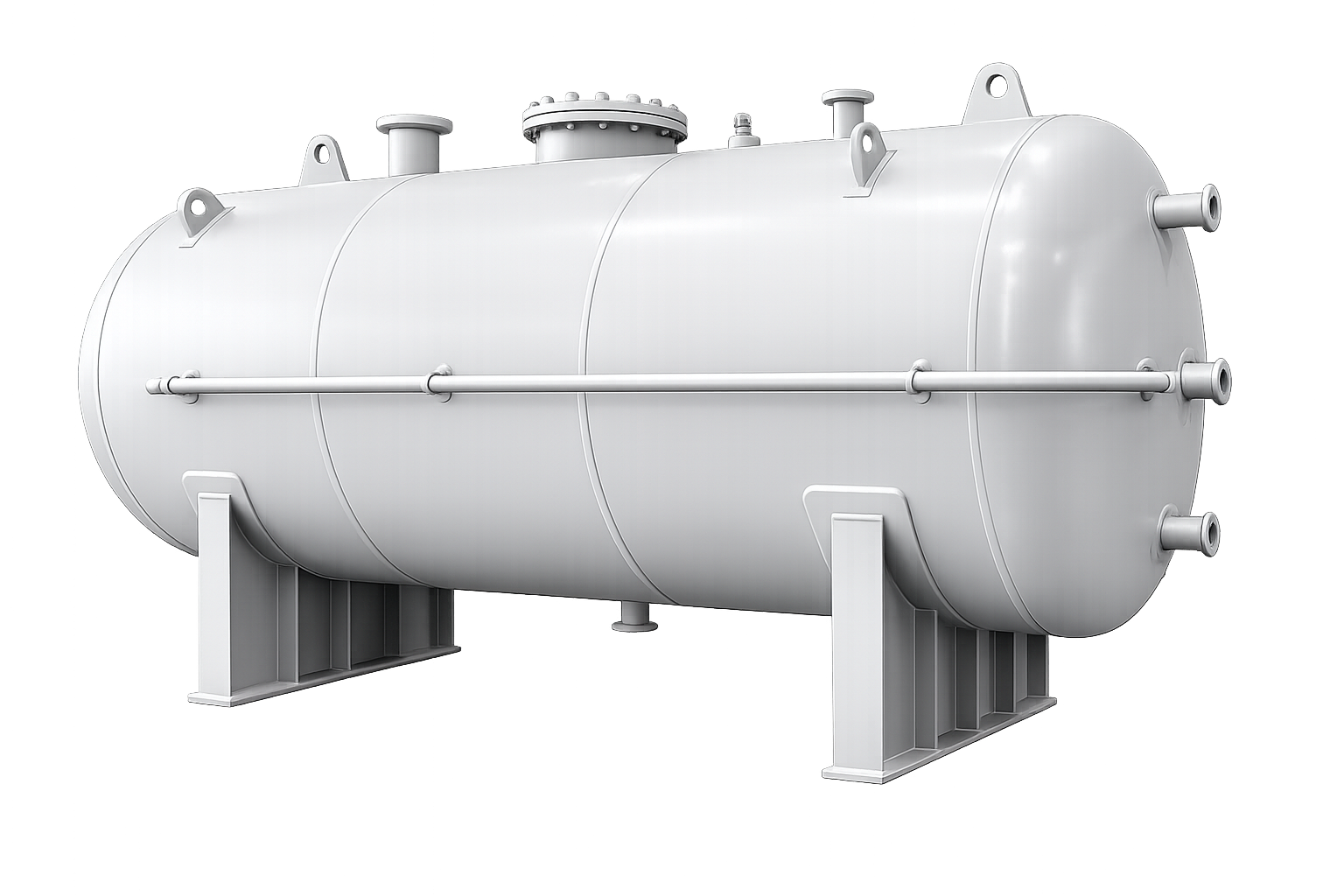
A pressure vessel is a closed container designed to hold gases or liquids at a pressure substantially different from the ambient pressure. It is designed and built to a code such as ASME Section VIII Division 1, with a shell, formed heads, nozzles, supports and safety devices, and is inspected and pressure-tested before use.
A pressure vessel is a leak-tight container that holds a gas or liquid at a pressure different from the surrounding atmosphere. The pressure can be positive (compressed air receiver, steam drum, separator) or negative, as in a vacuum vessel. Because the contained fluid stores energy, a pressure vessel is one of the most heavily regulated pieces of equipment in industry, and its design, welding, inspection and testing follow published codes rather than the maker's own judgement.
You meet pressure vessels everywhere in a process plant: separators, knock-out drums, flash drums, surge drums, accumulators, air receivers, reactors, columns and heat exchanger shells are all pressure vessels. If the duty is severe, see our dedicated guide on the high-pressure vessel.
| Component | Purpose |
|---|---|
| Shell | Cylindrical body that carries pressure; thickness set by design calculation |
| Heads | Formed end closures, usually 2:1 ellipsoidal, torispherical or hemispherical |
| Nozzles and flanges | Inlets, outlets, instrument and safety-valve connections, rated to ASME B16.5 or B16.47 |
| Manway | Access for inspection and cleaning |
| Supports | Legs, skirt, lugs (vertical) or saddles (horizontal) |
| Internals | Demister pads, vortex breakers, baffles, distributor pipes |
| Safety devices | Relief valve, rupture disc, pressure gauge, level instruments |
| Name plate | Records design pressure, temperature, code and serial number |
Heads deserve special mention: a hemispherical head is strongest and thinnest for a given pressure but expensive to form, a 2:1 ellipsoidal head is the usual economical choice for moderate pressure, and a torispherical head is cheaper still for low pressure.


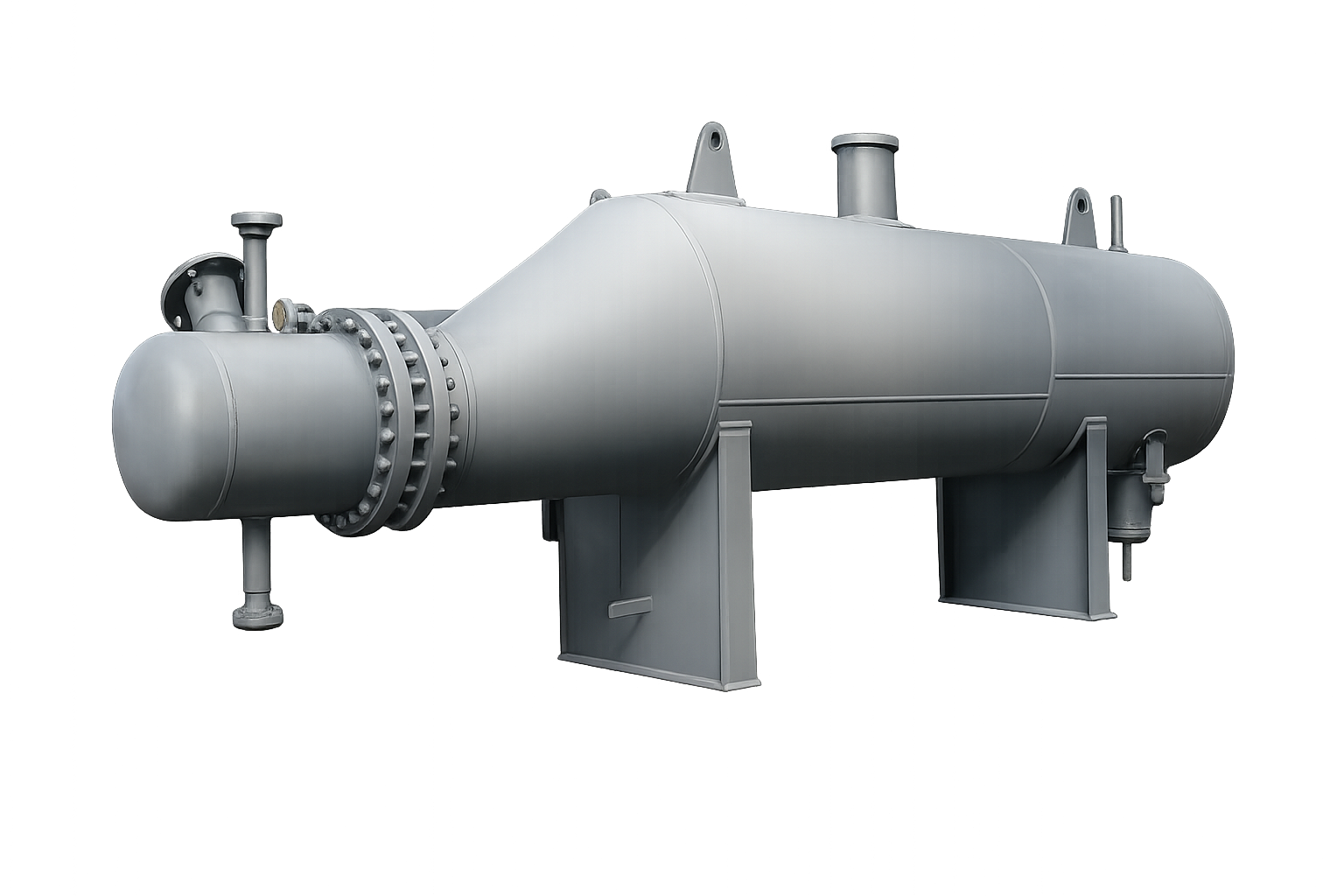
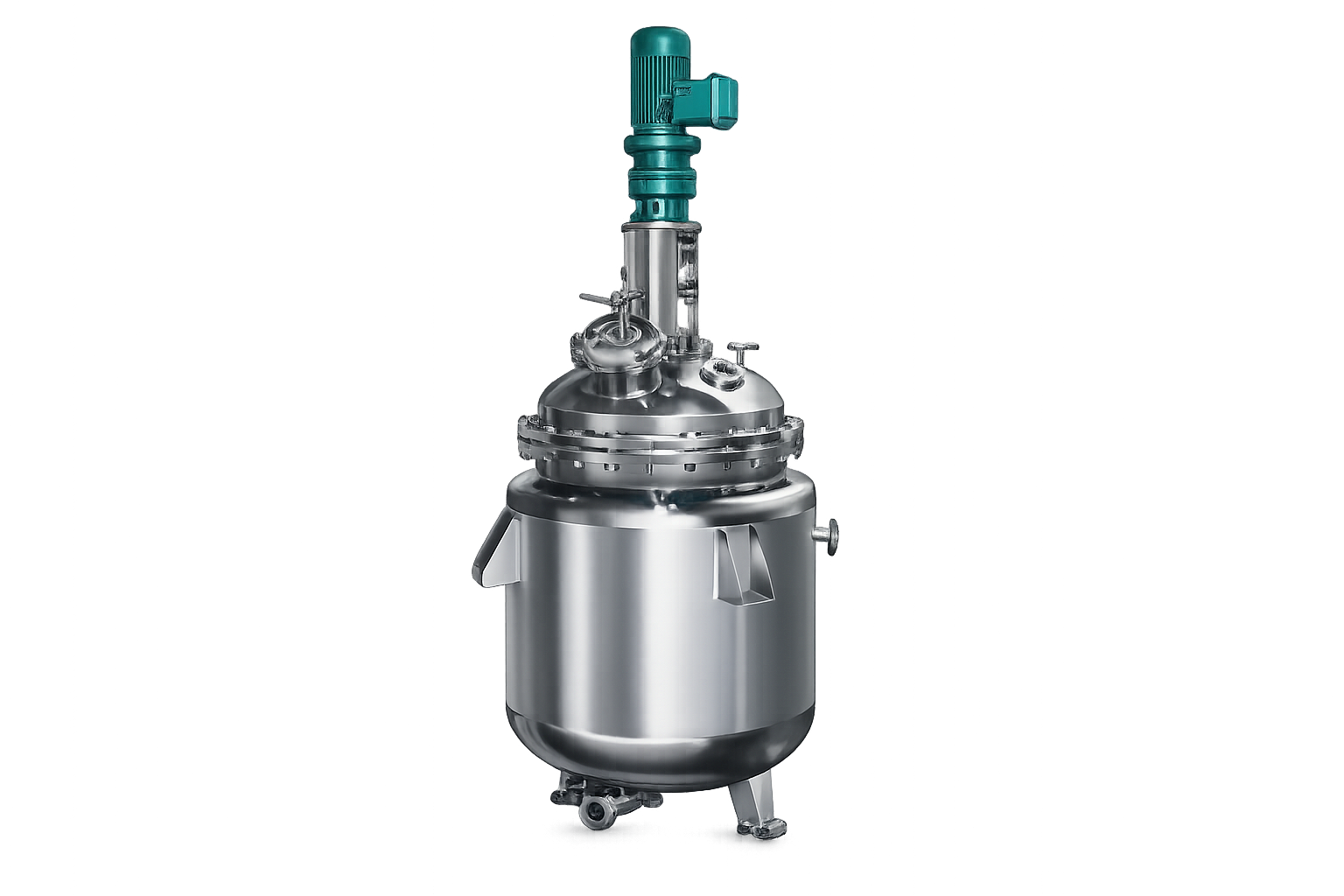
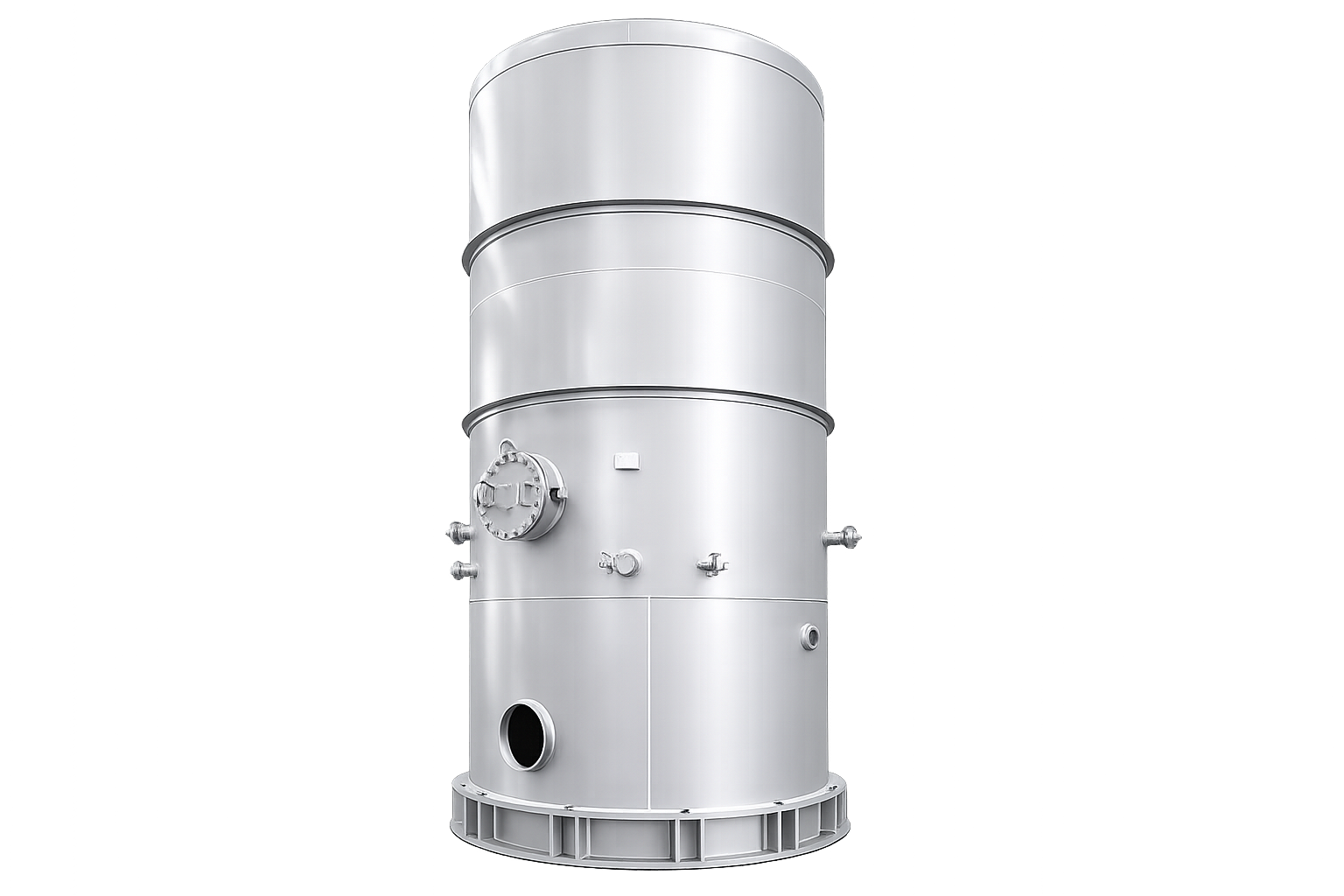
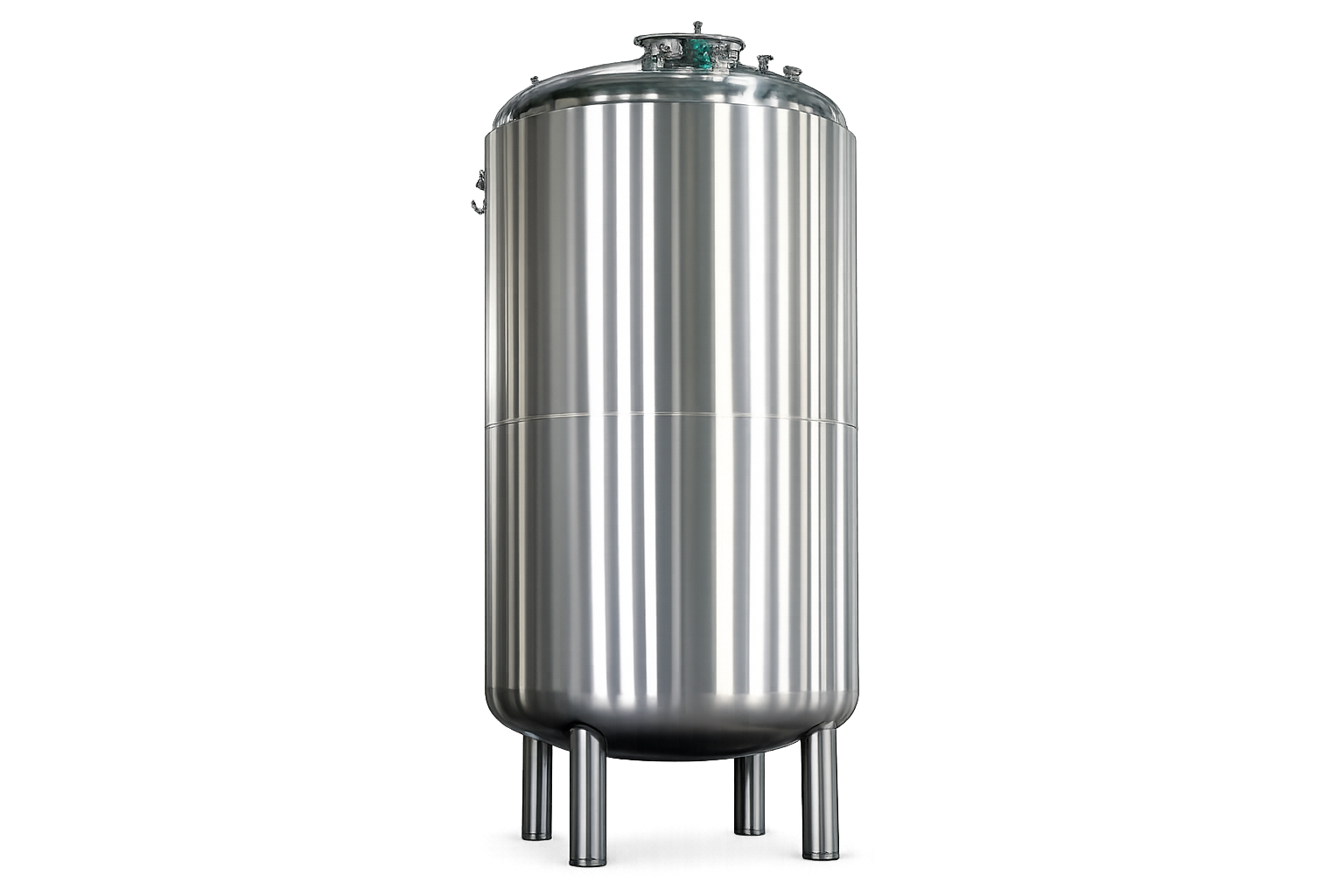
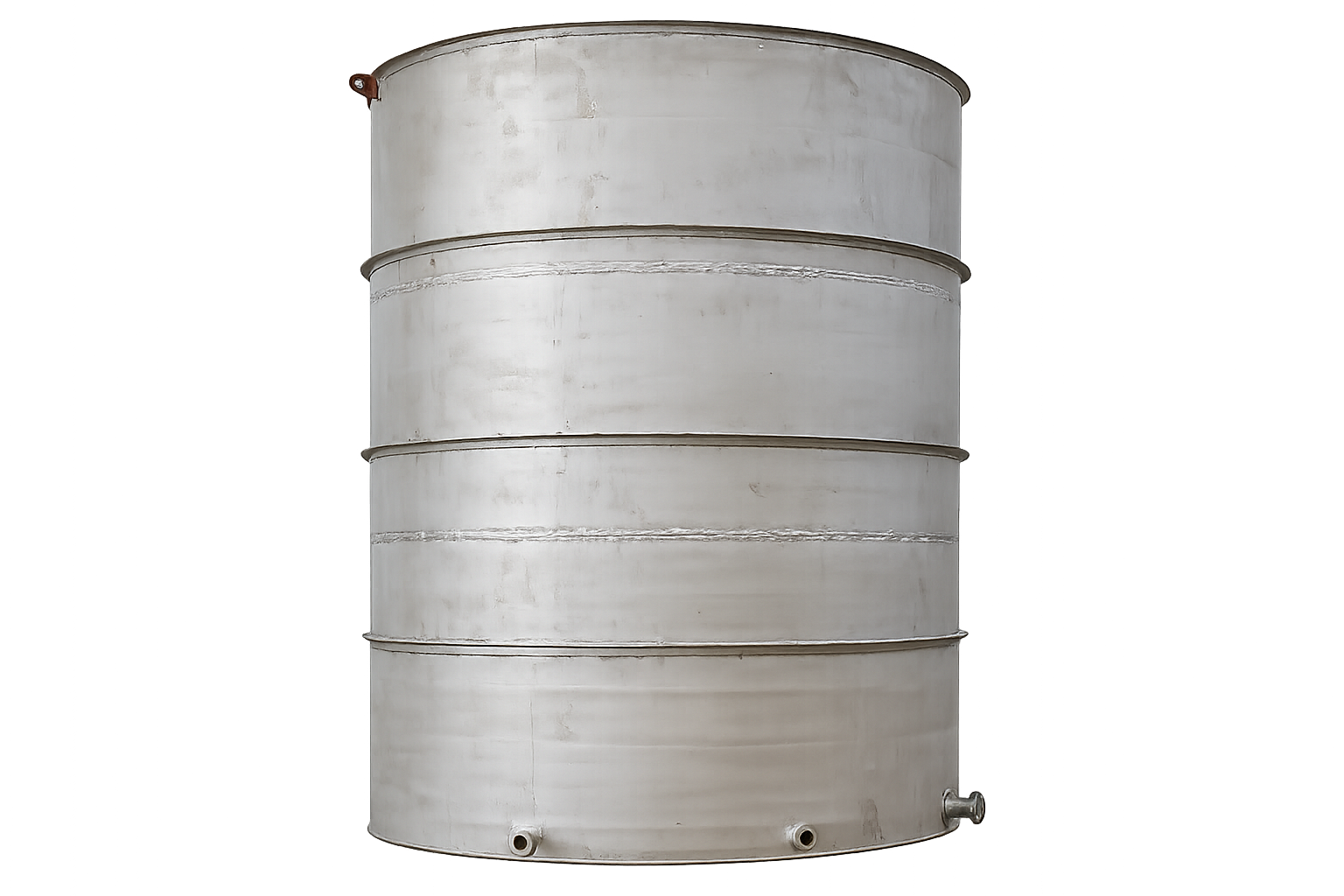
Vertical vessels stand on a skirt or legs, take up little floor space, and suit separators, knock-out drums and flash vessels. Horizontal vessels lie on saddles and suit surge drums, condensate receivers and two-phase separators because they offer a long, wide liquid surface.
Internal pressure vessels, vacuum vessels and combined (pressure and vacuum) vessels each have their own design cases. Many chemical vessels see full vacuum during cleaning or solvent recovery, so external-pressure design is checked even when the main duty is positive pressure.
The code decides how the vessel is calculated, welded, examined and stamped. The ones you will meet in India are:
Using a manufacturer that already holds these stamps and approvals shortens approvals on your side, because the quality system, welding procedures and inspection plans are already accepted.
For a thin-walled cylindrical shell the required thickness rises in direct proportion to the design pressure and the internal diameter, and falls as the allowable stress of the material goes up. In practice, ASME Section VIII Division 1 adds three further factors: the weld joint efficiency (a fully radiographed seam earns a higher efficiency than a spot-examined one), the corrosion allowance added for the planned service life, and the minimum thickness needed for handling and fabrication.
This means two vessels with the same volume can have quite different plate thickness, simply because of pressure, diameter, material grade and how much NDT is specified. A larger diameter shell needs thicker plate than a slender one at the same pressure, which is one reason tall, narrow vessels are economical for high-pressure separation.
Heads follow a similar logic. A hemispherical head carries pressure with roughly half the thickness of a cylinder, a 2:1 ellipsoidal head needs about the same thickness as the shell, and a torispherical head needs more. Designers weigh head thickness against forming cost and available height when choosing the head type.
These three terms are often confused, but they differ in purpose, code and risk.
| Feature | Pressure vessel | Boiler | Atmospheric storage tank |
|---|---|---|---|
| Purpose | Hold or process fluid under pressure | Generate steam or hot water by firing or heat input | Store liquid at near-atmospheric pressure |
| Typical code | ASME VIII Div 1 | IBR, ASME Section I | API 650, IS 803 |
| Fired heat source | No (usually) | Yes | No |
| Wall thickness | Set by internal or external pressure | Set by steam pressure and temperature | Thin shell, thickness by hydrostatic head |
| Examples | Separator, receiver, reactor shell | Steam boiler, waste-heat boiler | Diesel, water or chemical tank |
Creative Engineering fabricates pressure vessels and also atmospheric and low-pressure storage tanks, so the right equipment can be specified against the correct code from one supplier.
A well-built vessel can run for decades if it is inspected and maintained. A practical in-service programme includes:
Keep the manufacturer's documentation: the drawings, design calculation, MTCs and data report are essential if you ever need to re-rate, repair or move the vessel.
| Material | Typical use |
|---|---|
| SA 516 Gr.60 / Gr.70, IS 2062 | General-purpose carbon steel for non-corrosive duty |
| SA-333, SA-537 | Low-temperature and higher-strength carbon steel |
| SS 304 / 304L | Mild corrosion, food and general chemical duty |
| SS 316 / 316L / 316Ti | Chlorides, pharma, higher corrosion resistance |
| Duplex and Super Duplex | High strength with chloride resistance |
| Alloy steel | High-temperature service |
| Inconel, Hastelloy, titanium | Severe corrosion and special duty |
Material is picked for corrosion first, then temperature and strength, then cost. Where a corrosion-resistant alloy is only needed on the wetted surface, a cladded or lined vessel can cut cost compared with a solid alloy vessel.
Creative Engineering combines NDT Level II engineers, calibrated QC equipment and full traceability of raw material, weld maps and test records.
Industry-specific information is available on our pages for oil and gas, petrochemicals, pharma equipment and specialty chemicals.
Provide a data sheet containing:
Send it via the contact page or to sales@creative-engineering.in. Enquiries are answered within 24 hours.
It is a strong, sealed container for gas or liquid at a pressure different from the air around it, built and tested to a safety code such as ASME Section VIII Division 1.
By orientation they are vertical or horizontal; by function they are storage, process, heat-transfer and mass-transfer vessels; by pressure they are internal-pressure, vacuum or combined vessels.
The U stamp is the ASME certification mark that authorises a manufacturer to build new pressure vessels to ASME Section VIII Division 1. The R stamp authorises repairs and alterations.
Carbon steel such as SA 516 Gr.70 suits non-corrosive duty; SS 316L suits chlorides and pharma; Duplex or alloy materials suit severe corrosion. The right choice depends on fluid, temperature and cost.
A storage tank holds liquid at atmospheric or very low pressure (API 650, 620), while a pressure vessel is designed to a pressure code and can hold substantial internal or external pressure.
IBR approval is required for steam and boiler-related equipment in India. Process pressure vessels are normally built to ASME Section VIII Div 1, and many owners ask for IBR-approved fabrication as an additional assurance.
Creative Engineering of Ankleshwar manufactures pressure vessels with ASME U and R stamps, IBR approval and ISO 9001:2015 certification, serving Bharuch, Vadodara, Ahmedabad, Surat, Mumbai and export customers.
Creative Engineering, Ankleshwar, Gujarat designs and manufactures process equipment to ASME and IBR codes. Share your drawing or process data and our team will respond with a technical offer.






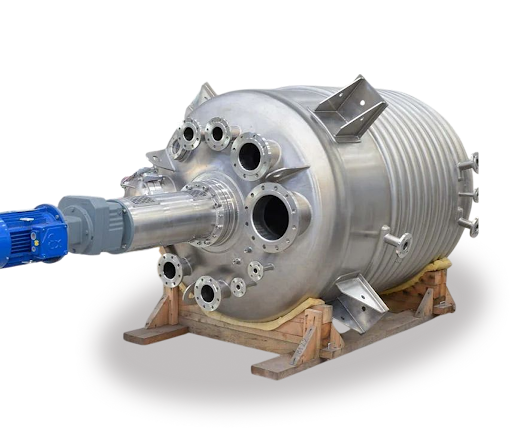 Reactor
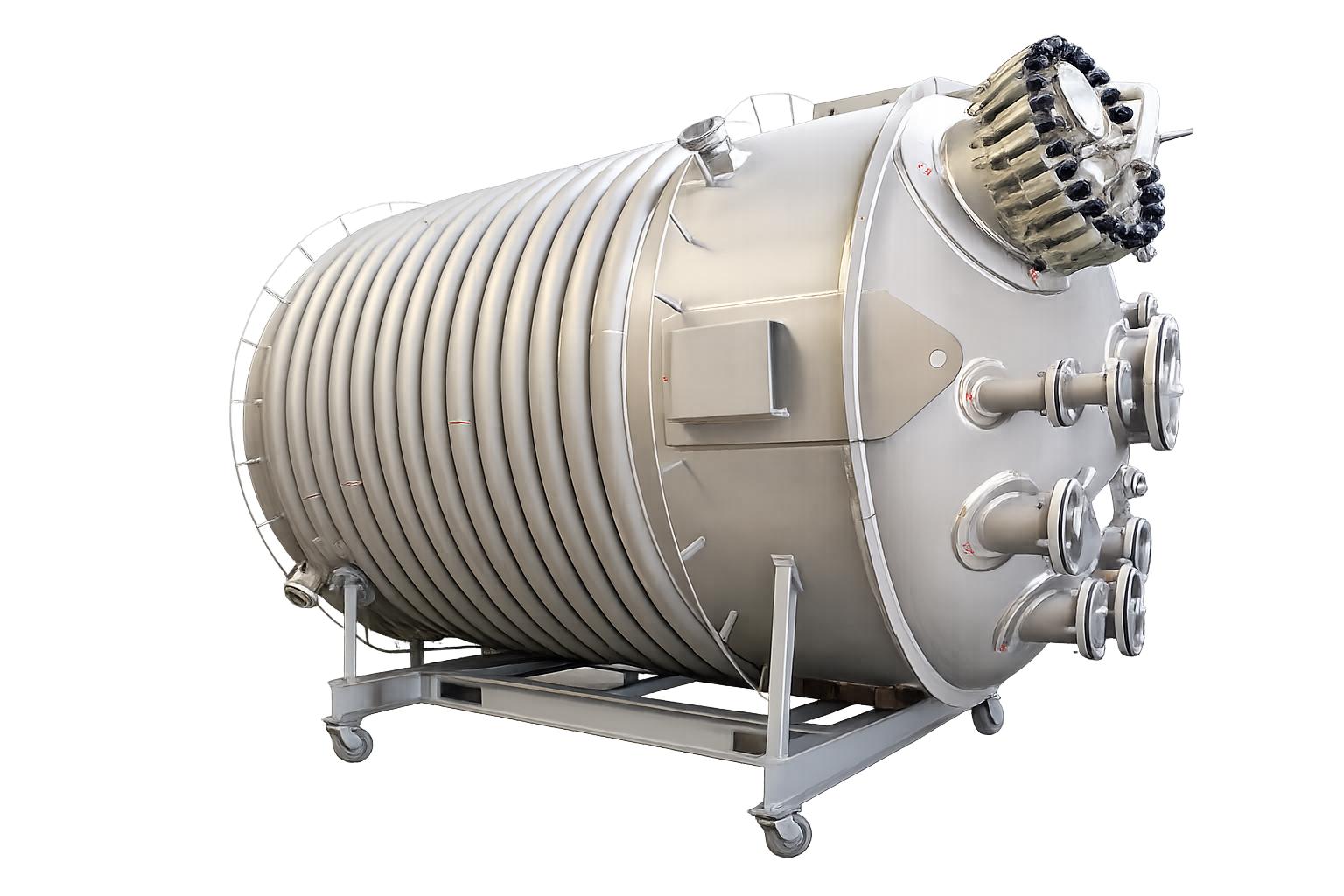 High Pressure Vessel
 Skid Equipment
 Receiver
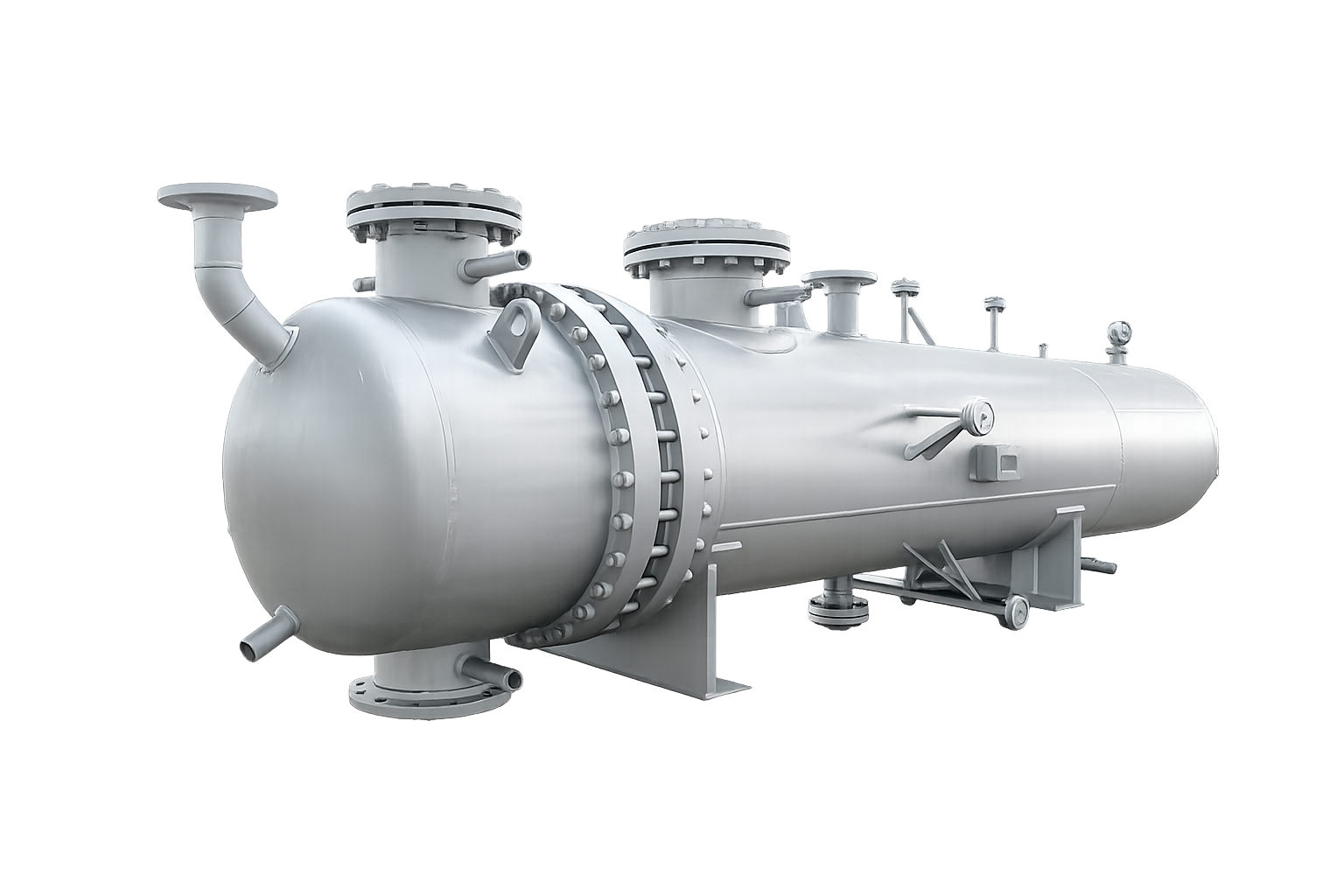 Heat Exchanger
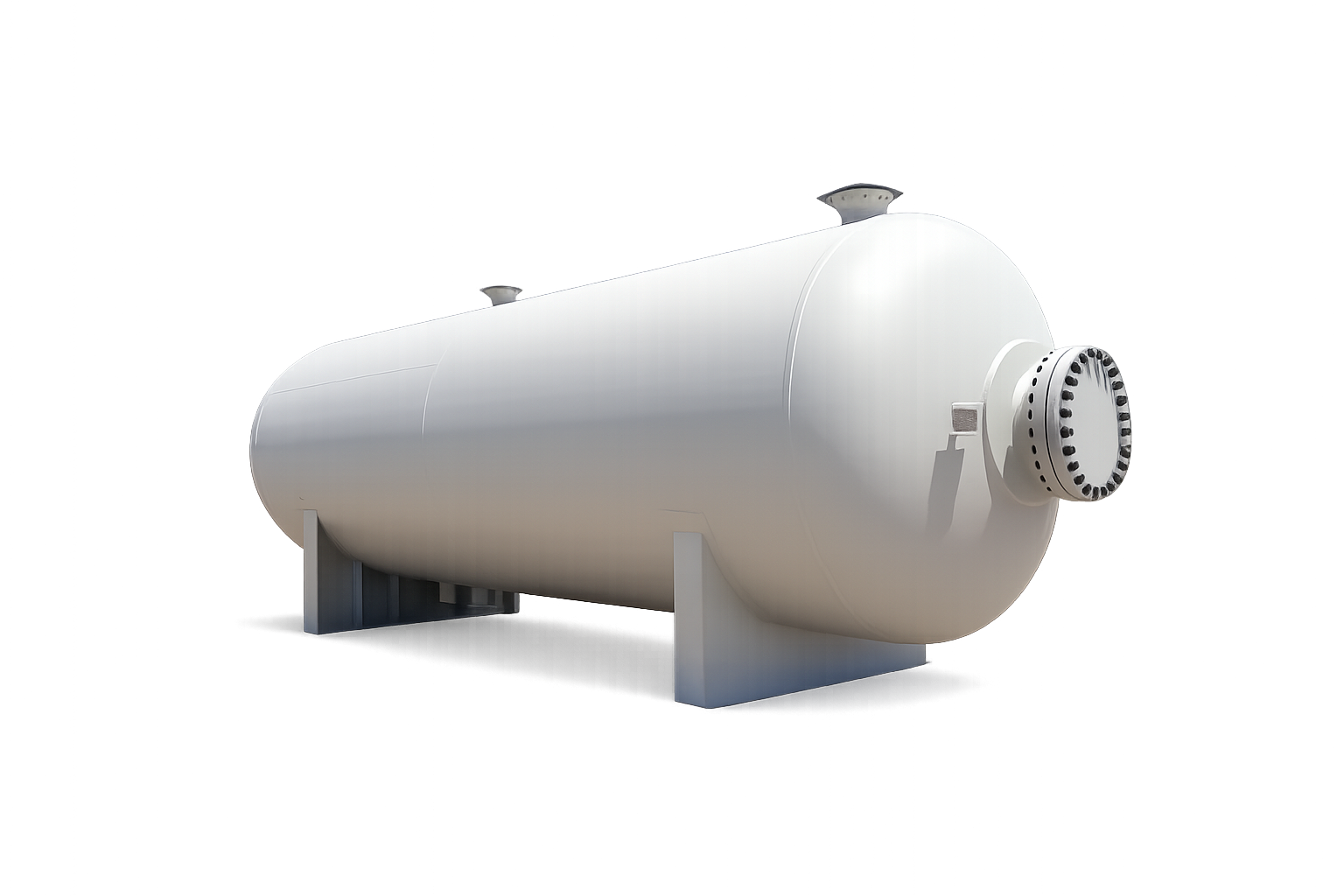 Pressure Vessel
 Silo
 Solvent Stripper
 Pharma Equipments