A complete guide to industrial heat exchangers: shell and tube, U-tube, hairpin, corrugated tube, finned tube and pipe-in-pipe designs, TEMA classes, baffles, materials and how to select and order one.

A heat exchanger is equipment that transfers heat from a hot fluid to a cold fluid without mixing them. The most common industrial type is the shell and tube heat exchanger, designed to TEMA and ASME Section VIII Div 1, in which one fluid flows through tubes and the other around them in the shell. Other types include U-tube, hairpin, corrugated tube, finned tube and pipe-in-pipe.
A heat exchanger moves heat from one fluid to another through a solid wall, so the two fluids never mix. Industrial plants use heat exchangers to heat feed streams, cool products, condense vapours, recover waste heat and keep reactors at temperature. Because energy is the largest running cost in most chemical plants, a well-designed exchanger directly lowers operating cost.
The basic physics is simple: the heat transferred equals the overall heat-transfer coefficient, times the surface area, times the mean temperature difference. A designer can therefore increase duty by raising any of the three: use a more conductive or thinner wall and higher fluid velocity (coefficient), add tubes or length (area), or arrange the flow so the temperature difference stays large (counter-current flow).
Creative Engineering manufactures shell-and-tube, U-tube, hairpin, corrugated tube, finned tube and pipe-in-pipe heat exchangers, plus box heat exchangers and reboilers, at its Ankleshwar works.
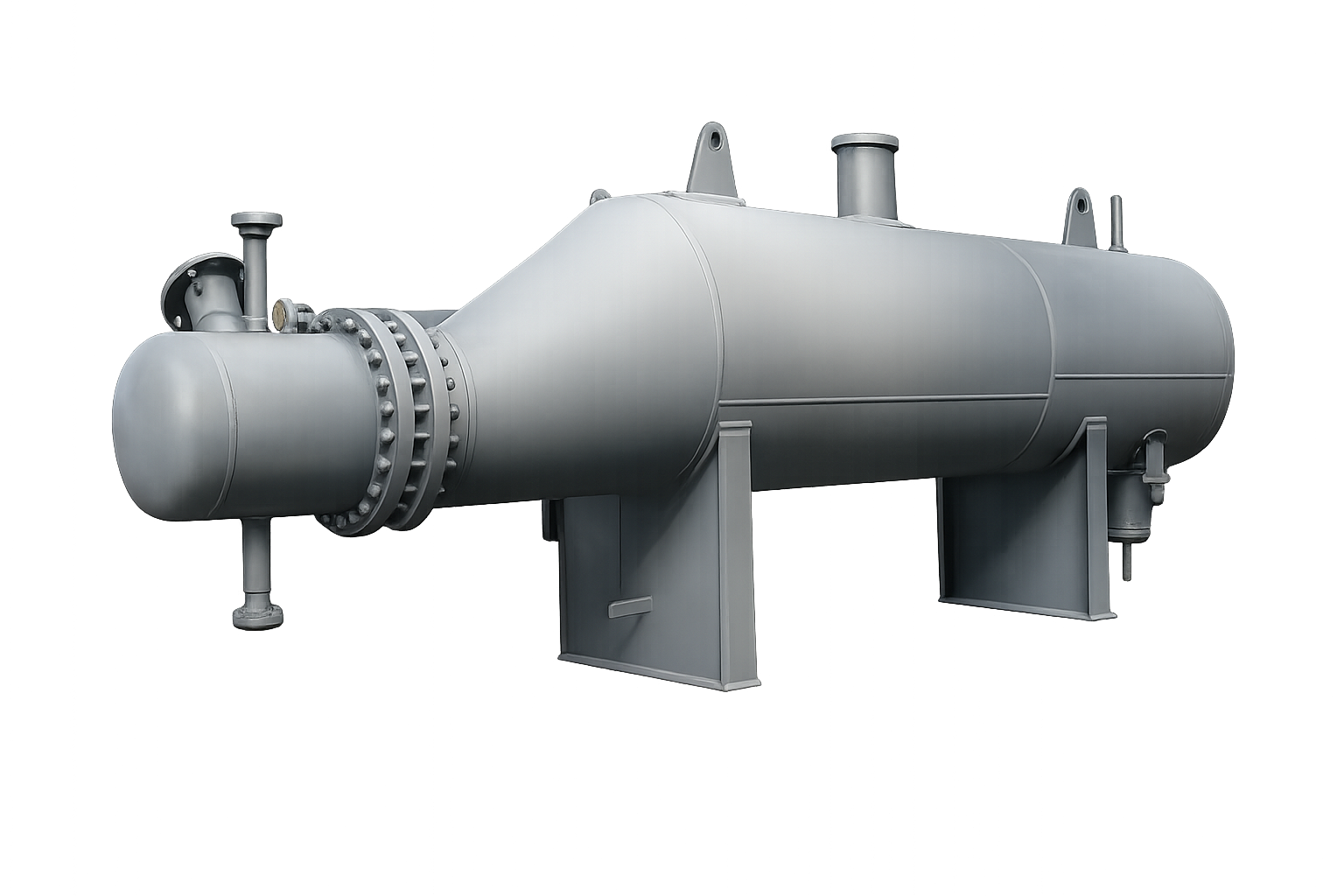
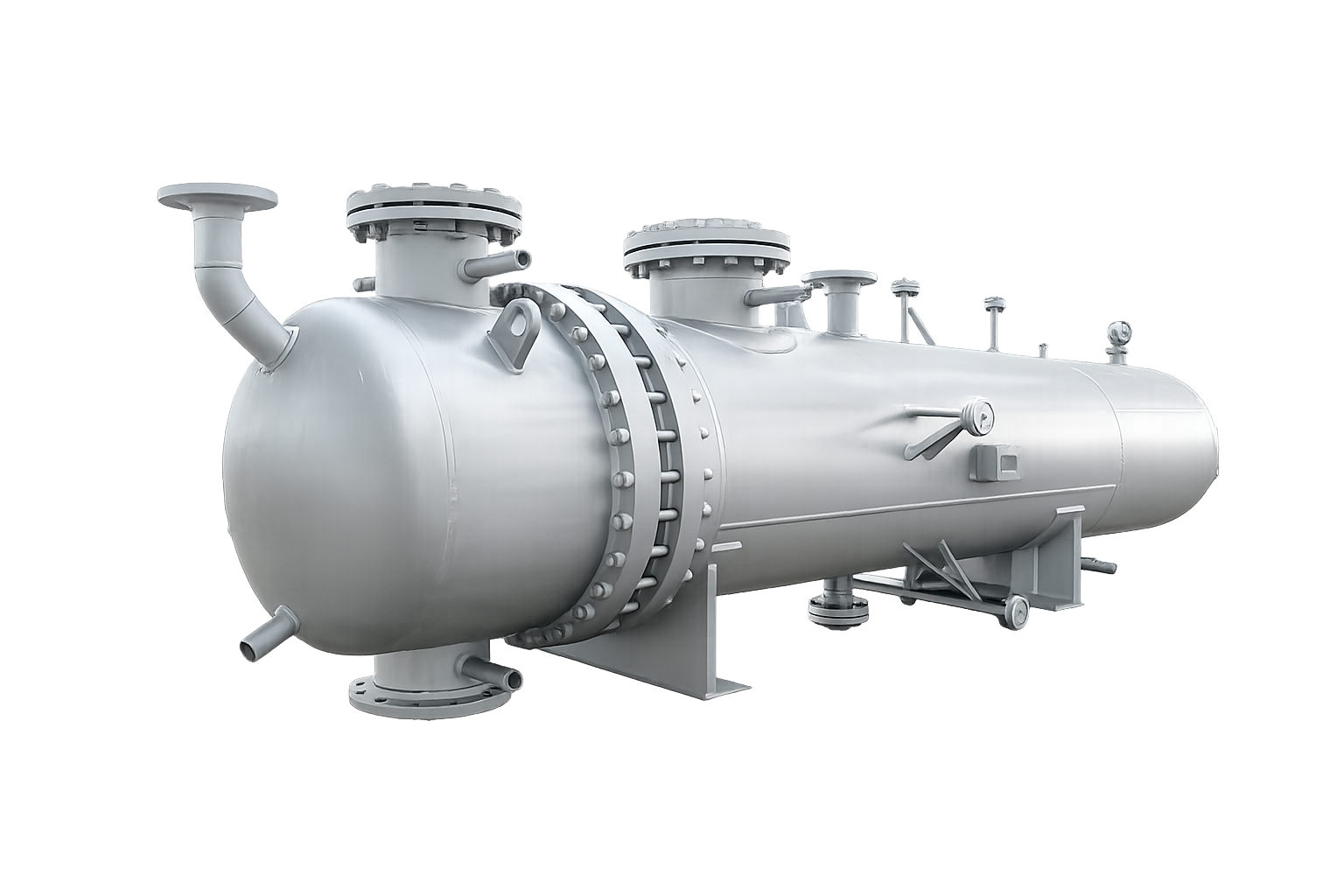
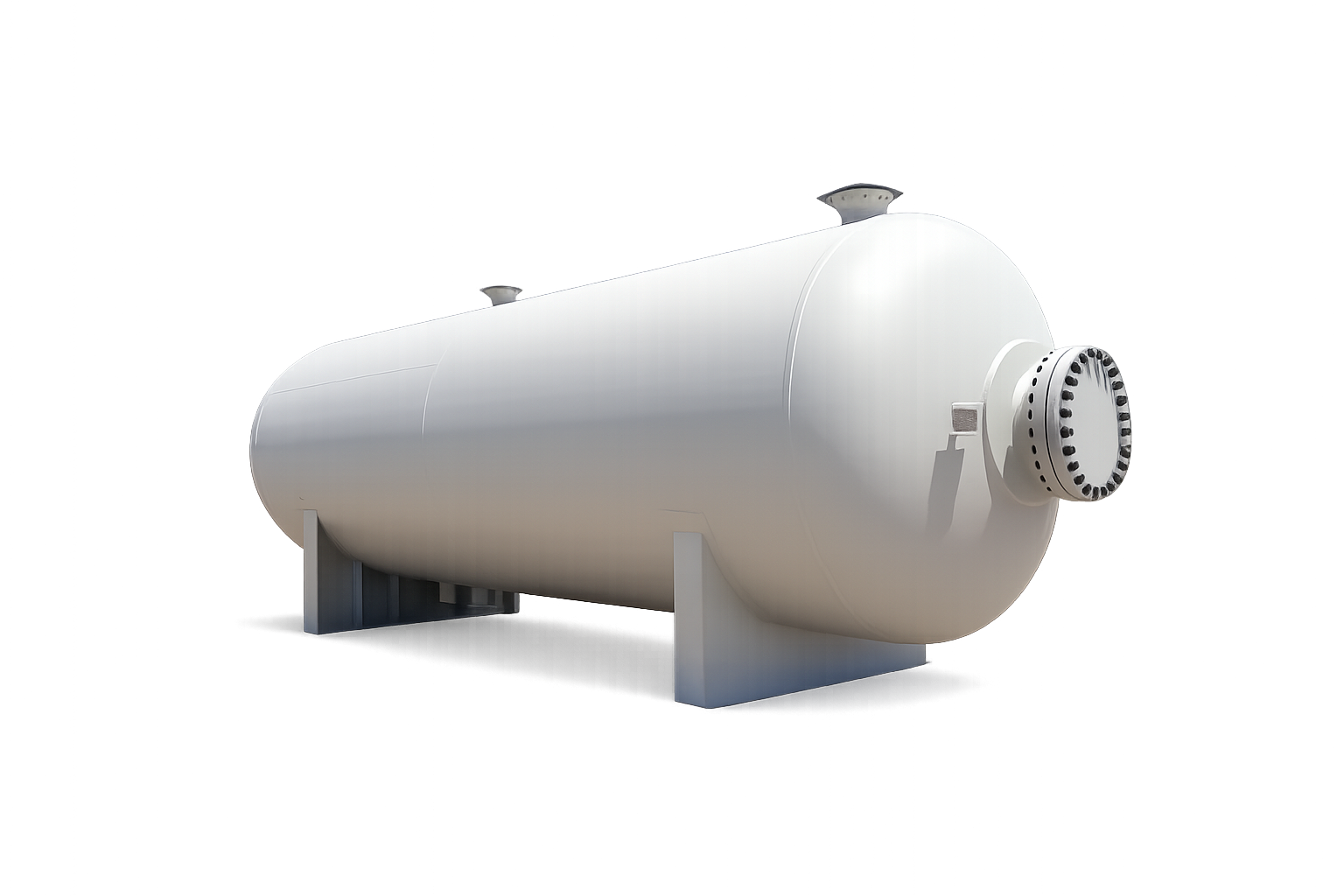
In a shell and tube exchanger a bundle of tubes is held between two tubesheets inside a cylindrical shell. One fluid flows through the tubes (tube side) and the other flows through the shell around the tubes (shell side). Baffles inside the shell force the shell-side fluid to cross the tube bundle several times, which raises velocity and heat-transfer rate. Heat passes from the hotter fluid through the tube wall to the colder one.
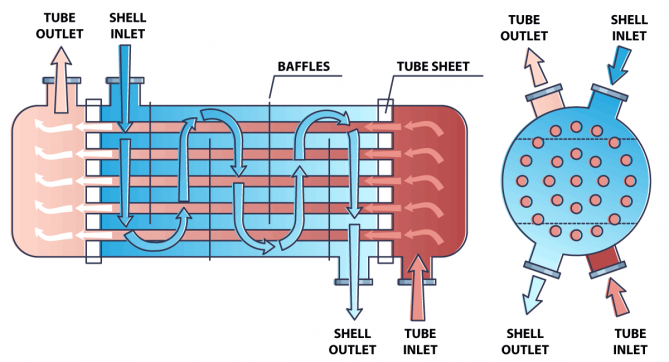
Three terms appear in almost every exchanger data sheet. Heat duty is the amount of heat to be transferred, usually in kW or kcal/h, calculated from flow, specific heat and temperature change. LMTD (log mean temperature difference) is the effective driving temperature difference between the two streams along the exchanger, and it is highest in counter-current flow. Fouling factor is an allowance for the insulating layer of scale, sludge or biological growth that builds on tube surfaces over time.
Because fouling lowers performance with time, an exchanger is designed with extra surface so it still delivers the duty near the end of a cleaning cycle. A designer who knows the fluids can choose velocity, tube side versus shell side and cleaning method to keep fouling low. If your data sheet leaves out the fouling factor, any quote is based on an assumption, so state it or ask your supplier what value was used.
| Term | Meaning | Why it matters |
|---|---|---|
| Duty (Q) | Heat transferred per unit time | Sets the size of the exchanger |
| LMTD | Mean temperature driving force | Higher LMTD means smaller area |
| U value | Overall heat-transfer coefficient | Depends on fluids, velocity, wall and fouling |
| Fouling factor | Resistance of deposits | Adds extra area as safety margin |
| Pressure drop | Loss of pressure through the unit | Affects pump size and operating cost |
Shell and tube exchangers are the default for high pressure, high temperature and fouling services, while plate exchangers give higher efficiency in a smaller footprint for clean, low-pressure liquids. Hairpin and pipe-in-pipe suit smaller duties at high pressure, and finned tubes suit gas-side duty.
| Exchanger | Pressure and temperature | Cleaning | Footprint |
|---|---|---|---|
| Shell and tube | High | Tubes or removable bundle | Large |
| Plate and frame | Low to moderate (gasket limits) | Open and clean | Small |
| Hairpin | High | Good, true double-pipe access | Moderate |
| Finned tube | Moderate | Air-side only | Large |
Our focus is on fabricated shell-and-tube and related heavy-duty exchangers built under code, with full documentation.
Creative Engineering also supplies equipment for pre-heating and heat recovery loops in distillation and reaction systems, such as the reboiler at the base of a distillation column.
| Type | Key feature | Best suited for |
|---|---|---|
| Shell and tube (fixed tubesheet) | Simple, economical, tubes fixed at both ends | Clean services, moderate temperature difference |
| Floating head | One tubesheet moves with expansion; bundle removable | Large temperature difference, fouling services needing cleaning |
| U-tube | Tubes bent in a U, free to expand, single tubesheet | Thermal cycling and high temperature difference |
| Kettle reboiler | Oversized shell for vapour disengagement | Boiling duty at distillation column bases |
| Corrugated tube | Corrugated walls create turbulence | Viscous or fouling fluids |
| Hairpin (double-pipe) | Compact, true counter-current flow | High pressure, high temperature, small duty |
| Finned tube | Extended surface on tubes | Gas heating or cooling, low-coefficient side |
| Pipe-in-pipe | Pipe inside pipe, low hold-up | Small duty, high-pressure or viscous fluids |
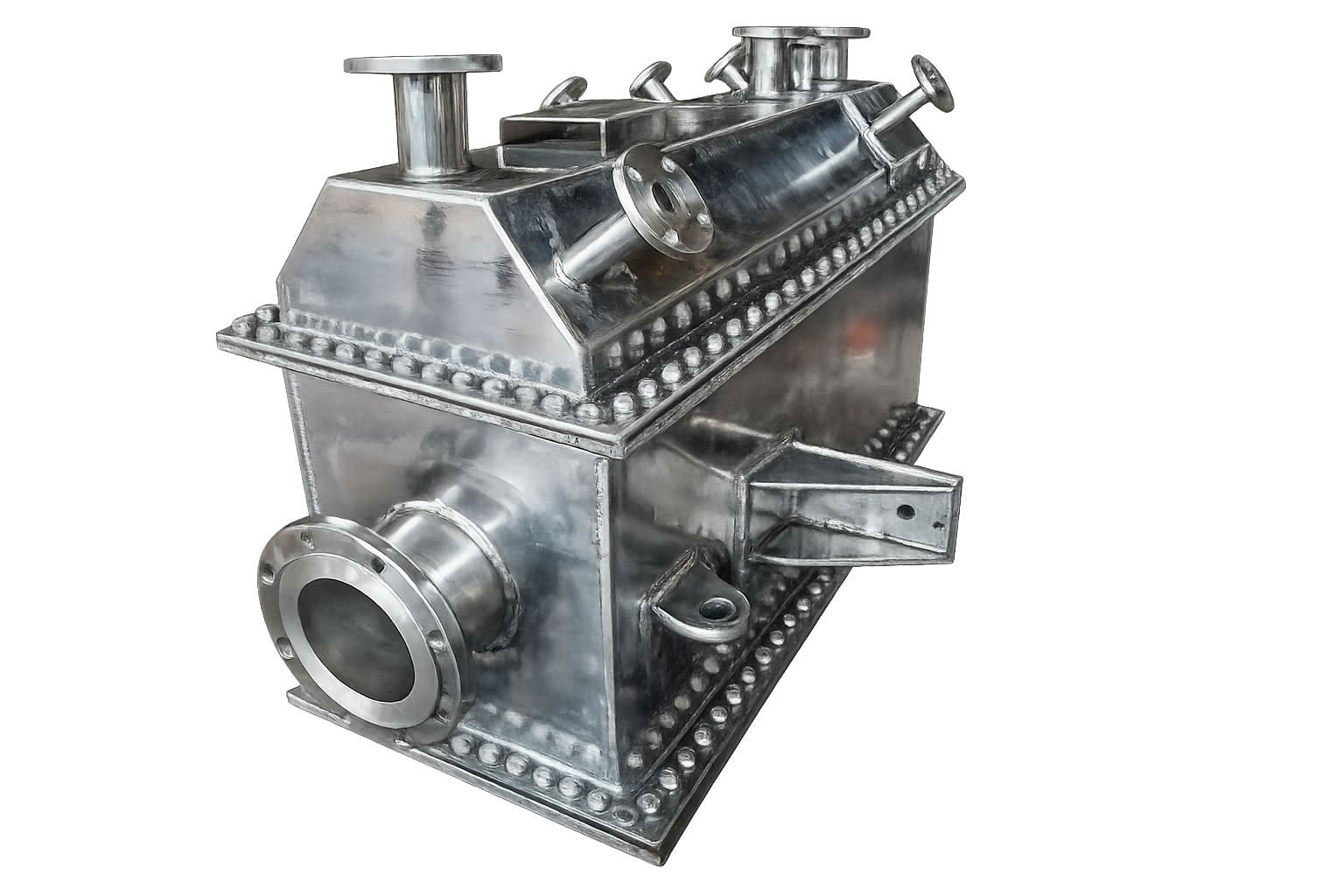
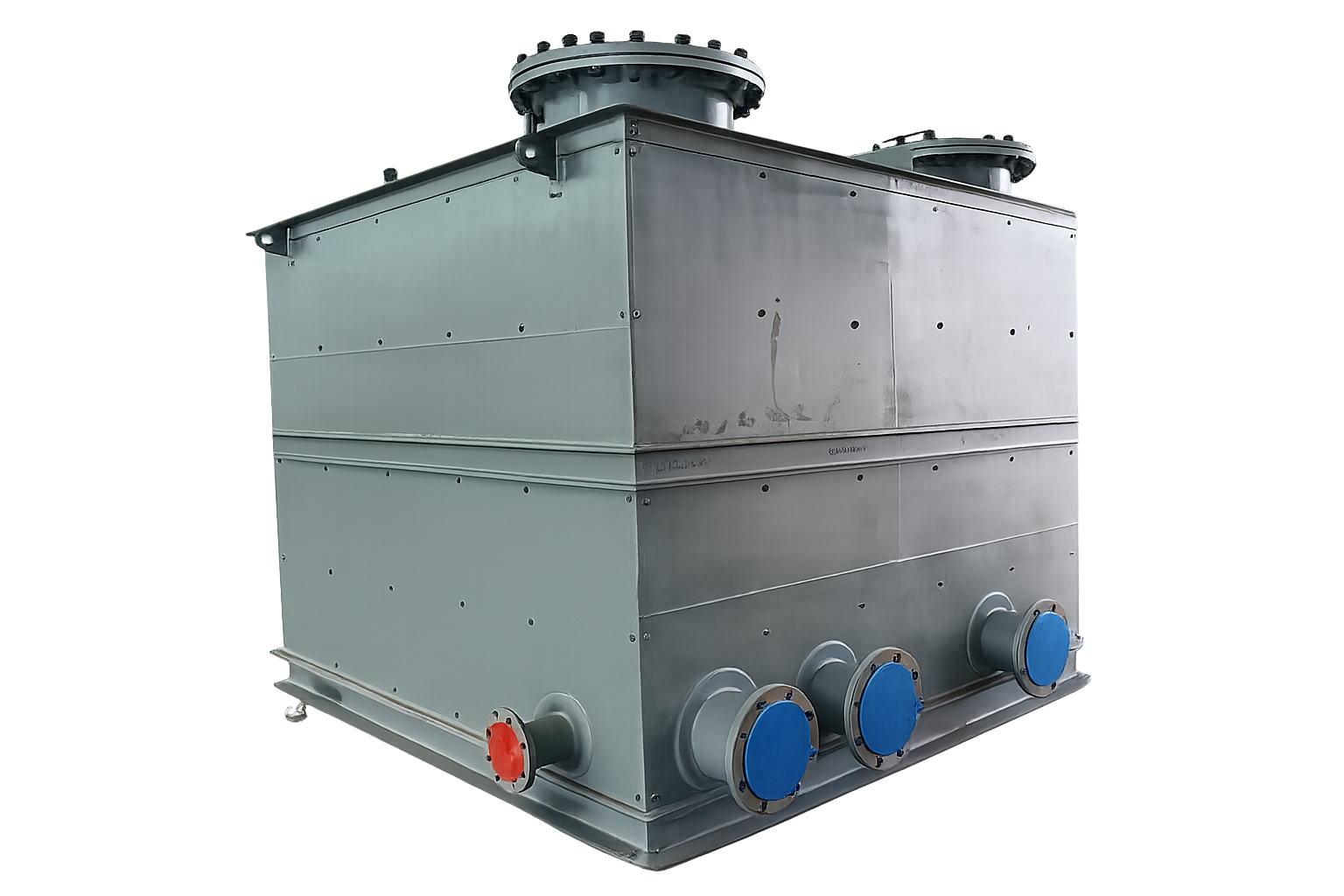
Each configuration is selected from the duty, fouling tendency, pressure, temperature difference and the need for cleaning. Where a rectangular or compact layout is needed, our box heat exchanger is built to customer drawings.
The Tubular Exchanger Manufacturers Association (TEMA) standard governs mechanical design, tolerances and construction of shell-and-tube exchangers. TEMA defines three classes:
TEMA also names the front head, shell and rear head types with letter codes (for example AES, BEM, AEU). Specifying the TEMA type and class in the enquiry removes ambiguity about the intended construction. Creative Engineering builds to TEMA classes B, C and R and designs the pressure parts to ASME Section VIII Div 1, with IBR and IS 4503 where applicable.
Baffle type changes shell-side flow and pressure drop. Options include single segmental (the common choice), double segmental (lower pressure drop), no-tubes-in-window and rod baffles, which reduce vibration and fouling. Tube layout (triangular for compactness, square for easy cleaning) and tube pitch are chosen for the fluid and cleaning method. Tubesheet and joint design (expanded, welded, or both) depends on pressure and leakage risk.
Tubes, shell and heads are supplied in carbon steel (SA 516, IS 2062, SA-333), stainless steel (SS 304, 304L, 316, 316L, 316Ti, 321, 347) and exotic alloys (Duplex, Super Duplex, Inconel, Hastelloy, CuNi, 904L, titanium). For pharma and food duty the surfaces are electro-polished and passivated, and for external protection blasting and painting are standard.
Creative Engineering builds exchangers to customer drawings or from process data for the chemical, petrochemical, pharma and oil and gas sectors, for domestic and export customers.
| Problem | Cause | Remedy |
|---|---|---|
| Reduced heat transfer | Fouling or scaling on tubes | Cleaning schedule, removable bundle design, higher velocity |
| Tube leaks | Corrosion, vibration, thermal stress | Right MOC, baffle support, U-tube or floating head for expansion |
| High pressure drop | Fouling, wrong baffle spacing | Cleaning, redesign of baffle cut and spacing |
| Cross-contamination | Tube or tubesheet leak | Pressure test, double tubesheet where critical |
| Thermal shock | Sudden startup | Controlled warm-up, expansion provision |
Regular cleaning, correct start-up and shut-down procedures, and periodic pressure testing keep an exchanger efficient for decades.
A heat exchanger transfers heat between two fluids through a metal wall without mixing them. In a shell and tube exchanger one fluid flows in tubes and the other around them in the shell.
Common types include shell and tube, U-tube, floating head, hairpin, corrugated tube, finned tube, pipe-in-pipe, plate and box-type exchangers.
TEMA is the standard of the Tubular Exchanger Manufacturers Association that governs mechanical design and fabrication of shell-and-tube exchangers; classes B, C and R define chemical, commercial and severe-duty service.
A U-tube exchanger uses tubes bent in a U shape fixed to a single tubesheet, allowing free thermal expansion and suiting services with large temperature differences.
A fixed tubesheet unit is simpler and cheaper but cannot absorb large expansion differences or allow mechanical cleaning of the shell side, while a floating head unit allows expansion and a removable bundle.
Carbon steel for general duty, SS 304 or 316L for corrosive and pharma service, and Duplex, Hastelloy, Inconel or titanium for aggressive fluids.
Creative Engineering manufactures shell and tube, U-tube, hairpin, corrugated and box heat exchangers with ASME U and R stamps, IBR approval and TEMA design in Ankleshwar, Gujarat.
Creative Engineering, Ankleshwar, Gujarat designs and manufactures process equipment to ASME and IBR codes. Share your drawing or process data and our team will respond with a technical offer.






 Reactor
 High Pressure Vessel
 Skid Equipment
 Receiver
 Heat Exchanger
 Pressure Vessel
 Silo
 Solvent Stripper
 Pharma Equipments