How to choose an agitator for a reactor or mixing vessel: impeller types, viscosity ranges, flow patterns, baffles, shaft seals, drives and the process data a manufacturer needs.

Choose an agitator by viscosity and mixing task: propeller, hydrofoil and pitched-blade impellers for low-viscosity blending and solids suspension, turbine and paddle for general mixing and gas dispersion, anchor for viscous masses and wall heat transfer, helical ribbon for very viscous or shear-sensitive materials, and Maxblend or retreat curve for wide viscosity ranges with gentle shear.
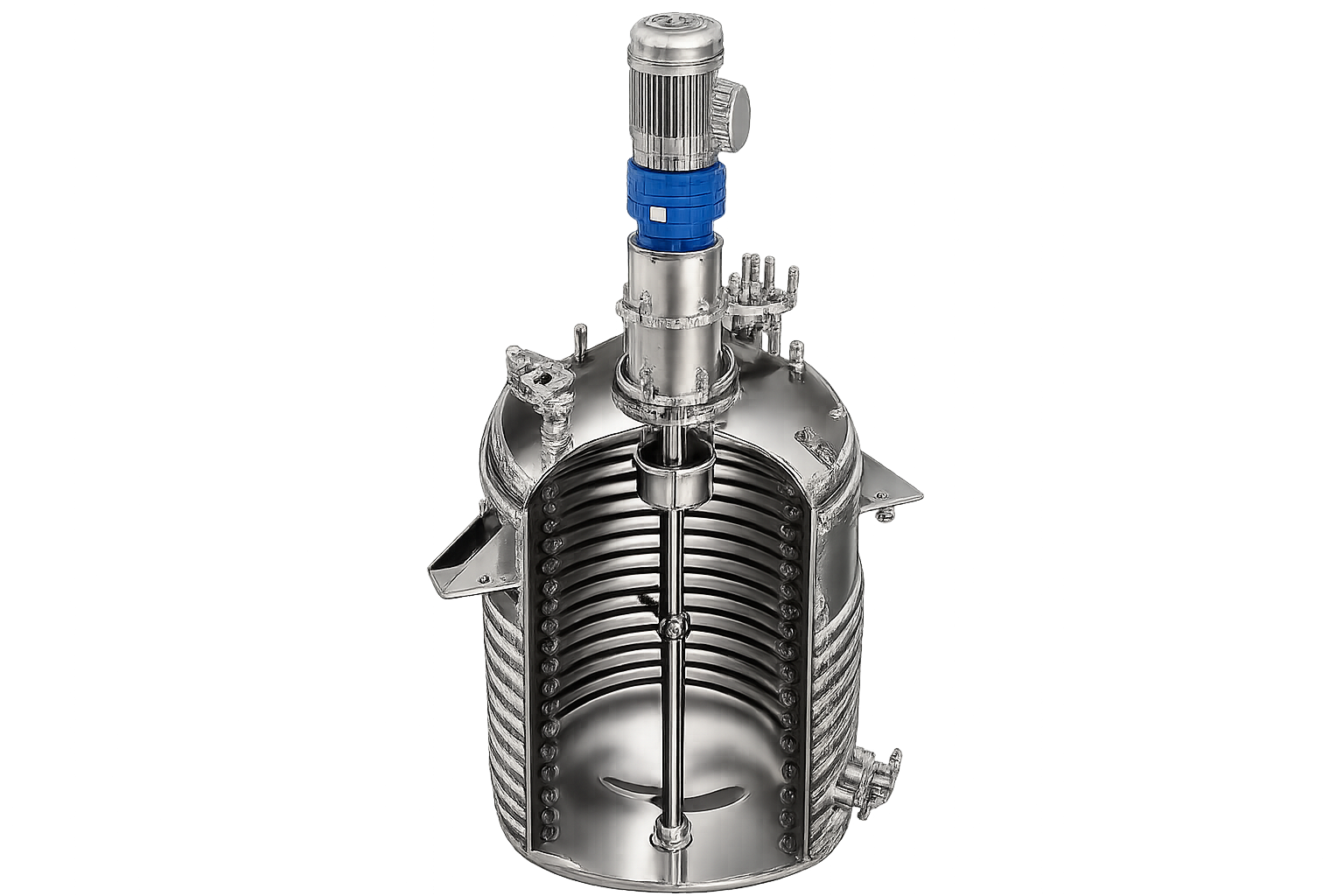
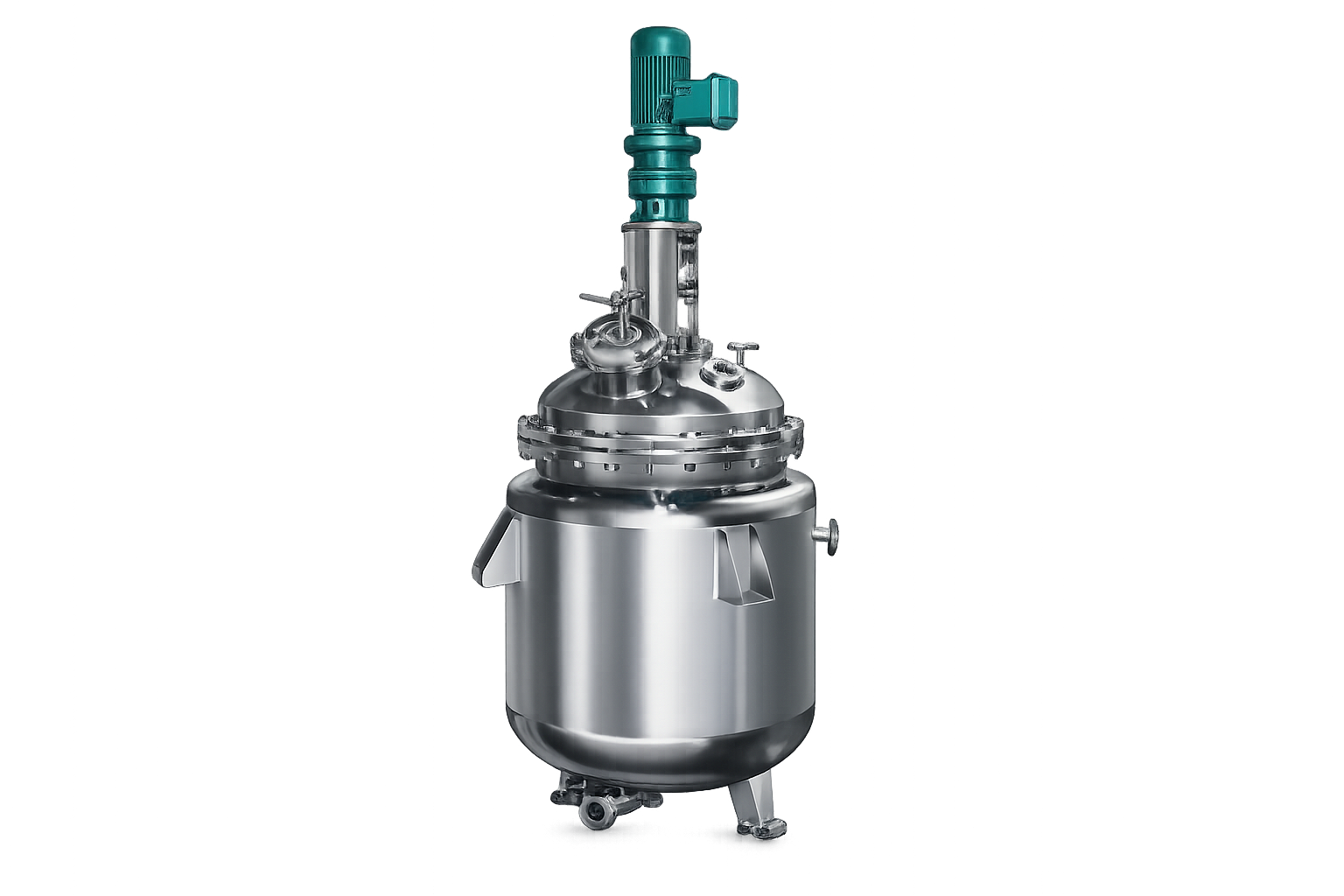
An agitator (also called a mixer or stirrer) is the rotating assembly in a reactor or vessel that moves the liquid. It consists of an impeller mounted on a shaft, a drive (motor and gearbox) and a seal where the shaft enters the vessel. Its job may be to blend miscible liquids, suspend or dissolve solids, disperse gas into liquid, create an emulsion, or improve heat transfer to the jacket. Each of these tasks needs a different balance of flow (volume moved) and shear (local intensity of mixing).
Poor agitation shows up as long batch times, hot spots, unreacted solids at the bottom, product quality variation and scale-up problems. Good agitator selection is therefore one of the highest-value decisions in reactor design, and it should be made together with the vessel geometry, baffles and heat transfer arrangement described in our guides what is a reactor and what is a reaction vessel.
| Flow pattern | How it moves liquid | Typical impellers | Good for |
|---|---|---|---|
| Axial flow | Pushes liquid along the shaft axis, then circulates it | Propeller, pitched blade, hydrofoil | Blending, solids suspension, heat transfer, low power per volume pumped |
| Radial flow | Throws liquid outward toward the wall | Flat-blade (Rushton) turbine, paddle | Gas dispersion, liquid-liquid dispersion, higher shear |
| Close-clearance, wall-scraping | Moves the whole mass slowly near the wall | Anchor, helical ribbon | High viscosity, heat transfer through the jacket |
Many reactors use a combination, for example a pitched-blade or hydrofoil impeller for bulk flow and a radial turbine at the bottom for gas or solids dispersion.
Large impeller whose shape follows the vessel wall with small clearance. It sweeps the wall, which prevents material from sticking and keeps heat moving to and from the jacket. It is used for viscous liquids, pastes and processes where wall heat transfer matters, but it gives limited top-to-bottom mixing, so it is often combined with an inner impeller.
Flat or curved blades on a disc or hub throw liquid radially. They are general-purpose, relatively simple, and good for gas dispersion and blending low to medium viscosity liquids. Paddles with large, slow-moving blades suit gentle mixing.
A helical ribbon wound around the shaft moves viscous material up the wall and down the centre. It is used for very viscous and shear-sensitive materials such as polymers, resins and pastes.
These axial-flow impellers move large volumes of liquid at low power. Hydrofoils have a streamlined shape that improves efficiency and is gentle on the liquid, making them ideal for blending and solids suspension in low-viscosity systems.
Wide-blade impellers with large surface area that give good mixing over a broad range of viscosities with low shear. They are used where products are sensitive or the viscosity changes during the batch.
| Viscosity range | Typical impeller choices | Notes |
|---|---|---|
| Low (water-like, up to about 500 cP) | Hydrofoil, propeller, pitched blade, turbine | Baffles needed to prevent swirling |
| Medium (about 500 to 10,000 cP) | Pitched blade, turbine, paddle, Maxblend | Baffles may be reduced; check power |
| High (about 10,000 to 100,000 cP) | Anchor, Maxblend, anchor with inner impeller | Wall clearance and torque are critical |
| Very high (above about 100,000 cP) | Helical ribbon, anchor with scraper | Slow speed, large motor torque |
In a low-viscosity liquid, a rotating impeller tends to make the whole liquid swirl around with it, forming a central vortex and poor top-to-bottom mixing. Baffles, usually four vertical strips fixed close to the wall, break up the swirl and turn rotation into axial and radial flow, greatly improving mixing. In viscous liquids baffles are not needed and may create dead zones, which is why anchor and helical impellers are used without them. The ratio of impeller diameter to vessel diameter, the impeller height above the bottom and the liquid depth all influence mixing, so impeller placement is part of the design, not an afterthought. Large vessels often use two or more impellers on one shaft to cover tall liquid depth.
Creative Engineering fabricates agitators and homogenisers in its own machine shop with dynamic balancing, so the agitator and vessel are matched by one supplier.
Agitator power depends strongly on speed and impeller size: for turbulent flow, power rises with the cube of speed and the fifth power of diameter. That means a small increase in speed or diameter makes a large increase in motor load, which is why sizing the drive correctly matters. Designers use the power number of the chosen impeller, the fluid density and the speed to estimate power, and check tip speed to avoid excessive shear on sensitive materials.
When scaling up a mixing process, no single rule fits every case. Keeping power per unit volume constant tends to preserve mixing in many blending duties, keeping tip speed constant protects shear-sensitive products, and keeping mixing time constant gives the most similar behaviour but demands high power at large scale. Process development data and, for critical duties, pilot trials should guide the final choice.
| Scale-up criterion | Preserves | Drawback |
|---|---|---|
| Constant power per volume | Overall mixing intensity in blending | Tip speed rises with scale |
| Constant tip speed | Shear level on the product | Mixing slows at large scale |
| Constant mixing time | Process timing | Power demand grows very fast |
| Symptom | Likely cause | What to check |
|---|---|---|
| Vortex and air entrainment | No baffles, speed too high, low liquid level | Baffles, speed, liquid depth over impeller |
| Solids settling at the bottom | Impeller too high or too weak | Impeller position, axial-flow impeller, speed |
| Motor overload | Viscosity higher than design, wrong impeller | Fluid viscosity at operating temperature, impeller choice |
| Seal leakage | Shaft wobble, wear, wrong seal | Shaft runout, seal face condition, barrier fluid |
| Vibration or noise | Imbalance, loose parts, critical speed | Dynamic balancing, bolts, shaft stiffness |
| Poor heat transfer | Weak wall flow, fouled jacket surface | Impeller near the wall, jacket flow and cleanliness |
Regular inspection of the seal, bearings, gearbox oil and shaft alignment keeps an agitator running reliably. We offer preventive maintenance programs and breakdown support for the equipment we supply.
Agitators are built in the same materials as the vessel: stainless steel (304, 316L, 316Ti, 321), Duplex, Hastelloy, Inconel and other alloys for corrosive service, with carbon steel, rubber-lined or PTFE-sheathed designs for specific duties. For pharma service, polished impellers and shafts with smooth welds avoid product traps. Surface finishes include blasting, mirror polishing and electro-polishing.
Share these on the contact page. Our reactor team will propose the impeller, baffles and drive with the vessel.
Anchor, helical ribbon and Maxblend-type impellers are used for high-viscosity materials because they move material near the wall and through the bulk at low speed.
Both produce mainly radial flow. A turbine has smaller blades on a disc and runs faster with more shear, while a paddle has large flat blades and runs slower for gentler mixing.
Baffles stop the liquid from swirling with the impeller, converting rotation into top-to-bottom flow and improving mixing in low-viscosity systems.
A hydrofoil is an axial-flow impeller with a streamlined blade profile that moves large volumes of liquid efficiently at low shear.
A Maxblend is a wide-blade impeller that gives good mixing over a wide viscosity range with low shear and low power.
The seal depends on pressure, temperature and fluid; double mechanical seals with barrier fluid are used for toxic, flammable or high-pressure service.
Yes. Creative Engineering fabricates agitators, homogenisers and dynamically balanced rotating assemblies with its reactors and vessels.
Provide viscosity range, volume, vessel dimensions, mixing task (blend, suspend, disperse), solids or gas phases and temperature or pressure. The manufacturer then selects impeller type, baffles, drive and seal.
Not usually. Many reactors are cleaned in place with spray balls, but the agitator can be lifted out through the top for inspection and seal service where the design allows.
Creative Engineering, Ankleshwar, Gujarat designs and manufactures process equipment to ASME and IBR codes. Share your drawing or process data and our team will respond with a technical offer.




 Reactor
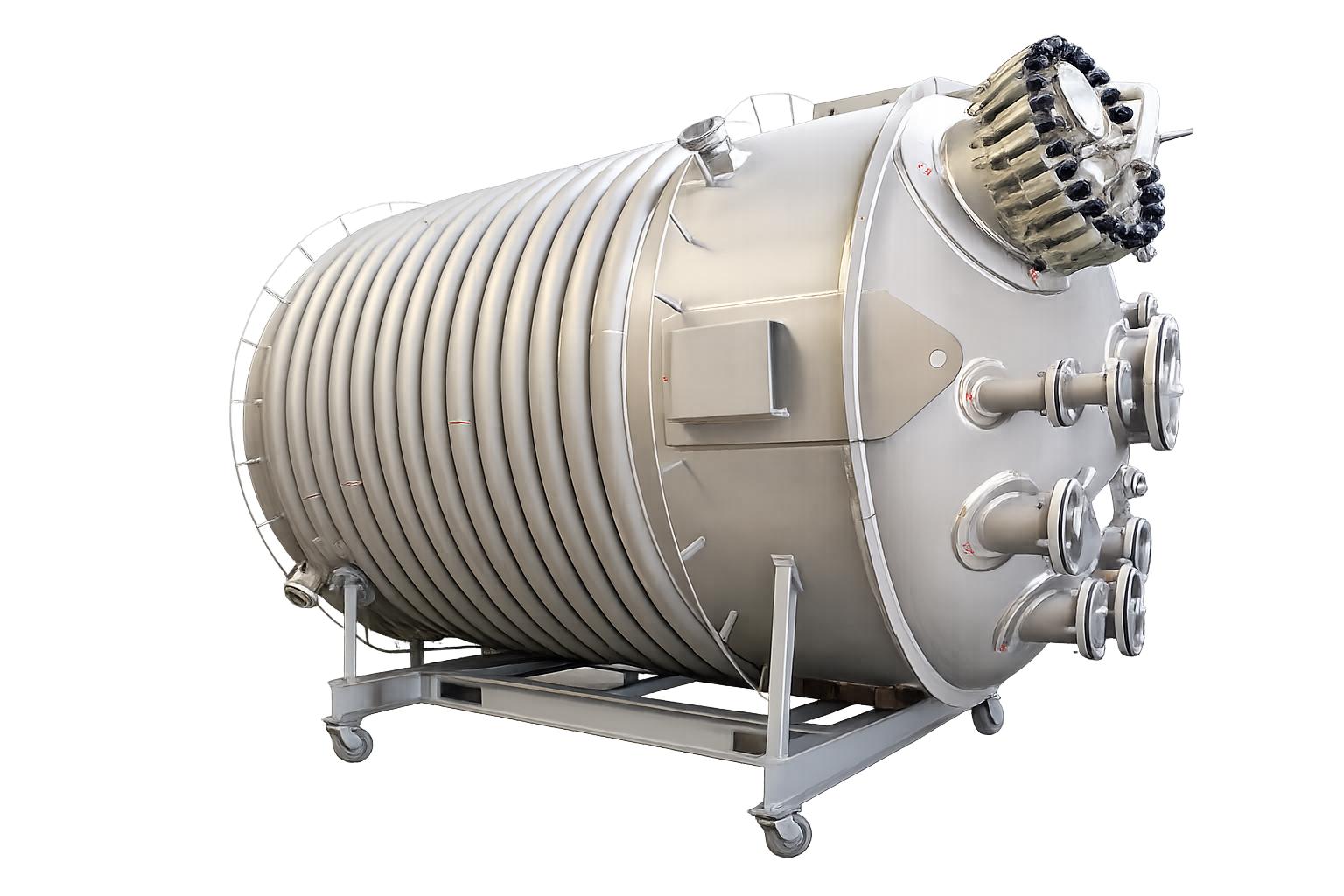 High Pressure Vessel
 Skid Equipment
 Receiver
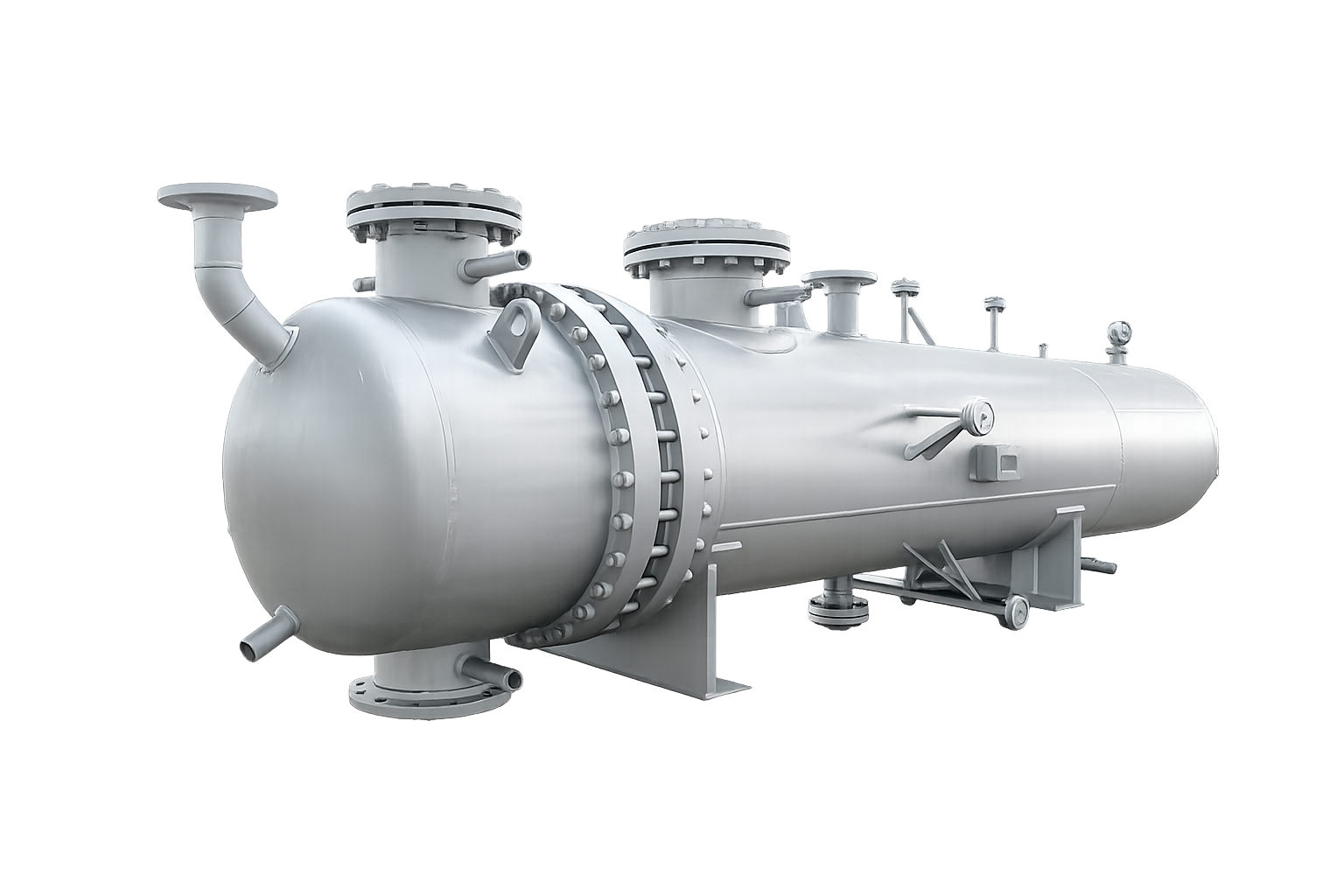 Heat Exchanger
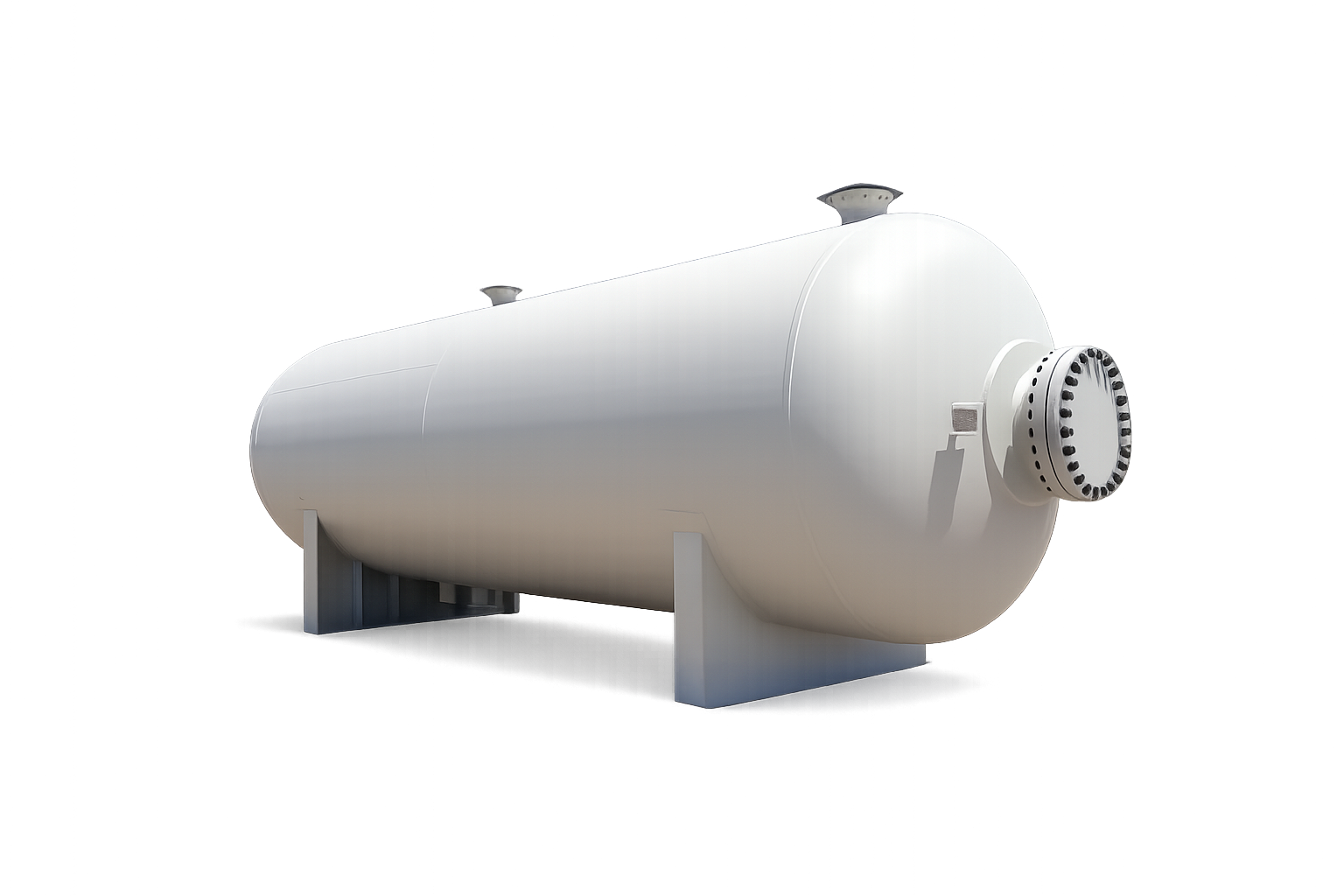 Pressure Vessel
 Silo
 Solvent Stripper
 Pharma Equipments