A clear comparison of the main chemical reactor types: batch, semi-batch, CSTR, plug flow (PFR), packed bed and fluidised bed, plus the jacket and agitator options used in stirred batch reactors in pharma and specialty chemical plants.

The main types of chemical reactors are batch, semi-batch, continuous stirred-tank (CSTR), plug flow (PFR), packed-bed and fluidised-bed reactors. In specialty chemical, API and agrochemical plants the stirred batch reactor dominates, and it is further classified by how heat is transferred: full jacket, limpet (half-pipe) coil, or internal coil.
Chemical reactors can be classified in several ways, and it helps to keep the classifications separate. The first is by mode of operation: batch, semi-batch or continuous. The second is by flow pattern and mixing: well-mixed (stirred) or plug flow. The third is by phases present: homogeneous (single phase) or heterogeneous (gas-liquid, liquid-solid, gas-solid). The fourth is the mechanical construction: how heat is added or removed, and how the contents are mixed.
Textbooks usually cover the first two, while buyers of equipment care most about the fourth, because it is what a fabricator actually builds. This guide covers all four so you can match the process thinking to the purchase specification. For the basics, start with our introduction, what is a reactor.
In a batch reactor all reactants are charged, the reaction runs for a set time, and the whole batch is discharged. Conditions change with time inside the vessel: concentration falls as reactants are consumed while temperature is controlled by the jacket. Batch reactors are flexible because a single vessel can produce many products by changing the recipe, and they handle slow reactions, solids and high-value products with ease.
The disadvantages are downtime between batches (charging, heating, cooling, discharging, cleaning), batch-to-batch variation and the labour needed. Even so, batch reactors are the standard in the pharmaceutical, API, dye, pigment, agrochemical and fine chemical industries, where volumes per product are modest and product variety is high.

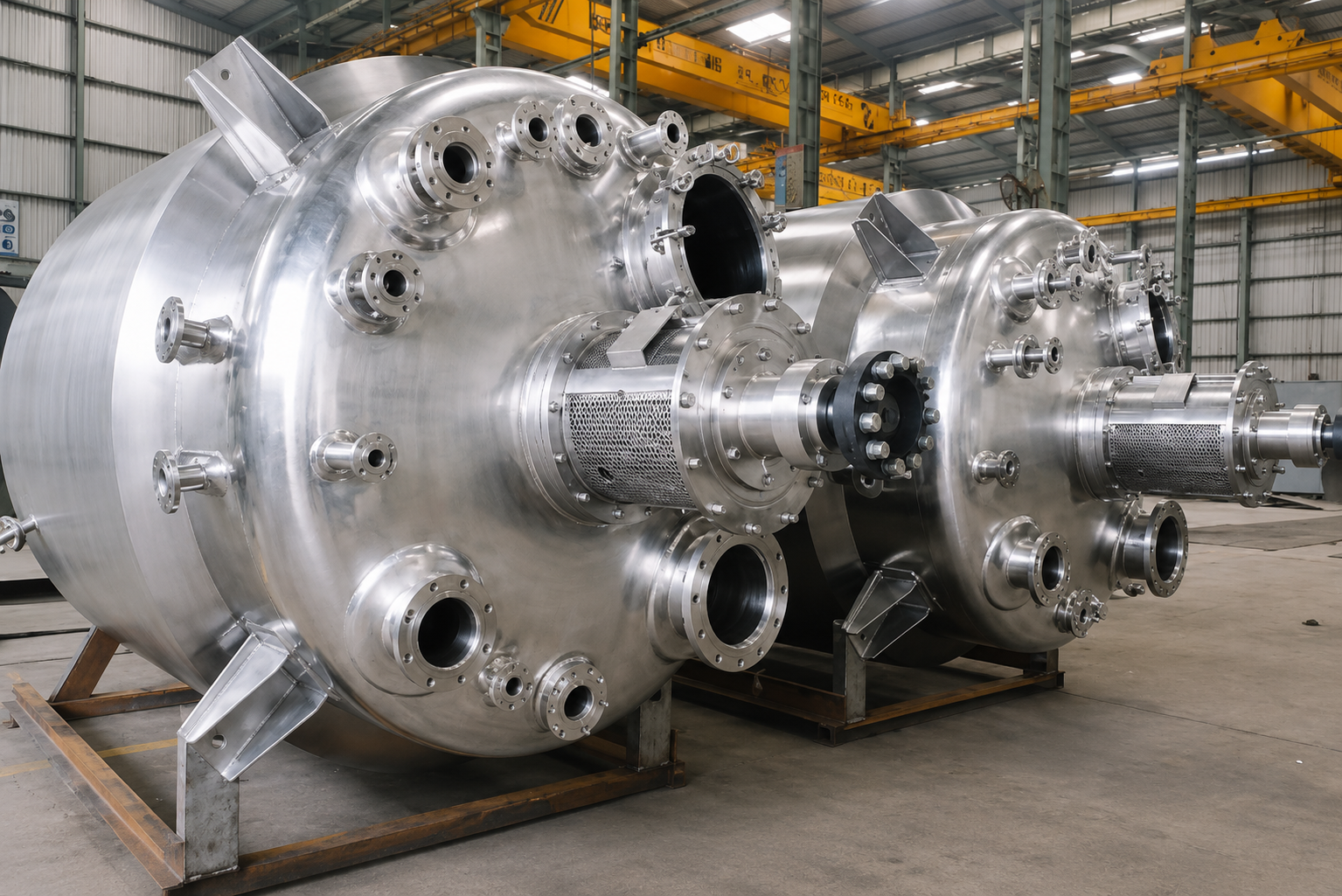
A semi-batch reactor starts with part of the reactants in the vessel and adds one reactant gradually, or removes a product continuously during the run. Feeding slowly controls the rate of heat release for strongly exothermic reactions, keeps the concentration of a reactive ingredient low to avoid side reactions, or lets a gas bubble through a liquid. The equipment looks like a batch reactor, with dosing nozzles, dip pipes, a condenser and a controlled heating and cooling system. Most “batch” reactors in specialty chemical plants actually operate in semi-batch mode.
A CSTR receives feed and discharges product continuously while an agitator keeps the contents uniform. Because the composition inside equals the composition leaving, the reaction runs at the exit concentration, which for most reactions means a slower rate than a plug-flow reactor of the same volume. CSTRs are valued for steady temperature control, easy handling of viscous and multiphase mixtures and simple construction. Several CSTRs in series approach the performance of a plug-flow reactor.
In a plug flow reactor fluid moves through a tube as a series of thin "plugs" with no mixing along the flow direction. Each plug behaves like a tiny batch reactor, so the concentration falls along the length of the tube. For the same conversion a PFR needs less volume than a CSTR for most reaction orders, so it suits high-volume, fast reactions. Tubular reactors with jackets or shell-and-tube cooling are used in petrochemical and polymer plants.
| Reactor | Operation | Mixing | Typical use |
|---|---|---|---|
| Batch | Charge, react, discharge | Stirred | Pharma, API, fine and specialty chemicals |
| Semi-batch | Gradual addition during the run | Stirred | Exothermic or gas-liquid reactions |
| CSTR | Continuous in and out | Fully mixed | Steady liquid-phase reactions, polymerisation |
| PFR / tubular | Continuous flow in a tube | No axial mixing | High-volume, fast reactions |
| Packed bed | Fluid through catalyst particles | Plug-like | Catalytic gas-phase and liquid-phase reactions |
| Fluidised bed | Gas lifts solid particles | Well mixed solids | Catalytic cracking, combustion, drying-type reactions |
A packed-bed reactor holds solid catalyst pellets in a vessel through which fluid flows. It is the workhorse of catalytic processing, from hydrogenation to ammonia synthesis. A fluidised-bed reactor passes gas upward through fine solids at a velocity that lifts them into a bubbling, fluid-like state, giving excellent temperature uniformity and heat transfer. Both are pressure vessels built to code, and their design often involves distributor plates, catalyst supports and heavy-wall construction as described in our guide to the high-pressure vessel.
Within the stirred batch reactor family, the fabricated construction is what buyers specify. Creative Engineering builds three heat-transfer arrangements:
| Type | How it works | Strength | Watch out for |
|---|---|---|---|
| Full jacketed | Outer shell around the vessel; fluid in the annular gap | Large, uniform area; the general-purpose standard | Utility pressure limited by the jacket wall thickness |
| Limpet / half-pipe coil | Half-pipes welded to the outside shell | Withstands high utility pressure, high fluid velocity | Welding effort and thermal stress at the weld |
| Internal coil | Helical or serpentine coil inside the vessel | Extra heat transfer area for strong exotherms | Harder to clean; may interfere with mixing |
For deeper detail on jacket design see our reaction vessel guide. Where reactions run under pressure, the vessel is designed to ASME Section VIII Div 1, and hydrogenation duties use a gas-induction agitator in a high-pressure reactor.
Mixing quality depends on the impeller. Anchor and anchor-impeller agitators suit viscous masses, turbine and paddle impellers give general blending and gas dispersion, helical agitators move viscous and shear-sensitive materials, and propeller, pitched-blade and hydrofoil designs give axial flow for blending and keeping solids suspended. Maxblend and retreat-curve impellers suit wide viscosity ranges with gentle shear. Baffles prevent swirling and improve mixing in low-viscosity systems. A separate guide in this series on agitator selection will follow, but you can also contact our engineers for application advice.
| Industry | Typical reactor | Reason |
|---|---|---|
| API and pharma intermediates | Stirred batch reactor, SS 316L, GMP finish | Many products, small volumes, cleaning validation |
| Specialty and fine chemicals | Jacketed or limpet coil batch reactor | Flexible chemistry, wide temperature range |
| Agrochemicals | Batch or semi-batch reactor with condenser and scrubber connections | Exothermic reactions, solvent handling |
| Petrochemicals | Continuous tubular, packed-bed or fluidised-bed reactor | Large volumes, catalysts |
| Fertilizers | Continuous reaction vessels and granulation equipment | High throughput, material handling |
| Hydrogenation work | High-pressure reactor with gas-induction agitator | Gas-liquid-solid contact under pressure |
This table is a general guide and every plant is different. If you are evaluating a new process, ask your process development team for heat-release data, kinetics and phase behaviour before you decide on the reactor type.
Moving a reaction from the laboratory to a production reactor is rarely a simple multiplication. A small flask has a very high surface-area-to-volume ratio, so heat is removed easily; a large vessel has far less surface per unit volume, so the same reaction can overheat. Mixing times also grow with size, and a reagent that dissolved instantly in a flask may form a localised high-concentration zone in a big reactor. That is why scale-up work uses pilot reactors and why jacket area, agitator type and dosing rate are chosen carefully at full scale.
Practical steps include measuring heat of reaction in the laboratory, deciding the maximum safe dosing rate, specifying jacket or limpet area from the heat load, and selecting an agitator that gives the needed mixing time. A pilot reactor or modular unit can be built from our skid-mounted range for development work.
All of these are easier to design correctly when the reactor fabricator is involved early, which is why we encourage customers to share their process data at enquiry stage.
Material choices for aggressive duties include SS 316L, Duplex, Hastelloy and lined or cladded construction. Tell us your chemistry and we can advise. Reactors built for API intermediates, specialty chemicals and agrochemicals are all produced in Ankleshwar. Send your requirement through the contact page.
Batch, semi-batch, CSTR (continuous stirred-tank), plug flow (tubular), packed-bed and fluidised-bed reactors are the main types.
A batch reactor processes a fixed charge and is emptied at the end of each cycle, while a CSTR is fed and discharged continuously with uniform composition inside.
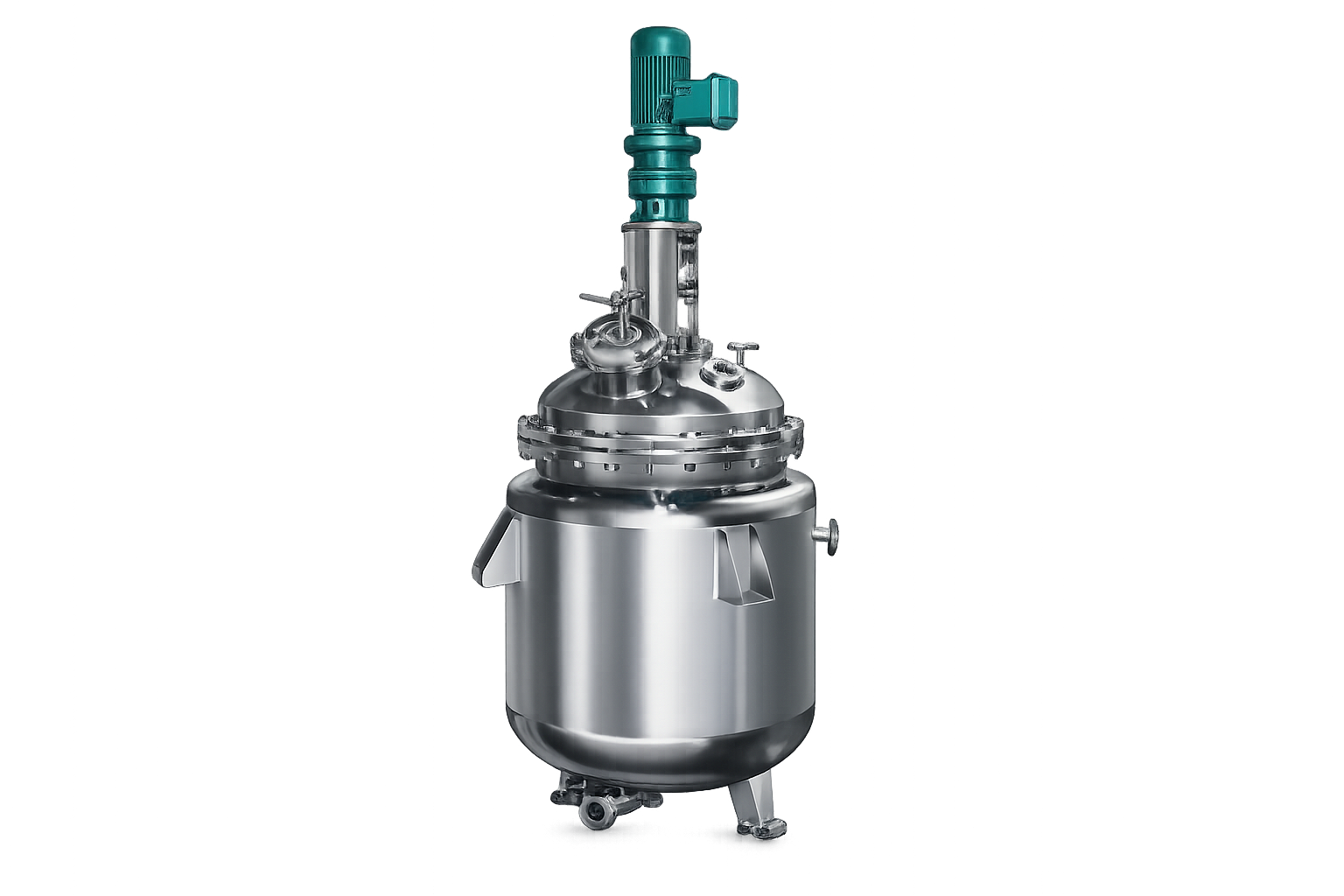
The stirred batch reactor, usually jacketed and made of SS 316L with a polished interior, is the most common for API and intermediate synthesis.
A reactor with half-pipe coils welded to its outer shell. It carries heating or cooling fluid at higher pressure and velocity than a full jacket.
A PFR has plug-like flow along a tube with no axial mixing, while a CSTR is uniformly mixed. For the same conversion a PFR usually needs a smaller volume.
A reactor in which one reactant is added gradually, or a product is removed, during the run, which helps control heat release and selectivity.
Creative Engineering of Ankleshwar manufactures jacketed, limpet coil and high-pressure batch reactors with ASME U and R stamps.
Creative Engineering, Ankleshwar, Gujarat designs and manufactures process equipment to ASME and IBR codes. Share your drawing or process data and our team will respond with a technical offer.



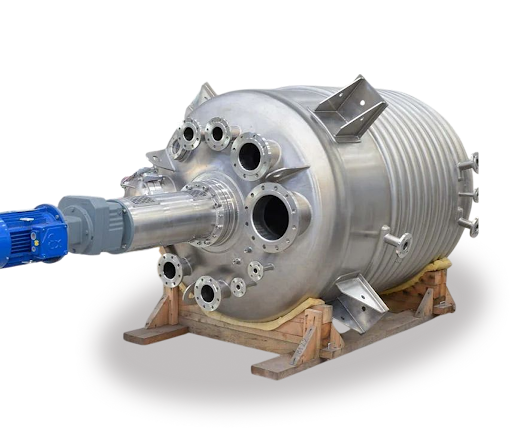 Reactor
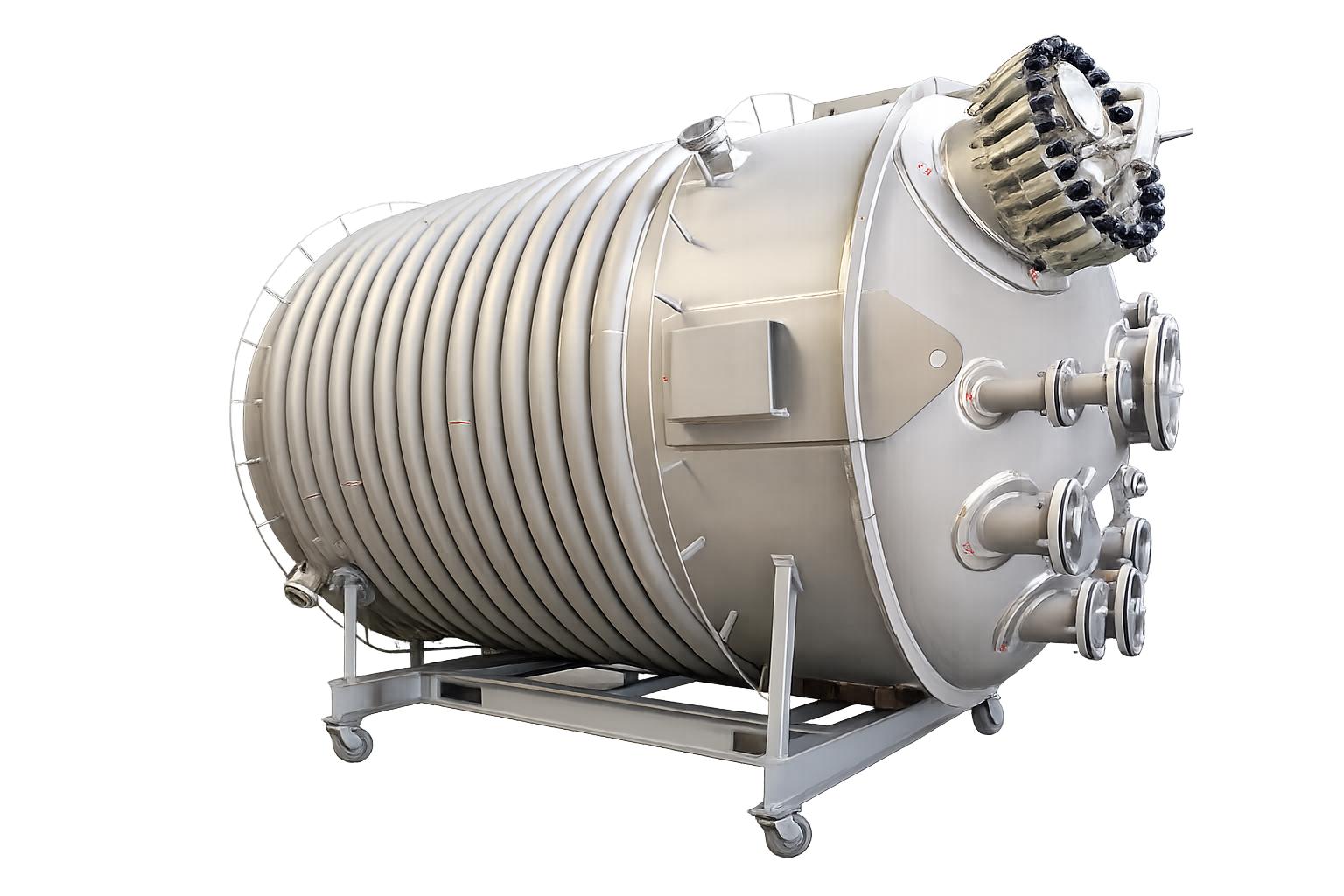 High Pressure Vessel
 Skid Equipment
 Receiver
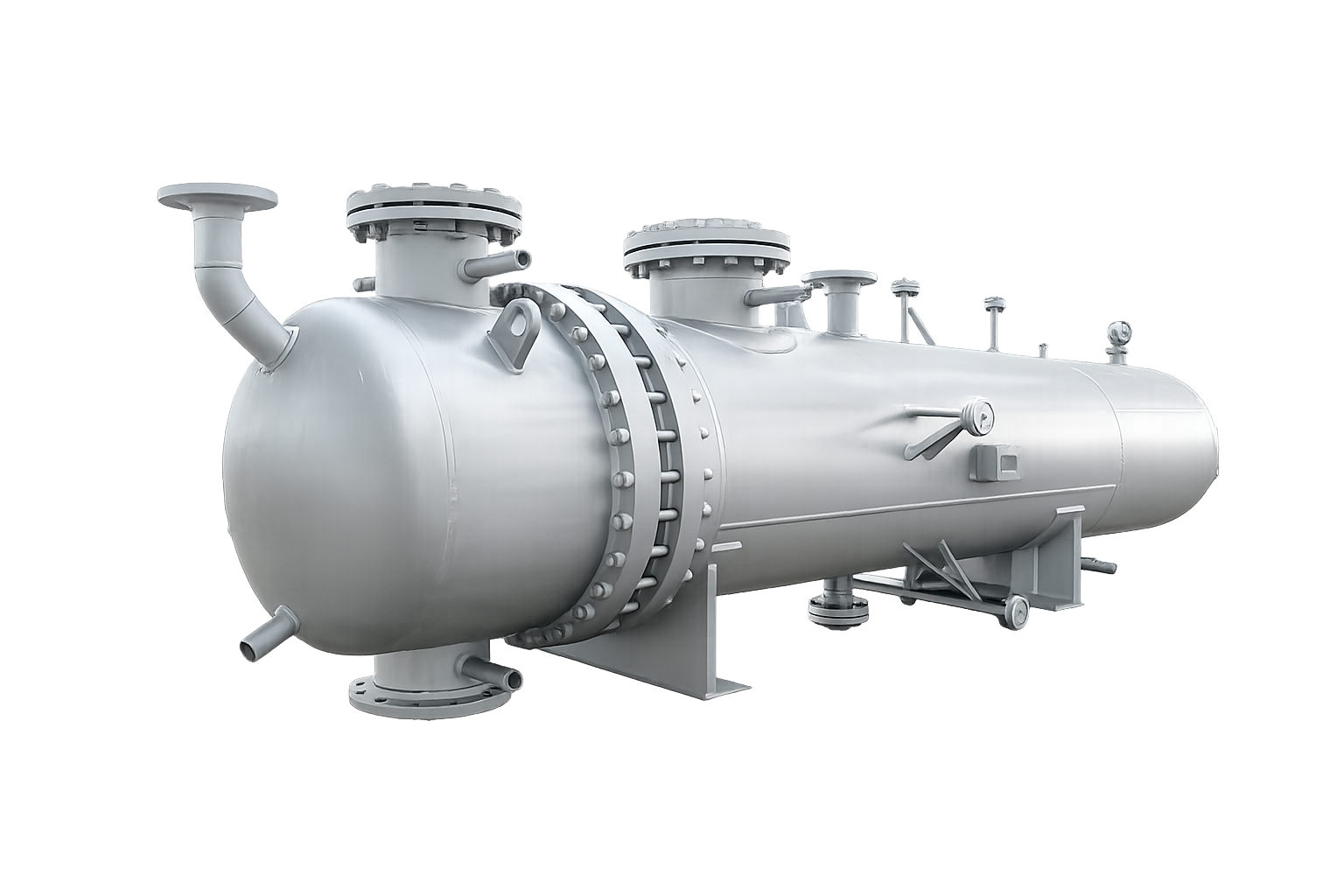 Heat Exchanger
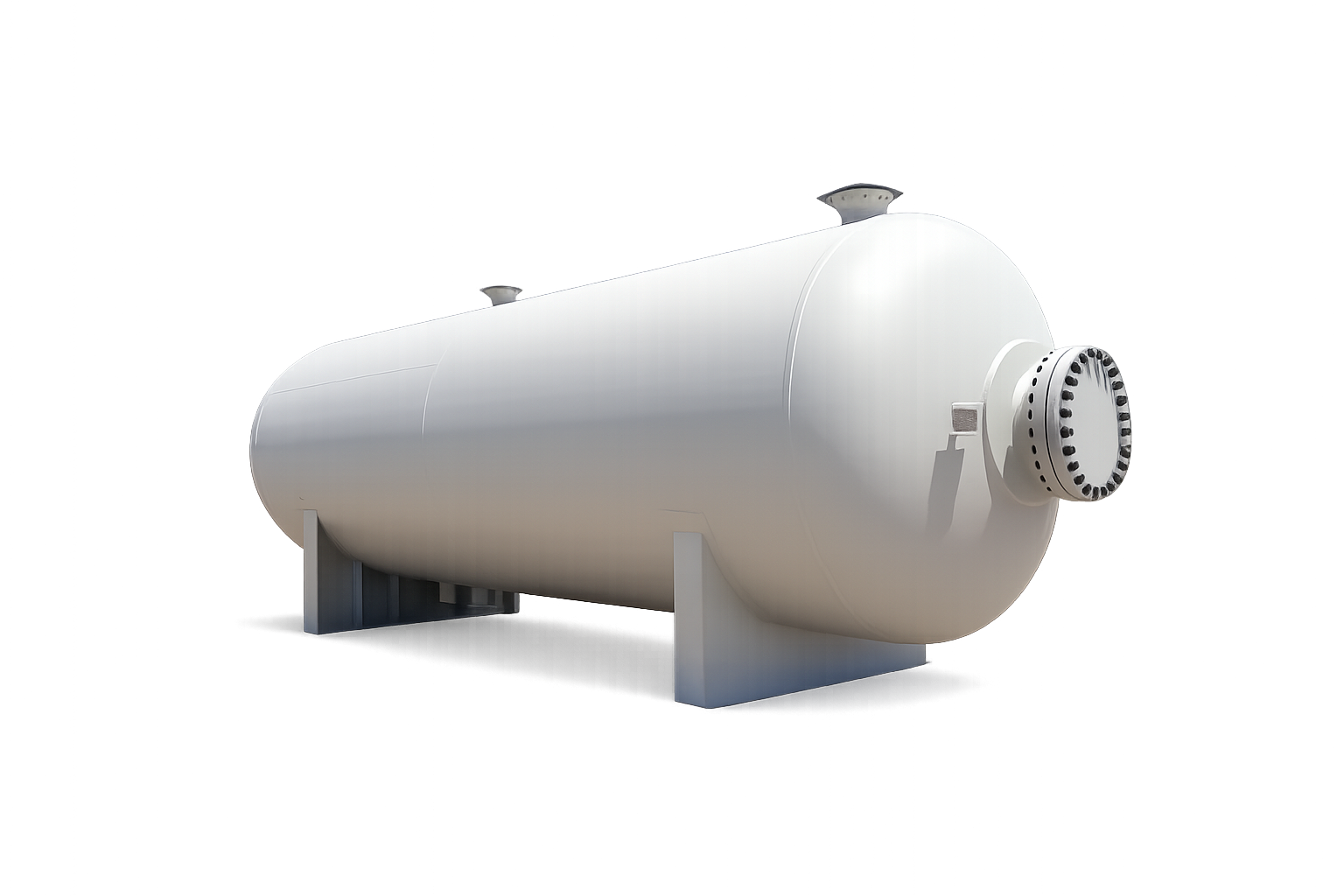 Pressure Vessel
 Silo
 Solvent Stripper
 Pharma Equipments