A practical material selection guide for reactors, vessels, tanks and heat exchangers: stainless steel grades 304, 304L, 316, 316L, 321, 904L, Duplex and Super Duplex, Hastelloy and Inconel, carbon steel, linings and claddings.

Use carbon steel (SA 516 Gr.70) for non-corrosive duty, SS 304 for mild service, SS 316L for chlorides and pharma, Duplex or Super Duplex for high strength with chloride resistance, and Hastelloy or Inconel for severe acids and high temperature. Linings (ETFE, HALAR, rubber) and cladded plate offer corrosion protection at lower cost than solid alloy.
The material of construction (MOC) is the single biggest factor in how long process equipment lasts. A reactor in the wrong grade can pit through in months, contaminate a pharmaceutical batch with metal ions, or fail suddenly by stress corrosion cracking. A reactor in an unnecessarily expensive alloy can cost several times more than it needs to. Good selection balances four things: corrosion resistance in the actual chemistry and temperature, mechanical strength at design temperature, fabricability (can it be welded and formed to code?) and cost over the whole life of the equipment, not only the purchase price.
Creative Engineering fabricates in a wide range: stainless steel SS 304, 304L, 316, 316L, 316Ti and 321; Duplex, Super Duplex, Inconel, Hastelloy, CuNi, 904L and SS-347; titanium; and carbon and mild steels such as SA 516 Gr.60/70, IS 2062, SA-333 and SA-537. This guide explains how to choose among them.
| Material | Key alloying elements | Strengths | Limits |
|---|---|---|---|
| Carbon steel (SA 516 Gr.70) | Iron, carbon, manganese | Low cost, strong, easy to weld | Rusts; unsuitable for corrosive fluids unless lined or coated |
| SS 304 / 304L | About 18% Cr, 8% Ni | Good general corrosion resistance, hygienic | Pitting and cracking in chlorides, especially when warm |
| SS 316 / 316L | About 16-18% Cr, 10-14% Ni, 2-3% Mo | Better chloride and acid resistance than 304; 316L is low carbon for welding | Still attacked by hot concentrated chlorides and strong acids |
| SS 316Ti / 321 / 347 | Stabilised with Ti or Nb | Resist sensitisation at high temperature | Specific high-temperature uses |
| 904L | High Ni, Mo and Cu | Excellent in sulphuric acid and chloride service | Higher cost |
| Duplex 2205 | About 22% Cr, 5% Ni, 3% Mo, N | High strength, strong chloride resistance | Limits above roughly 300 °C; welding care needed |
| Super Duplex 2507 | About 25% Cr, 7% Ni, 4% Mo, N | Excellent for seawater and aggressive chlorides | Higher cost, special welding |
| Hastelloy C-276 / Inconel 625 | Nickel-based with Mo, Cr | Withstand severe acids and oxidising or reducing media | Highest cost |
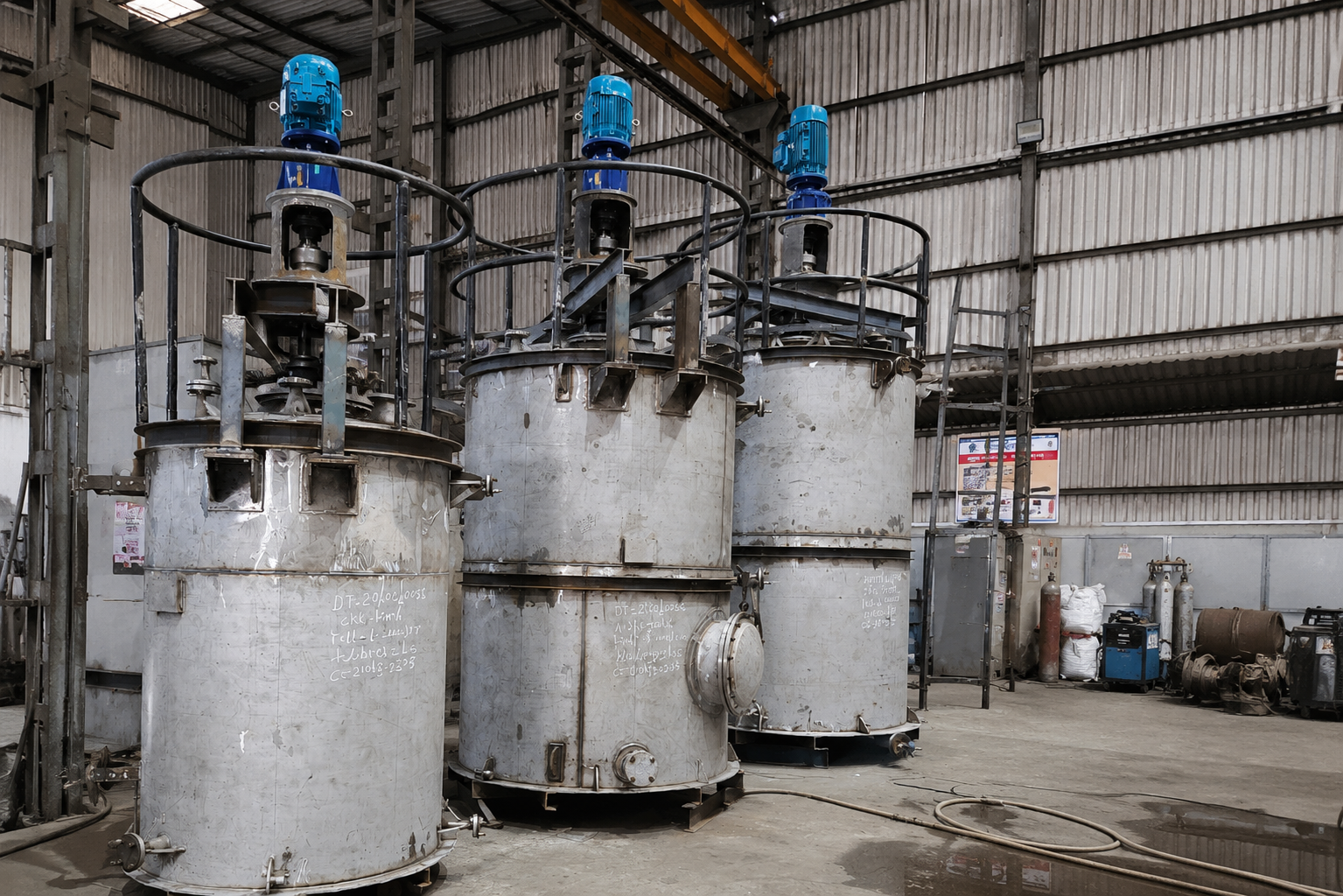

Most process buyers face this choice first. SS 304 is cheaper and entirely adequate for water, many food products, dry or mild chemical service and non-chloride environments. SS 316L adds molybdenum, which greatly improves resistance to pitting by chlorides, and the low carbon content (the "L") reduces the risk of corrosion at welds. For pharmaceutical, API and fine chemical equipment, 316L is the usual default because it also meets the finish and cleanability expectations of GMP.
The cost premium of 316L over 304 is modest compared with the cost of a failure or product contamination, so in chemical plants where traces of chloride, acids or cleaning agents are possible, 316L is often the safer choice. Where the process fluid is plain water or non-aggressive organic solvents, SS 304 can be the more economical option.
Duplex stainless steels have a mixed structure of austenite and ferrite. The result is roughly twice the yield strength of 304 or 316L, plus much better resistance to chloride pitting and stress corrosion cracking. Higher strength allows thinner walls, which can offset part of the higher plate price in large vessels. Super Duplex goes further, with higher chromium, molybdenum and nitrogen for the harshest chloride environments such as seawater or brine. The PREN (pitting resistance equivalent number, roughly Cr + 3.3Mo + 16N) is a handy guide: about 19 for 304, 24 to 26 for 316L, 34 to 36 for 2205 Duplex and over 40 for Super Duplex. A higher PREN means better resistance to pitting.
Duplex needs controlled welding procedures to keep the austenite-ferrite balance, and it is not recommended for prolonged service at high temperature. A fabricator with qualified duplex welding procedures, like Creative Engineering under ASME Section IX, can handle this.
When acids, oxidisers, hot halides or severe pitting conditions go beyond stainless steel, nickel-based alloys step in. Hastelloy C-276 resists a wide range of corrosive media including wet chlorine, hypochlorite and mixed acids; Inconel 625 combines corrosion resistance with strength at high temperature; titanium is superb in oxidising chloride environments. These materials cost far more than stainless steel, so engineers often limit them to the wetted surface using cladding, lining or small components such as agitators and nozzles.
The right option depends on temperature, vacuum, abrasion and mechanical loads. A lined vessel needs careful handling and inspection, because damage to the lining exposes the steel.
| Service | Commonly considered material | Notes |
|---|---|---|
| Water, dilute alkalis, many solvents | SS 304 or SS 316L | Check for chlorides in water |
| Dilute organic acids, pharma intermediates | SS 316L, electro-polished | GMP finish for pharma |
| Hydrochloric acid | Lined carbon steel, Hastelloy or special alloy | Stainless steels generally unsuitable |
| Sulphuric acid | Depends on concentration and temperature; 904L, alloy or lining | Very concentration-sensitive |
| Chlorides and brine | Duplex, Super Duplex, titanium | Avoid 304 and often 316L when hot |
| Hydrogen or H2S service | Controlled-hardness steel or corrosion-resistant alloy | Special codes and testing apply |
| Cryogenic liquids | Austenitic stainless steel, SA-333 for low temperature carbon steel | Toughness at low temperature is key |
This table is a starting point, not a guarantee. Always confirm with corrosion data or a materials engineer for your exact chemistry, concentration and temperature.
When ordinary 304 or 316 stainless steel is held in the temperature range of roughly 450 to 850 °C, chromium carbides can form at the grain boundaries and rob the surrounding metal of chromium. This sensitisation leaves a band next to the weld that is vulnerable to intergranular corrosion. Low-carbon "L" grades (304L, 316L) have too little carbon for significant carbide formation, and stabilised grades (316Ti, 321, 347) tie up the carbon with titanium or niobium. For welded vessels in corrosive service you will therefore see L or stabilised grades specified. Intergranular corrosion tests, such as ASTM A262, are part of qualification where the specification demands them.
Dissimilar-metal welds (for example carbon steel jacket to stainless steel shell), thick sections of Duplex, and nickel alloys all need qualified procedures and appropriate filler metals. Qualification to ASME Section IX, positive material identification and traceability give assurance that the right material went into the right place.
| Material | Relative plate cost (carbon steel = 1) | Typical role |
|---|---|---|
| Carbon steel | 1 | Utility, jackets, non-corrosive vessels |
| SS 304 | About 4 to 5 | Mild chemical, food duty |
| SS 316L | About 5 to 7 | Chemical and pharma standard |
| Duplex 2205 | About 6 to 8 | Strong, chloride service |
| Super Duplex / 904L | About 8 to 12 | Aggressive chlorides and acids |
| Hastelloy / Inconel | About 15 to 30 or more | Severe corrosion, high temperature |
These ratios move with the metal market, plate thickness and quantity, so treat them as orders of magnitude only. Ask for a priced comparison of two or three options when you request a quotation, since the cheapest material that lasts the required life is the best value.
Finish affects corrosion resistance and cleanability as much as grade does. Mill finish and blasted surfaces suit non-hygienic duty. Mirror and electro-polished finishes reduce surface roughness and product adhesion, and are the norm in pharma and food. After welding or forming, stainless steel should be pickled and passivated so that the protective chromium-oxide film can reform; skipping this step can lead to early rust spots. We offer blasting, painting, mirror, matte and electro-polished finishes, as well as pickling and passivation.
Send these details through the contact page and our engineers will suggest the economical solution. See product guides for the reactor, heat exchanger and pressure vessel.
SS 316L contains molybdenum and has low carbon, giving better resistance to pitting by chlorides and acids and safer welding. SS 304 is cheaper and suitable for mild, non-chloride service.
Use Duplex when you need higher strength than 316L and better resistance to chloride pitting and stress corrosion cracking, for example in chloride-rich process streams.
PREN stands for pitting resistance equivalent number, a guide to resistance to pitting corrosion calculated from chromium, molybdenum and nitrogen content. A higher PREN indicates better resistance.
Generally no. Hydrochloric acid attacks stainless steel; lined carbon steel, Hastelloy or other special alloys are used.
Cladded plate is carbon steel with a thin layer of corrosion-resistant alloy bonded to it, giving alloy surface performance at lower cost than solid alloy.
SS 316L with an electro-polished, crevice-free interior is the most common choice for pharmaceutical and API reactors.
Creative Engineering of Ankleshwar fabricates in SS 304, 316L, Duplex, Super Duplex, Inconel, Hastelloy, titanium and other alloys under ASME Section IX qualified procedures.
Creative Engineering, Ankleshwar, Gujarat designs and manufactures process equipment to ASME and IBR codes. Share your drawing or process data and our team will respond with a technical offer.

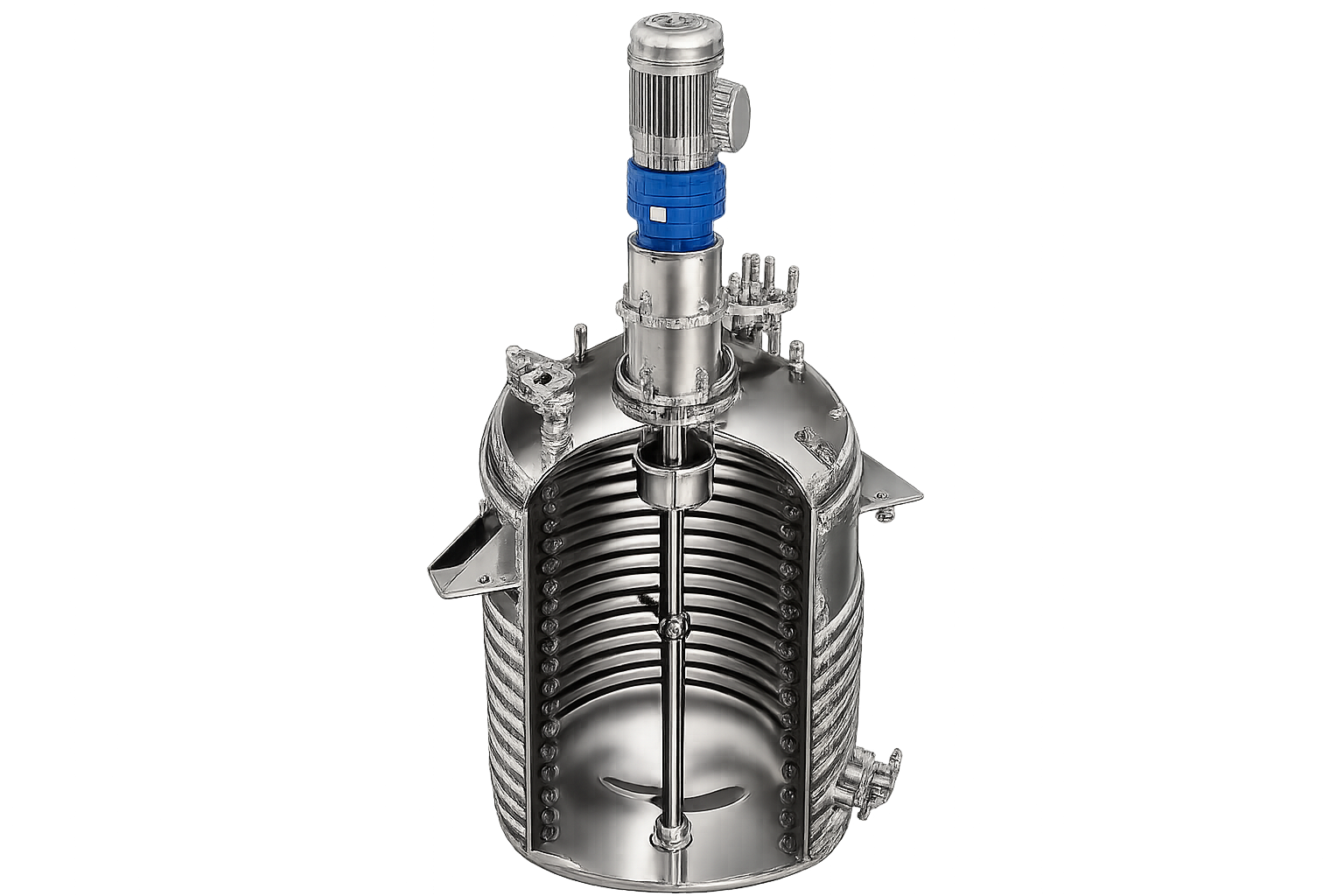
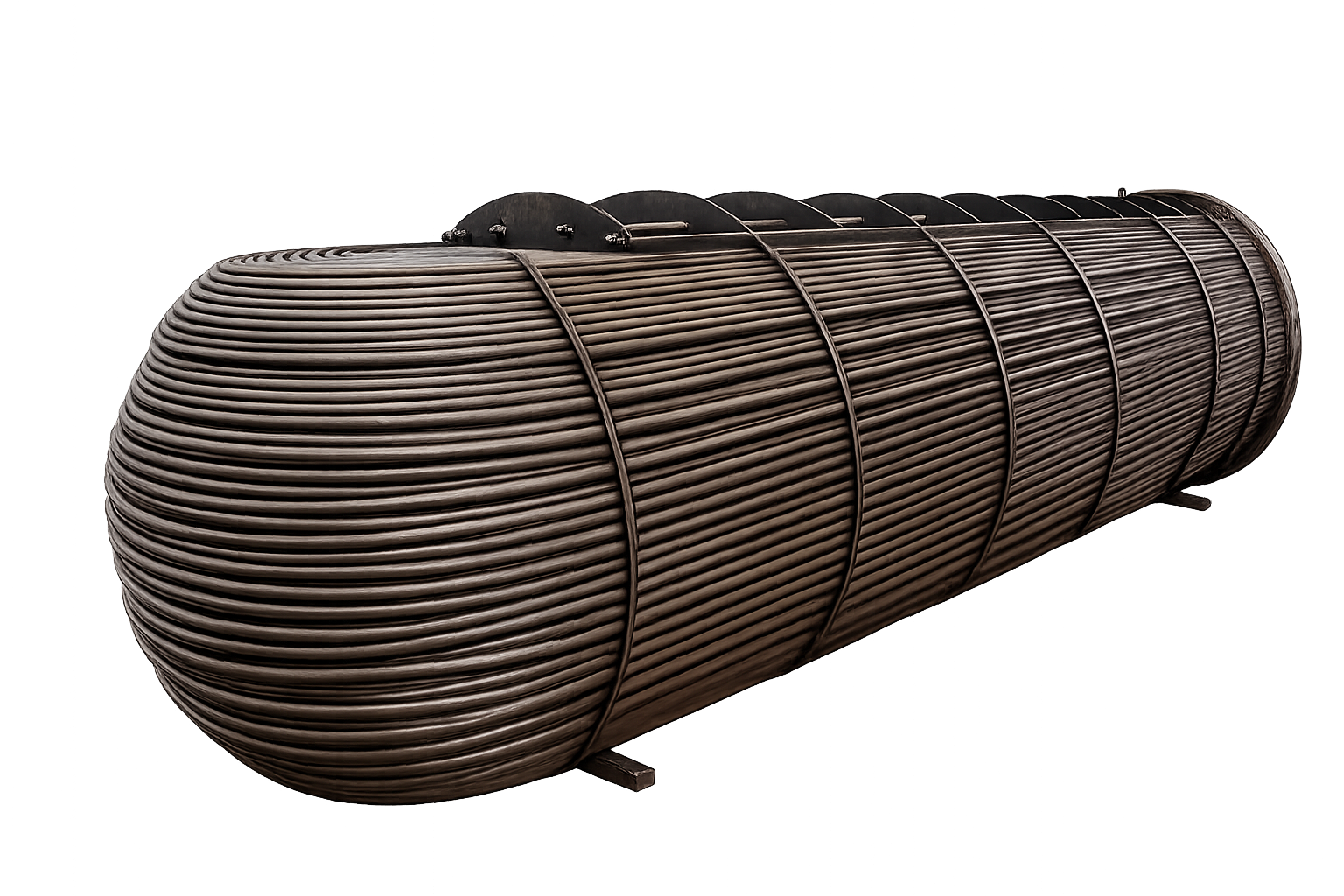
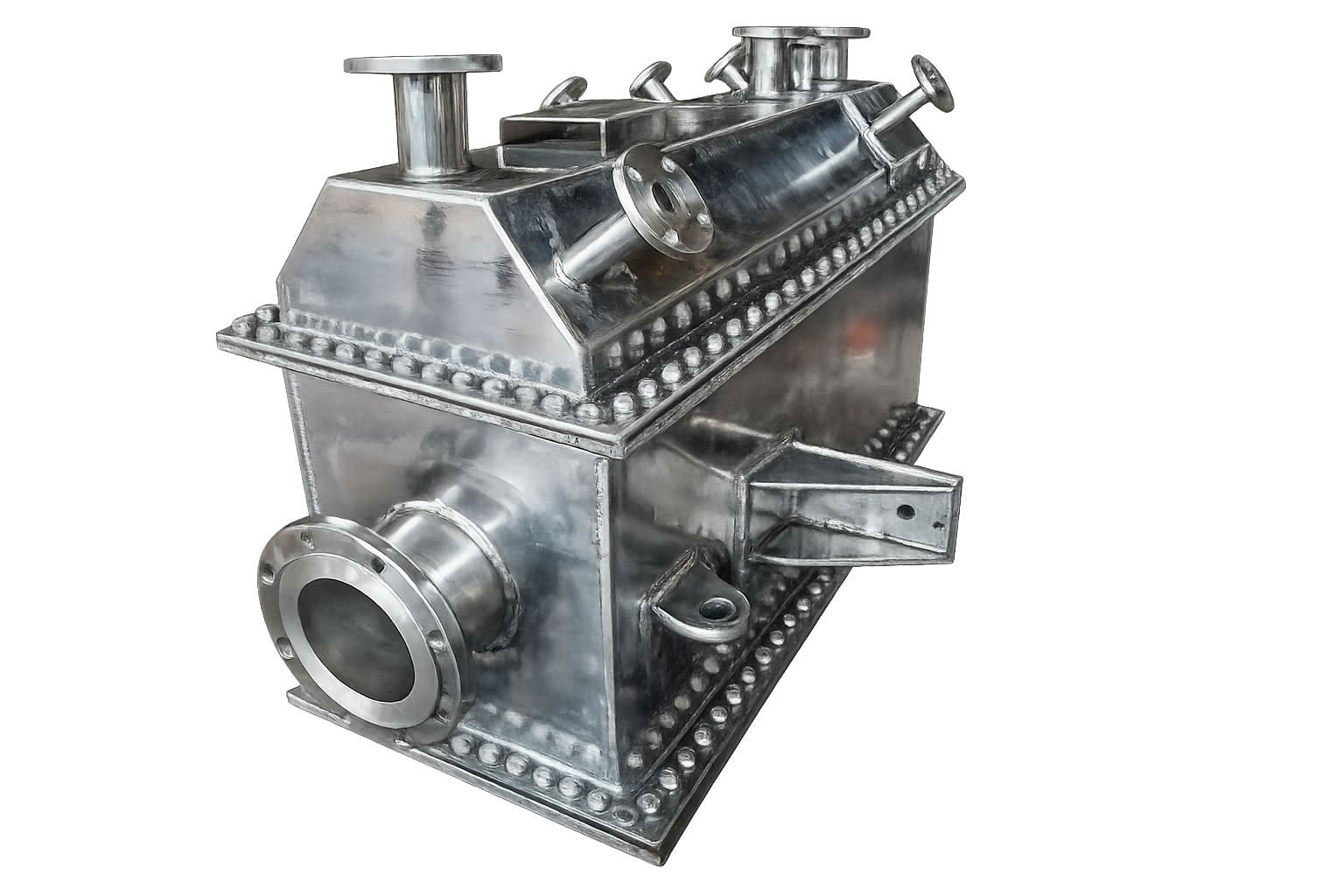


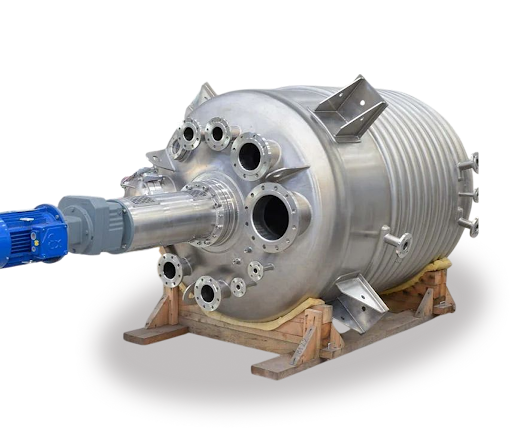 Reactor
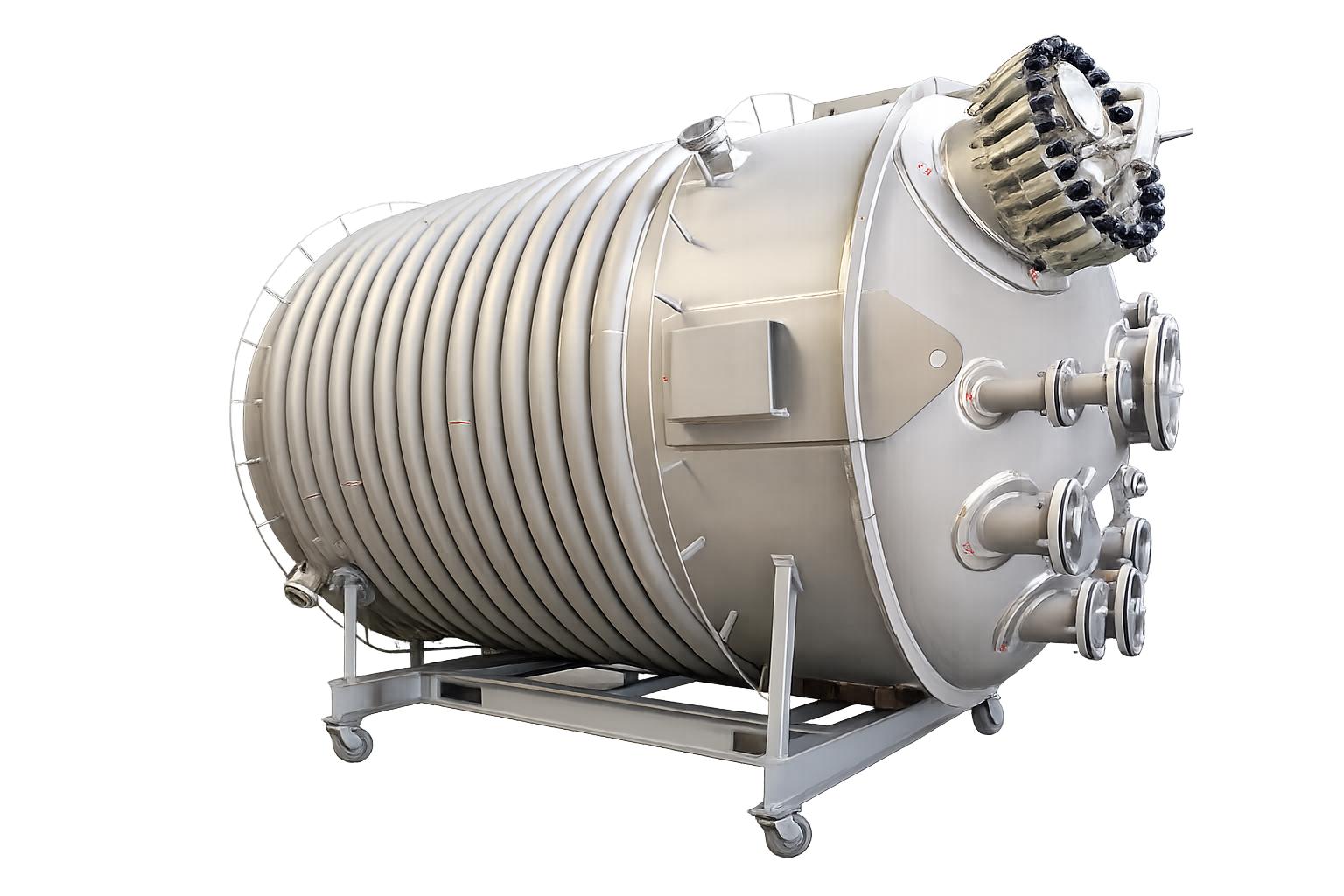 High Pressure Vessel
 Skid Equipment
 Receiver
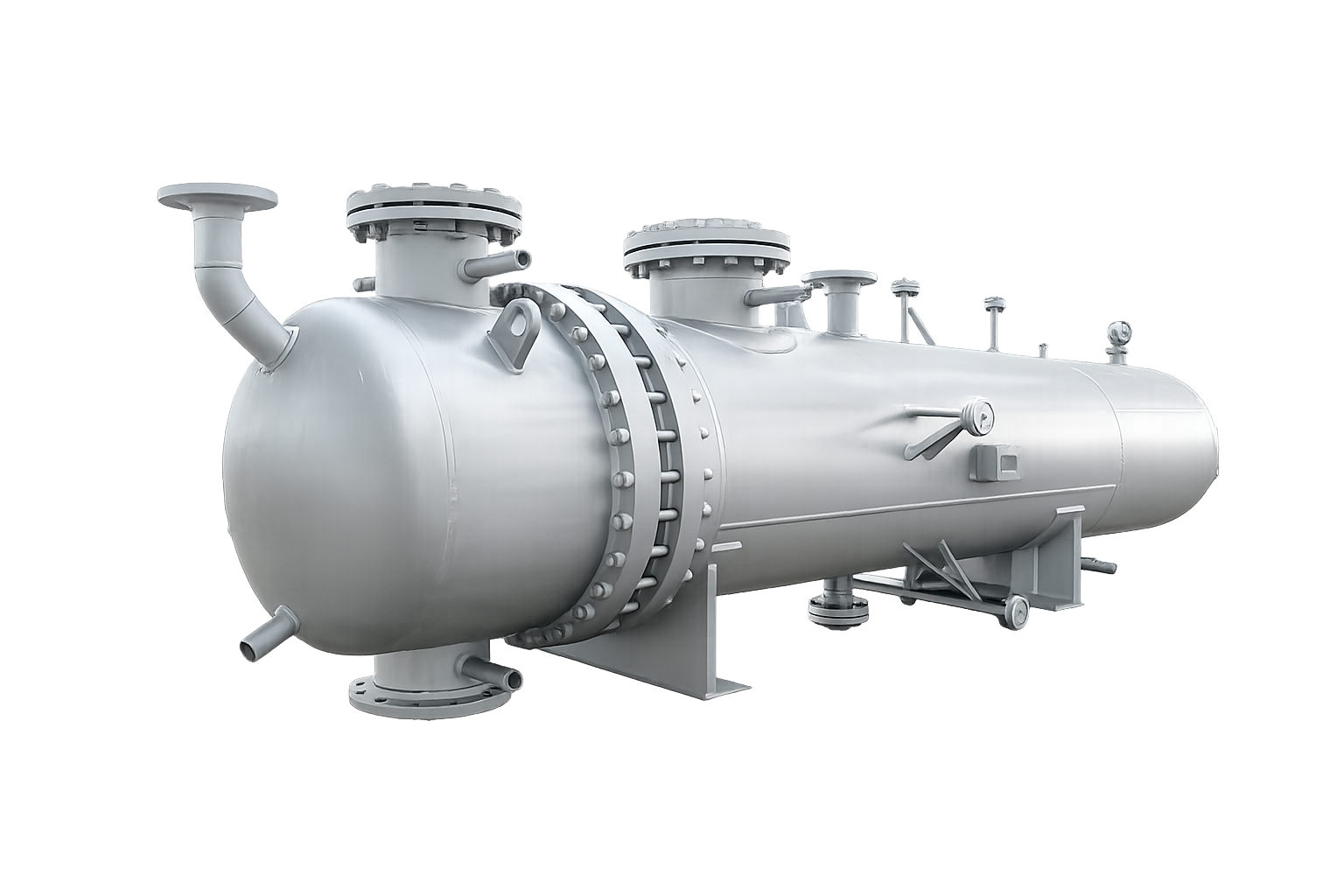 Heat Exchanger
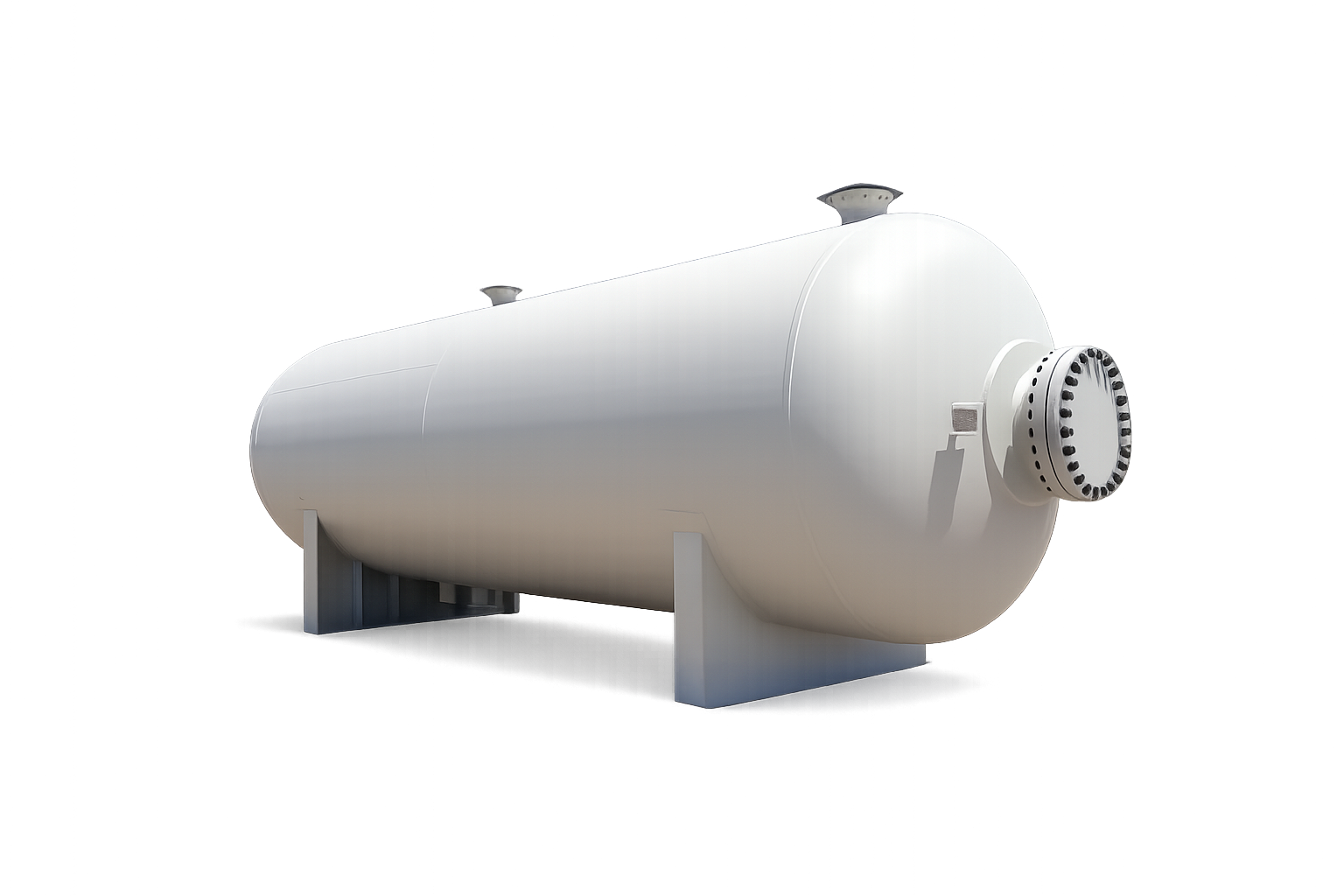 Pressure Vessel
 Silo
 Solvent Stripper
 Pharma Equipments