Compare conventional, half-pipe, limpet coil, dimple and plate-type jackets for reactors and reaction vessels: heat transfer, pressure rating, cost, cleaning, material, fabrication and which one suits pharma, chemical and high-pressure duties.

A conventional jacket suits low-pressure, general duties at lowest cost; a dimple jacket gives good heat transfer and strength with thin plate at moderate cost; a limpet (half-pipe) coil handles high jacket pressure and high temperature but takes more fabrication effort. The right choice depends on jacket pressure, heating or cooling duty, cleaning needs and budget.
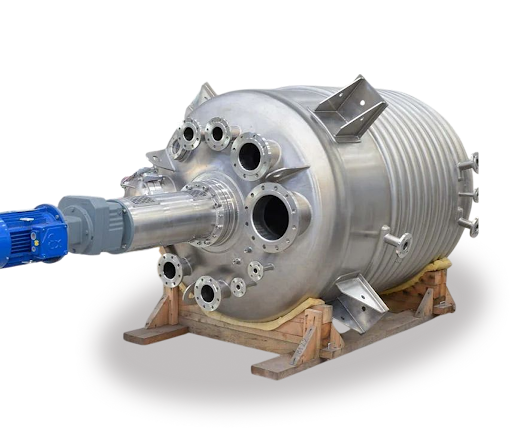
Most chemical reactions need heat to start, heat removal to stay safe, or precise temperature control to give the right product. In a stirred reactor, this exchange of heat usually happens through the vessel wall into a jacket, a second layer around the shell through which steam, hot oil, chilled water, brine or glycol flows. The type of jacket affects how quickly you can heat or cool, what pressure the heating medium can carry, how easily the vessel is fabricated and cleaned, and how much the vessel costs. A wrong jacket choice can mean slow batch cycles, hot spots, jacket failure or an uneconomical design.
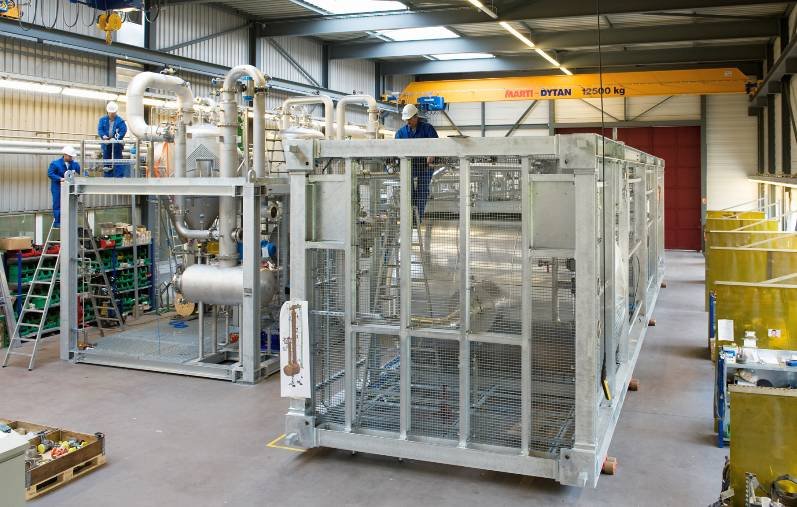
Creative Engineering fabricates reactors and reaction vessels with all the main jacket types, in SS 316L, SS 304, Hastelloy and carbon steel. See our reactor page and reaction vessel page, and read what is a reaction vessel for the basics.
| Jacket type | How it is built | Typical pressure | Best for |
|---|---|---|---|
| Conventional (plain) jacket | Second shell welded around the vessel, with an annular gap | Low, usually a few bar | General heating and cooling at lower pressure and cost |
| Half-pipe or limpet coil | Half pipes or channels welded to the outside of the shell | High, because small pipe sections resist pressure | High-pressure steam or thermal oil, high-temperature duties |
| Dimple jacket | Thin outer plate spot-welded to the shell, then inflated | Medium to high | Large vessels needing good heat transfer with lighter plate |
| Plate coil jacket | Pillow plates welded to the shell | Medium to high | Specialised heating and cooling with turbulence |
| Internal coil | Coil inside the vessel | High | Extra heat transfer area; harder to clean |

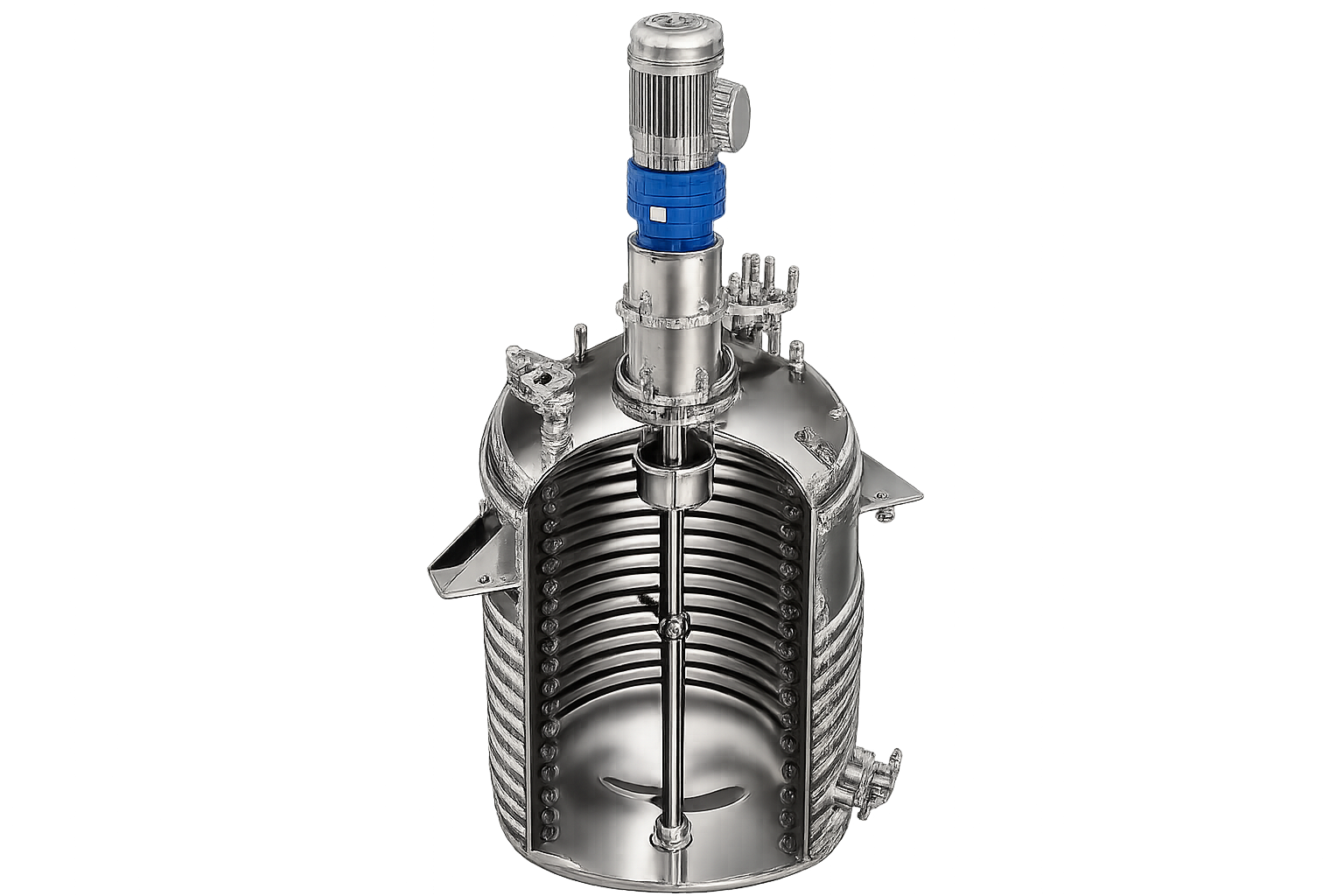
A conventional jacket is a plain outer shell with an annular space around the vessel, welded at the top and bottom. The heating or cooling fluid enters at one nozzle and leaves at another. It is the simplest and most economical jacket, widely used in pharma and fine chemical reactors at moderate temperature and low jacket pressure.
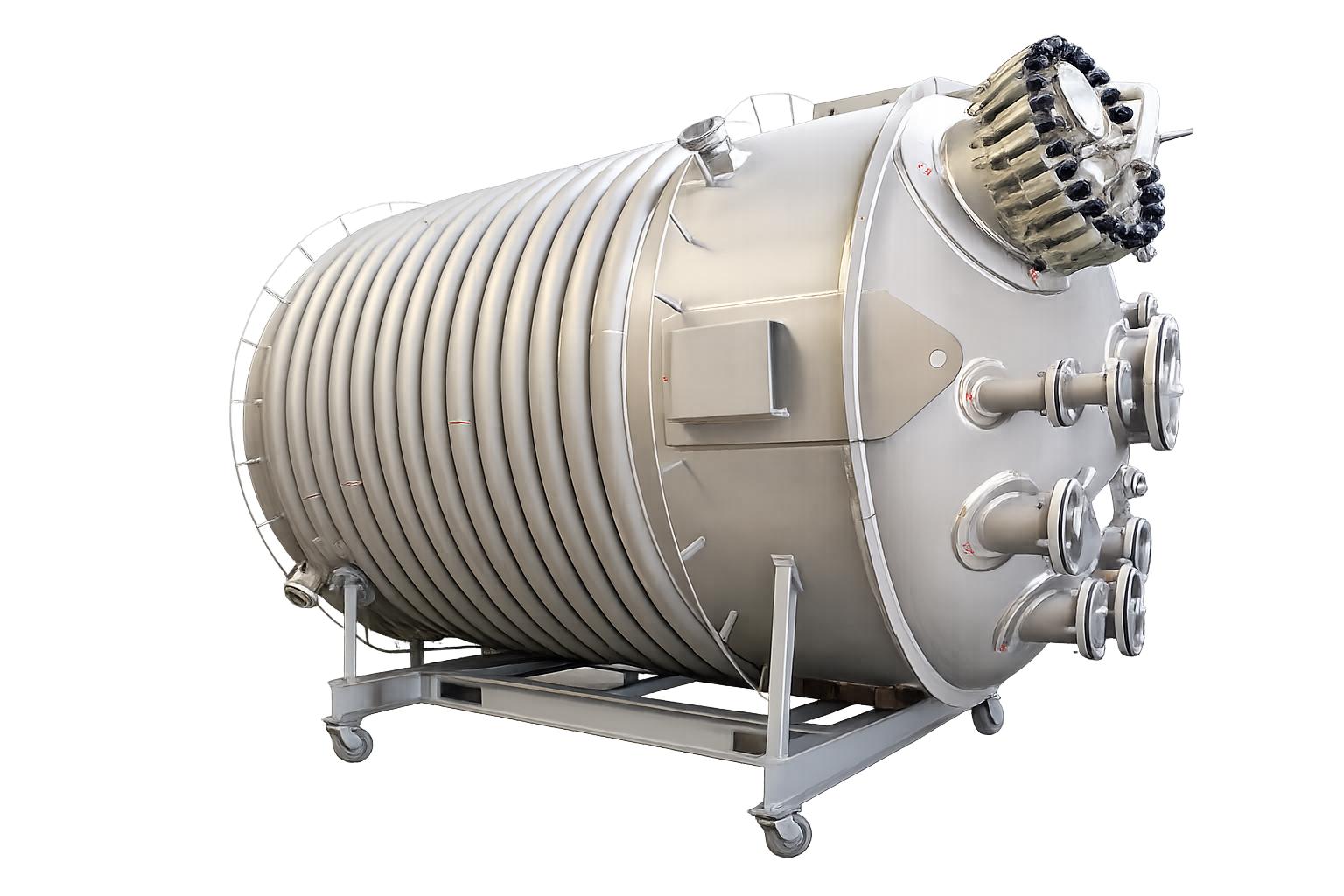
A limpet coil is made from half pipes or formed channels welded around the outside of the vessel. The utility fluid flows through the half pipes at high velocity, which gives good heat transfer and an excellent pressure rating, because a small-diameter half pipe handles pressure much better than a wide plain jacket. Limpet coils are common on reactors using high-pressure steam or thermal oil, and on large vessels where a plain jacket would need very thick plate.
See our completed projects for examples such as limpeted vessels.
A dimple jacket uses a thin outer plate with many small dimples that are welded to the inner shell. The space between is formed so liquid flows in channels between the dimples. The dimples act like stay bolts, so the jacket withstands higher pressure than a plain jacket of the same thickness, while turbulent flow improves heat transfer.
| Factor | Conventional jacket | Dimple jacket | Limpet coil |
|---|---|---|---|
| Heat transfer | Moderate; depends on baffles | Good | Very good |
| Jacket pressure capability | Low | Medium to high | High |
| Fabrication effort | Low | Medium | High |
| Relative cost | Lowest | Medium | Highest of the three |
| Cleaning of jacket side | Easier | Harder | Fixed flow path; flush to clean |
| Weight | Heavier at higher pressure | Lighter | Lighter shell, extra coil weight |
| Typical use | Pharma, general chemical | Large vessels, medium duties | High-pressure steam, thermal oil |
See our pharma equipment page, specialty chemical page and agrochemical page.
Heat transfer in a jacketed reactor depends on both sides of the wall. On the utility side, the jacket type sets velocity and distribution. On the process side, the agitator type, speed and baffles control the film coefficient and prevent hot spots near the wall. A powerful jacket with poor mixing will still give slow heating, and a strong agitator cannot fix a jacket that is too small for the batch. Design the two together. Read our agitator selection guide and types of chemical reactors.
Jackets are pressure parts and follow the same code rules as the vessel. Under ASME Section VIII Division 1 the jacket is designed for its own pressure, with the inner shell checked for external pressure from the jacket when the vessel is under vacuum. Welds are examined, and the jacket space is hydro tested, usually before the final closing of the vessel. Material for the jacket may be lower grade than the process side, for example a carbon steel jacket on a stainless inner shell, to reduce cost when the utility is non-corrosive. Read about codes in our ASME U stamp and IBR guide and testing in our inspection guide.
Most jacket problems come from design shortcuts rather than from the jacket type itself. Knowing them helps you write a better specification.
Our fabrication team plans the welding sequence, checks roundness and hydro tests every jacket before dispatch, so the jacket on your reactor performs as designed from the first batch.
Send us your batch size, heating and cooling requirements and the utility details, and our engineers will recommend a jacket type with calculations. Creative Engineering manufactures reactors, reaction vessels and pressure vessels in Ankleshwar, Gujarat for plants across India and for export. Call +91 98251 38460 or +91 91743 99000, email sales@creative-engineering.in or use the contact page. We respond within 24 hours.
A limpet coil is a set of half pipes welded around the outside of the vessel through which the heating or cooling fluid flows, giving high pressure capability and good heat transfer.
A dimple jacket is a thin outer plate spot-welded to the vessel shell with dimples, creating channels for the utility fluid and giving good strength and heat transfer.
Limpet coil jackets are usually preferred for high-pressure steam or thermal oil because small half pipes withstand pressure well.
A conventional jacket is usually the lowest cost, followed by dimple jackets, with limpet coils generally the highest of the three.
Conventional jackets are easier to inspect and flush; dimple and limpet jackets have fixed flow paths that are flushed rather than opened.
Yes. The jacket may be carbon steel on a stainless inner shell when the utility is non-corrosive, subject to design code and your specification.
Yes. We build reactors and reaction vessels with conventional, dimple and limpet jackets in stainless steel, alloys and carbon steel.
Creative Engineering, Ankleshwar, Gujarat designs and manufactures process equipment to ASME and IBR codes. Share your drawing or process data and our team will respond with a technical offer.




 Reactor
 High Pressure Vessel
 Skid Equipment
 Receiver
 Heat Exchanger
 Pressure Vessel
 Silo
 Solvent Stripper
 Pharma Equipments