A practical equipment list for setting up an API or pharma intermediate plant: reactors, receivers, centrifuges and Nutsche filters, dryers, distillation and solvent recovery, heat exchangers, storage tanks, utilities and how to specify each item.

A typical API or pharma intermediate batch plant needs stainless steel, Hastelloy or glass-lined reactors with condensers and receivers, a filtration and drying train (centrifuge or Nutsche filter dryer), solvent distillation and recovery columns, heat exchangers, storage tanks for raw material and solvents, vacuum and scrubber systems, and utilities such as chilled water, steam and nitrogen.
Most API and pharma intermediate plants in India are multipurpose batch plants. The same set of reactors and downstream equipment is used to make several products in campaigns, so equipment is chosen for flexibility, cleanability and a wide range of materials. The process usually flows through five stages: raw material receiving and charging, reaction, work-up and separation (extraction, crystallisation, filtration), drying and finishing, and solvent recovery and waste handling. Utilities such as steam, chilled water, brine, vacuum, nitrogen and compressed air support every stage.
Creative Engineering manufactures most of the vessels, filters, columns and exchangers in this list at its units in Ankleshwar. See our API intermediate equipment page and pharma equipment page.
| Stage | Equipment | Typical material | Notes |
|---|---|---|---|
| Raw material storage | Solvent and liquid storage tanks, day tanks | SS 304 or carbon steel | Vent, nitrogen blanket and earthing as required |
| Charging | Charging vessels, measuring tanks, powder charging hoppers | SS 316L or SS 304 | Accurate quantity control |
| Reaction | Jacketed reactors with agitator, condenser, receiver | SS 316L, Hastelloy or glass-lined | Heating and cooling through jacket or limpet |
| Work-up | Extraction vessels, separators, crystallisers | SS 316L | Bottom outlet and sight glass |
| Filtration | Centrifuge or Nutsche filter dryer | SS 316L, Hastelloy | Closed system for solvents |
| Drying | Vacuum tray dryer, rotary vacuum dryer, fluid bed dryer | SS 316L | Match product temperature sensitivity |
| Solvent recovery | Distillation column, reboiler, condenser, receivers | SS 316L or SS 304 | Recovers and recycles solvents |
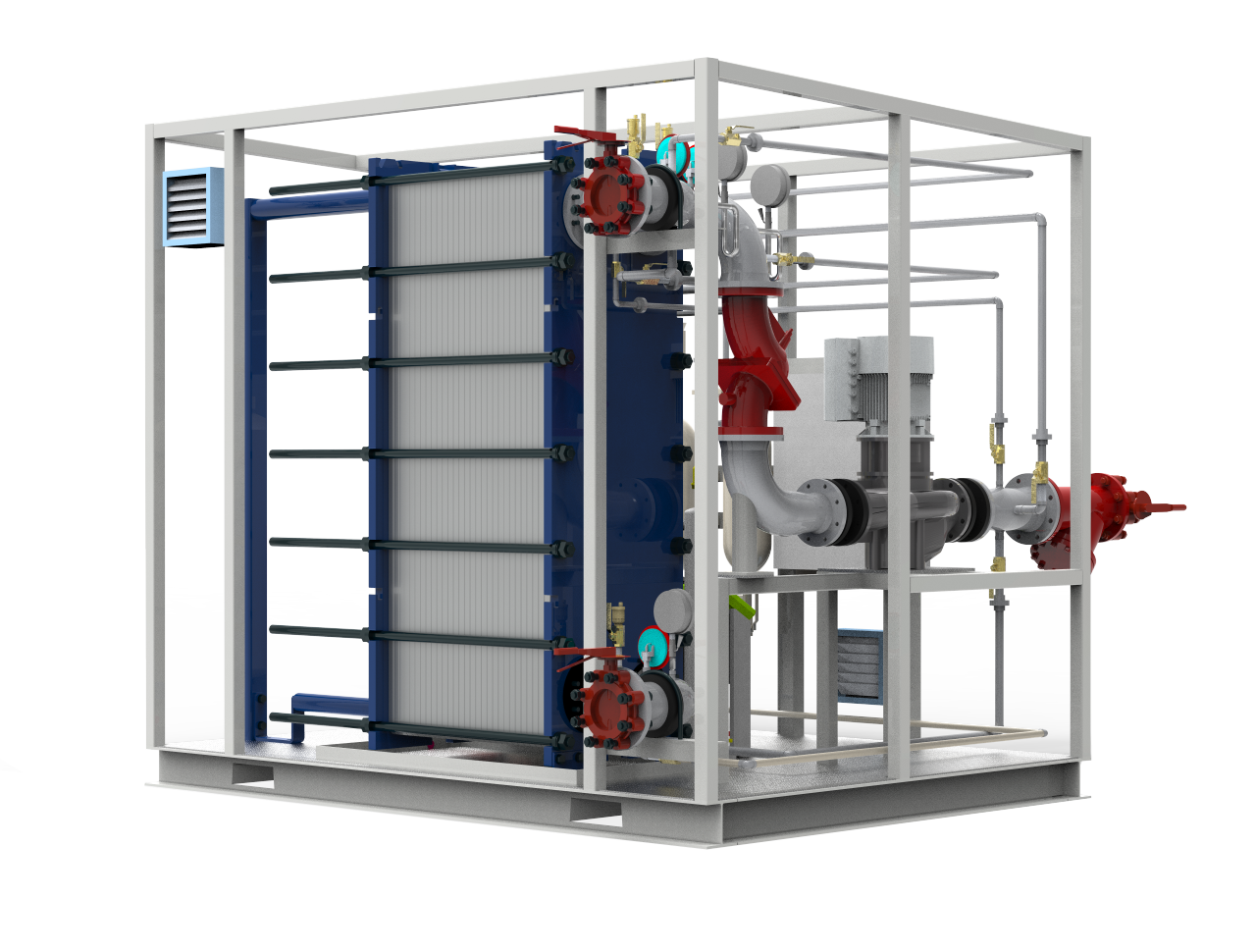
| Heat transfer | Shell and tube condensers, heat exchangers, chillers | SS 316L tubes | Chilled water or brine on the cold side |
| Vacuum and scrubbing | Vacuum pumps, scrubbers, knock-out pots | SS, FRP or PP | Protect vacuum system and environment |
| Effluent and utilities | Effluent holding tanks, boilers, chilled water plant, nitrogen | As required | Support all stages |
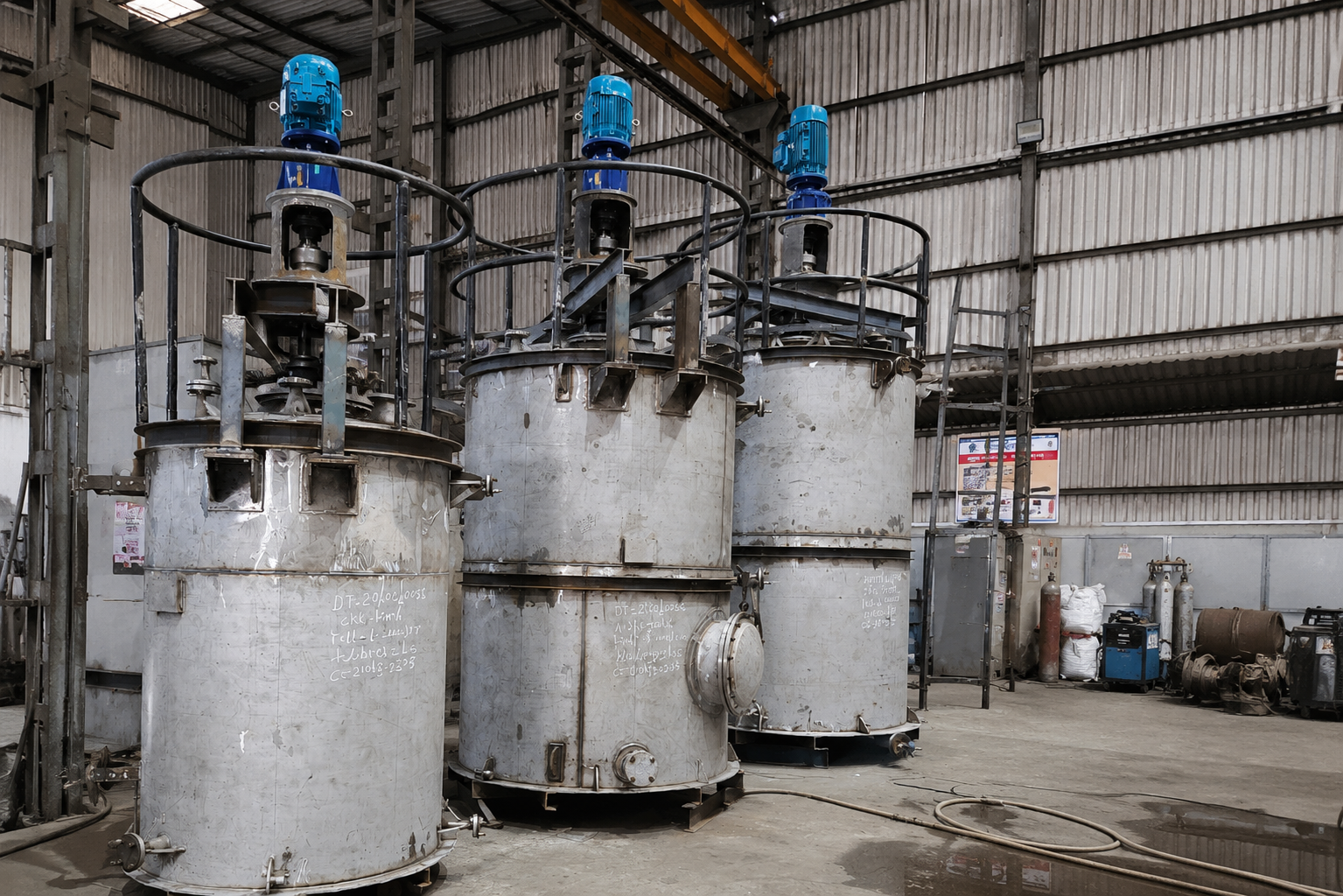

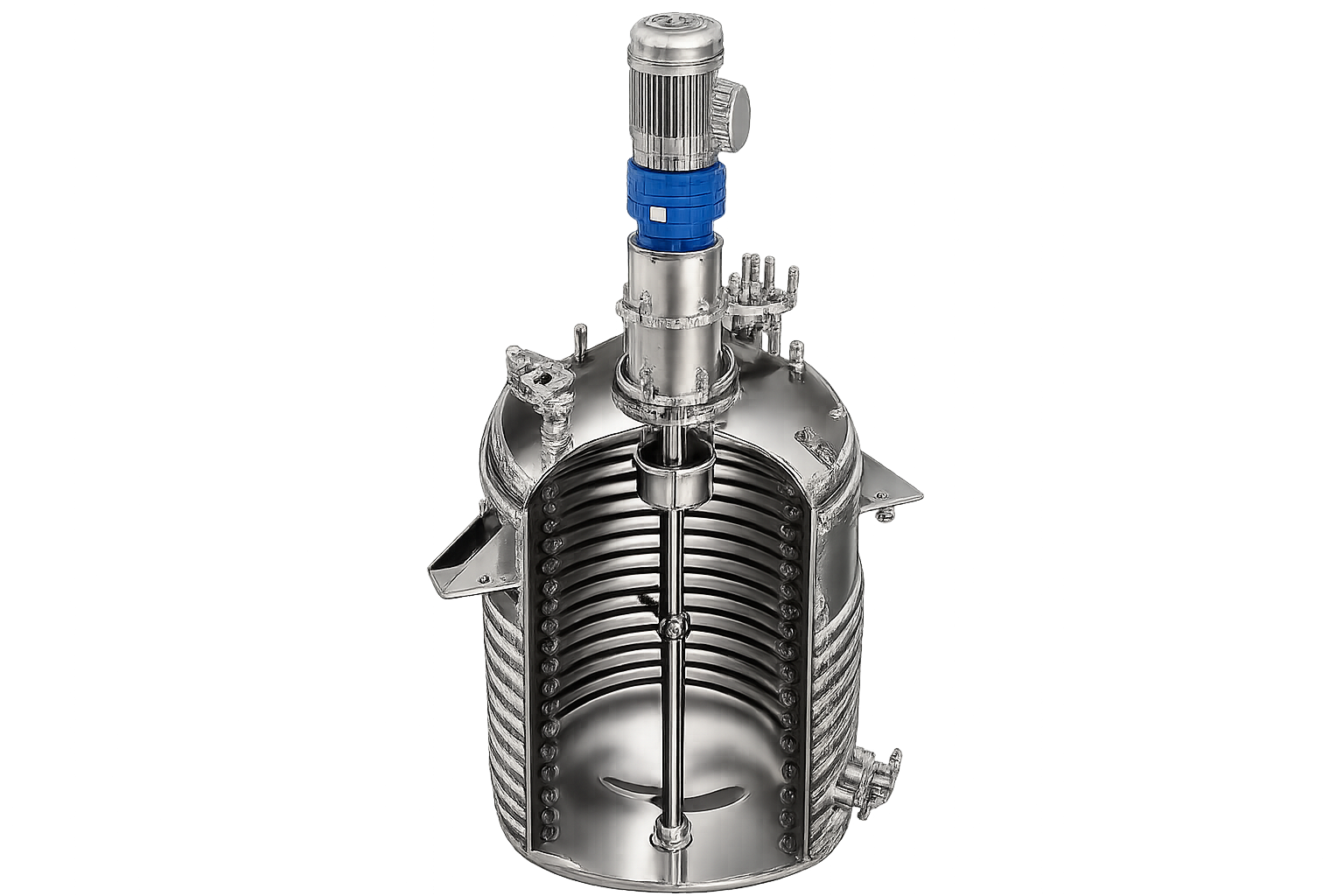
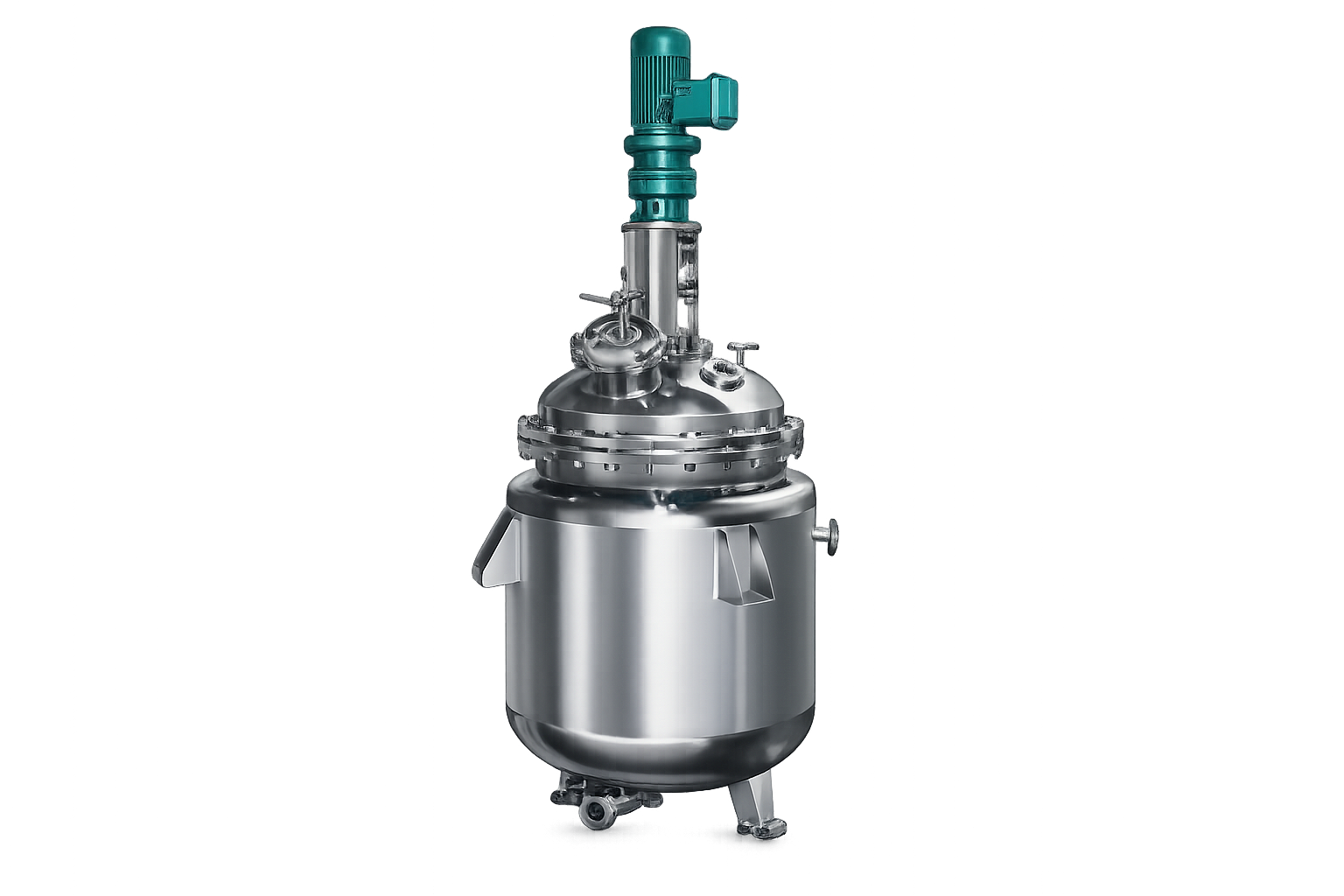
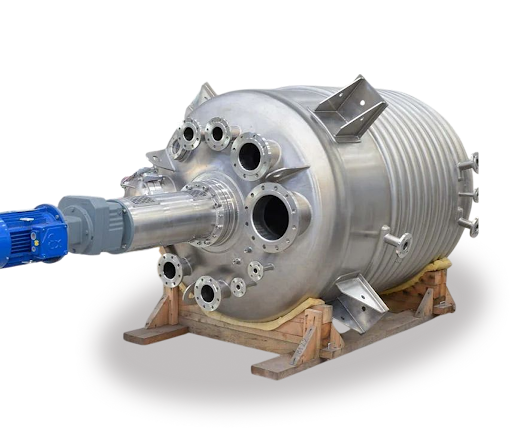
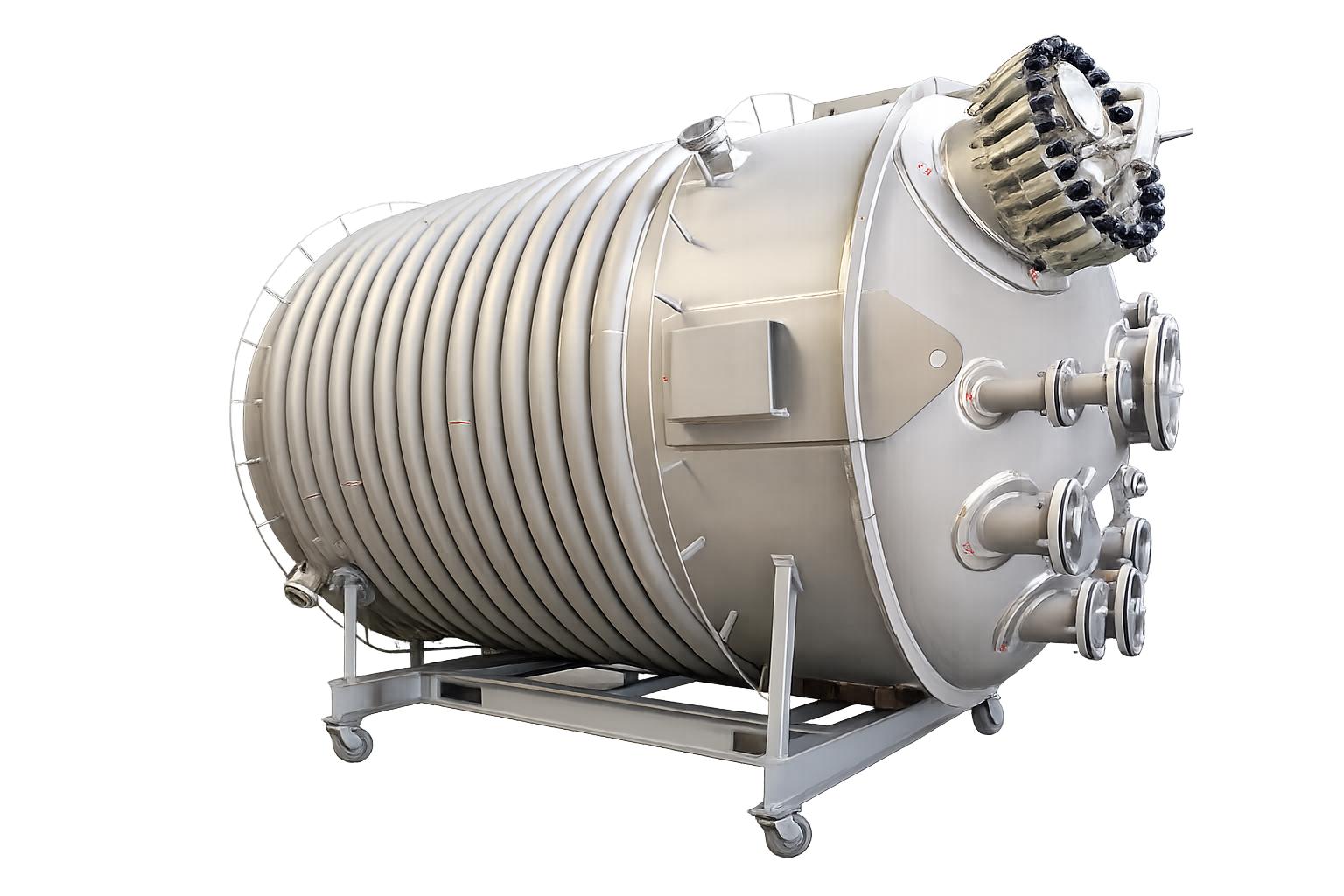
Reactors are the heart of the plant. A multipurpose plant commonly has several reactors in a range of sizes, from small pilot-scale to large production vessels, so campaigns of different volumes can be planned. Specify working volume, design pressure and vacuum, temperature range, jacket type, agitator type and speed, materials and surface finish. SS 316L is the default for most intermediates, with Hastelloy or glass-lined vessels where acids and chlorides are heavy.
Read what is a reactor, agitator selection and types of chemical reactors. Our reactor and reaction vessel pages list options.
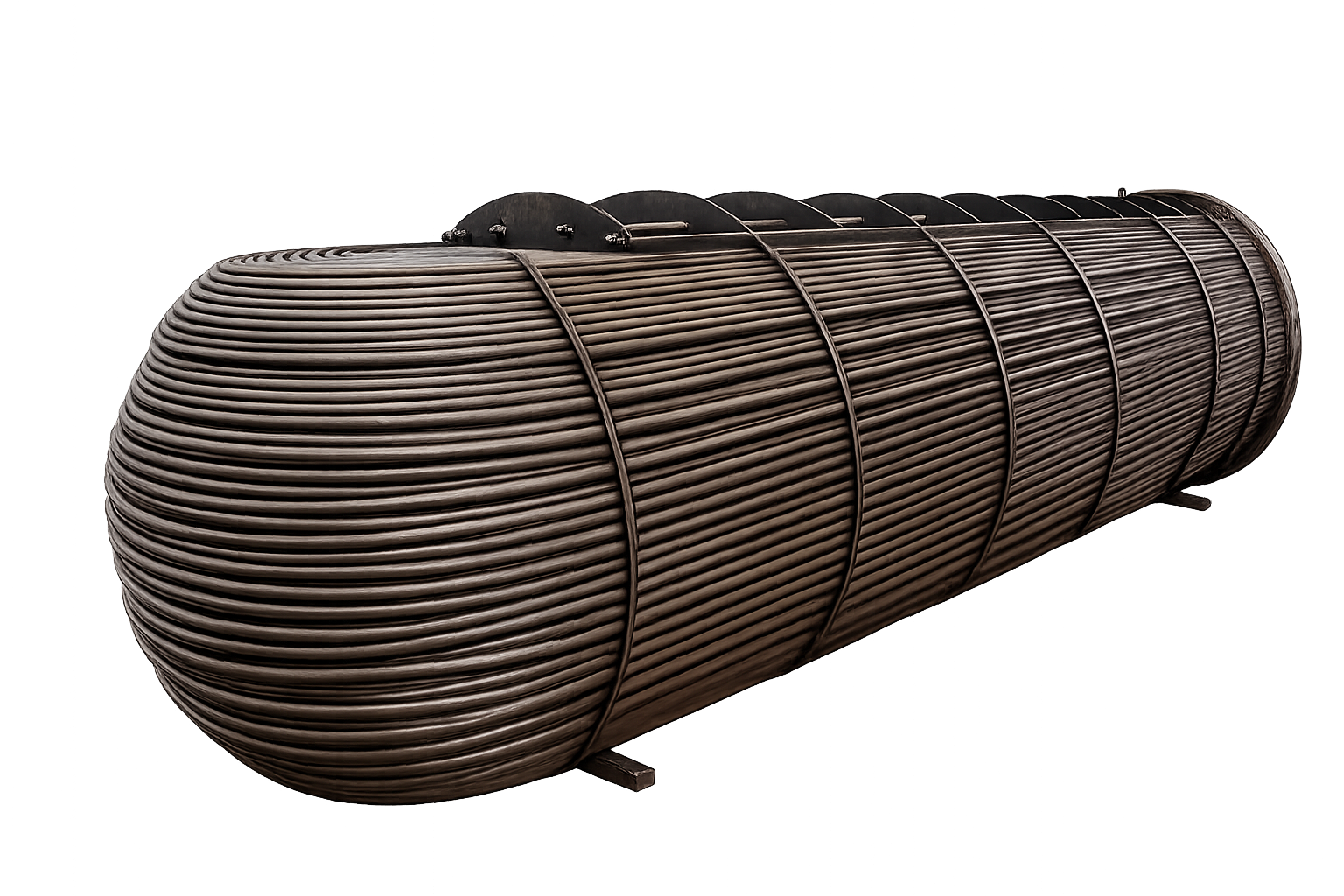
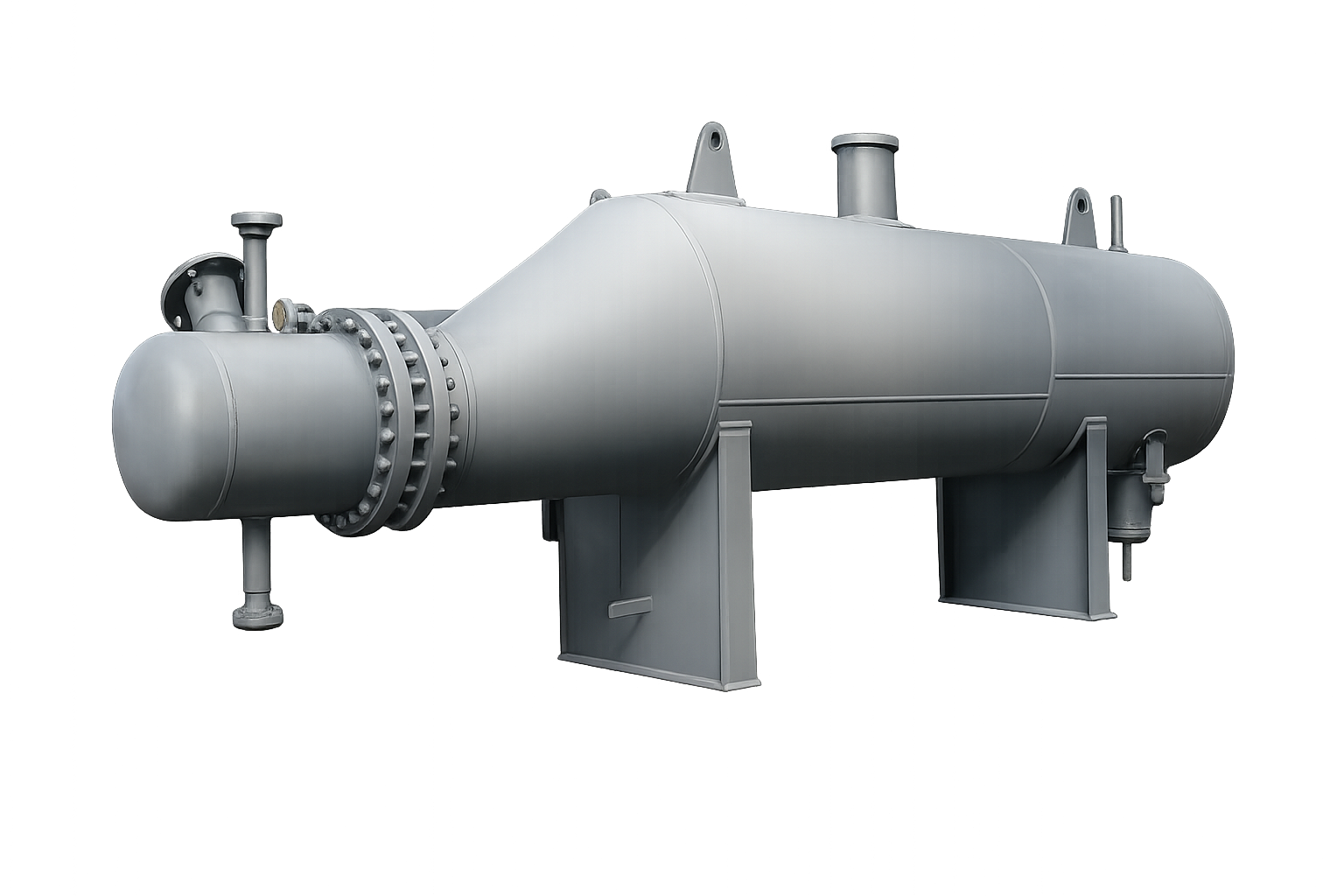
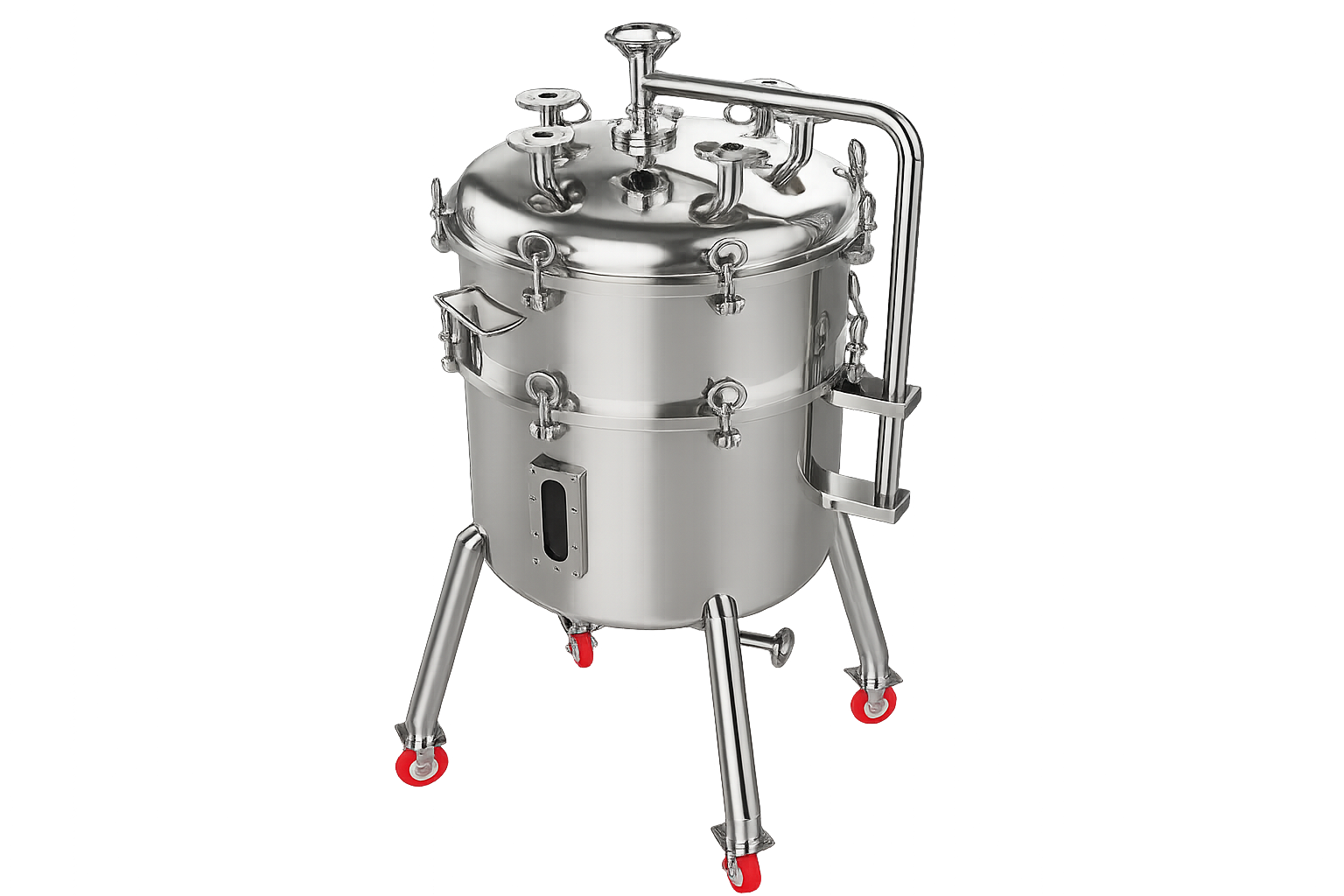
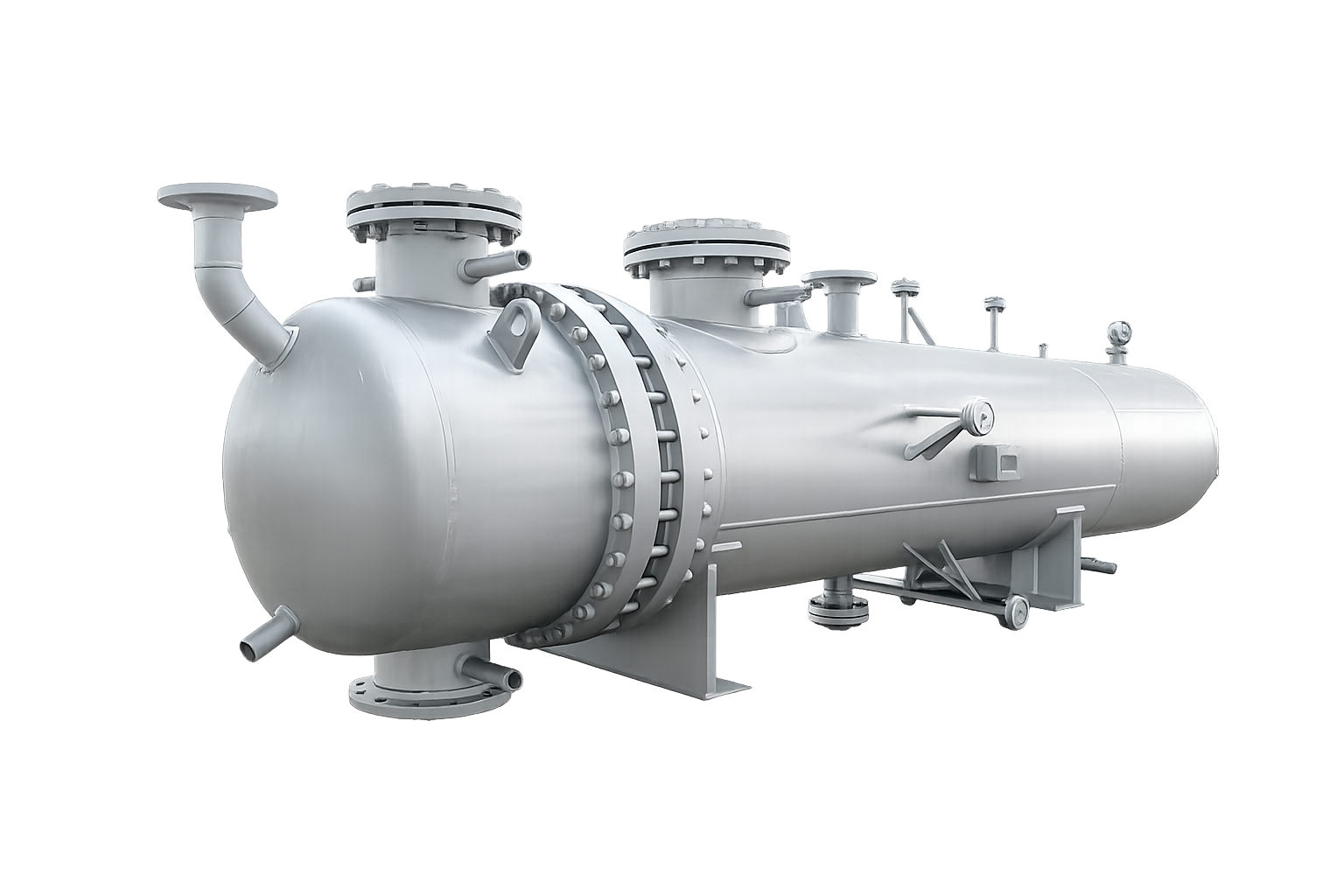
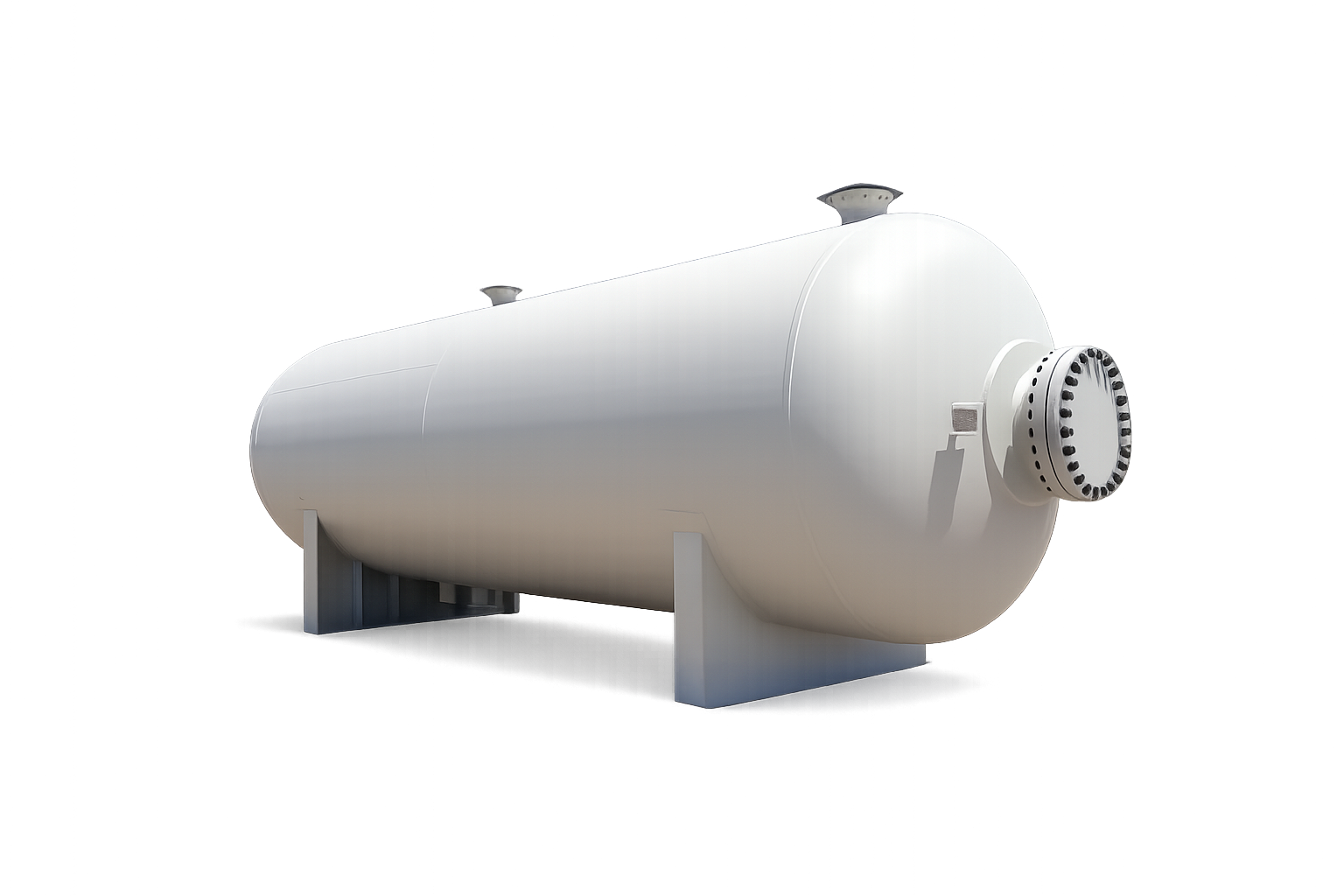
Every reactor that runs distillation, reflux or vacuum needs a condenser and a receiver. The condenser is usually a shell and tube exchanger mounted above or beside the reactor, and the receiver collects distillate. Standard practice is to match the receiver volume to the reactor batch size, add a vent line to the scrubber or vacuum system and provide a sight glass and a drain. Read our shell and tube heat exchanger design guide, and see our receiver vessels and heat exchanger pages.
After reaction and crystallisation the product must be separated and dried. There are two main routes. A centrifuge plus dryer route uses a basket or peeler centrifuge and a separate dryer, which suits larger volumes. A Nutsche filter dryer combines filtration, washing and drying in one closed vessel, which reduces product handling, exposure and cleaning effort and suits potent or solvent-wet products. Read what is a Nutsche filter and see our Nutsche filter page.
| Route | Advantages | Considerations |
|---|---|---|
| Centrifuge and dryer | Higher throughput, familiar technology | More handling, cleaning and transfer steps |
| Nutsche filter dryer | Single closed vessel, containment, fewer transfers | Batch size limited by vessel; washing depends on cake properties |
Solvents are a major cost in API manufacturing and a major environmental concern. A solvent recovery section with a distillation column, reboiler, condenser and receivers lets the plant recycle solvents and reduce waste. Columns may be packed or tray type, sized from the solvent mixture and the required purity. See our distillation column, reboiler and solvent stripper pages, or the complete distillation system.
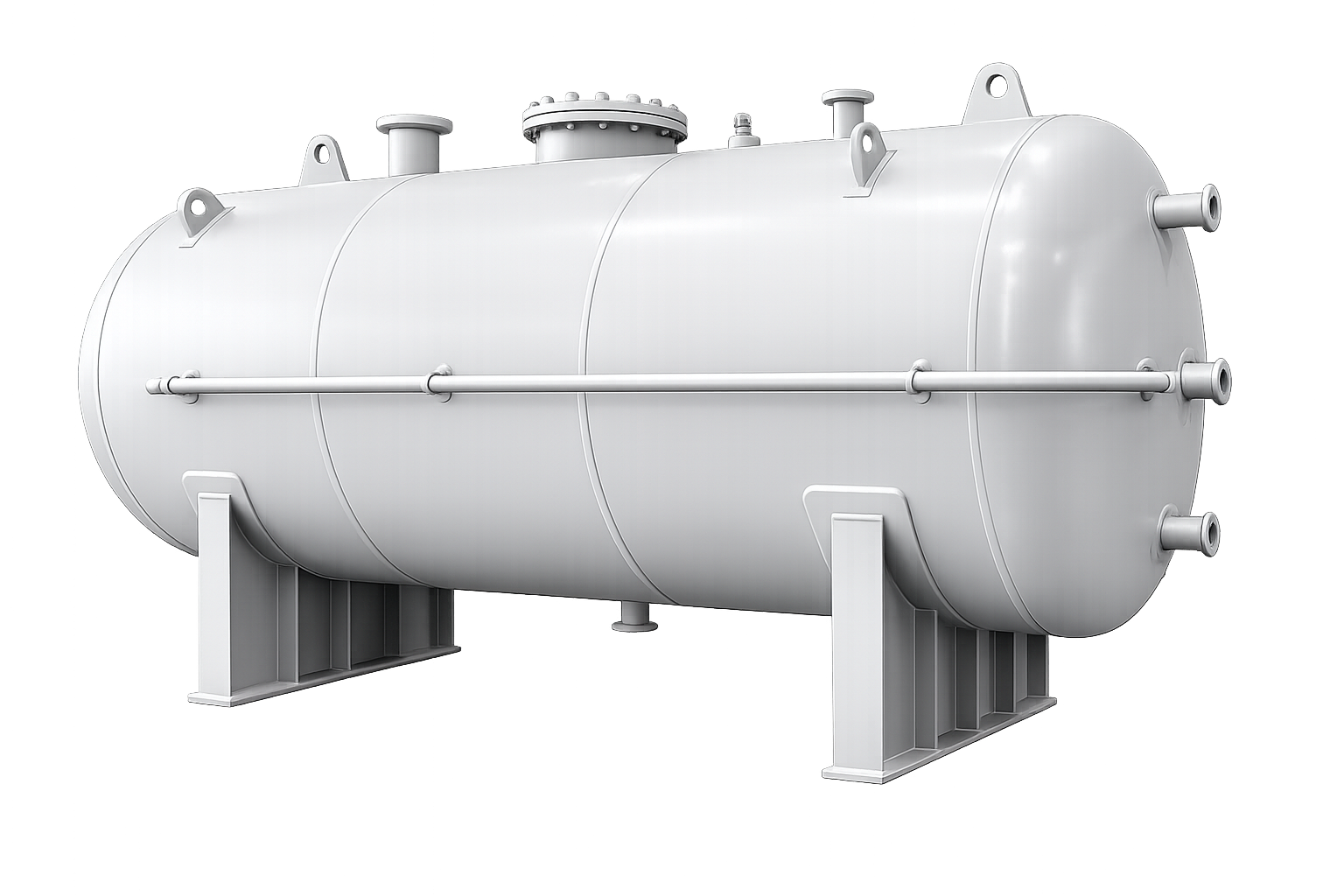
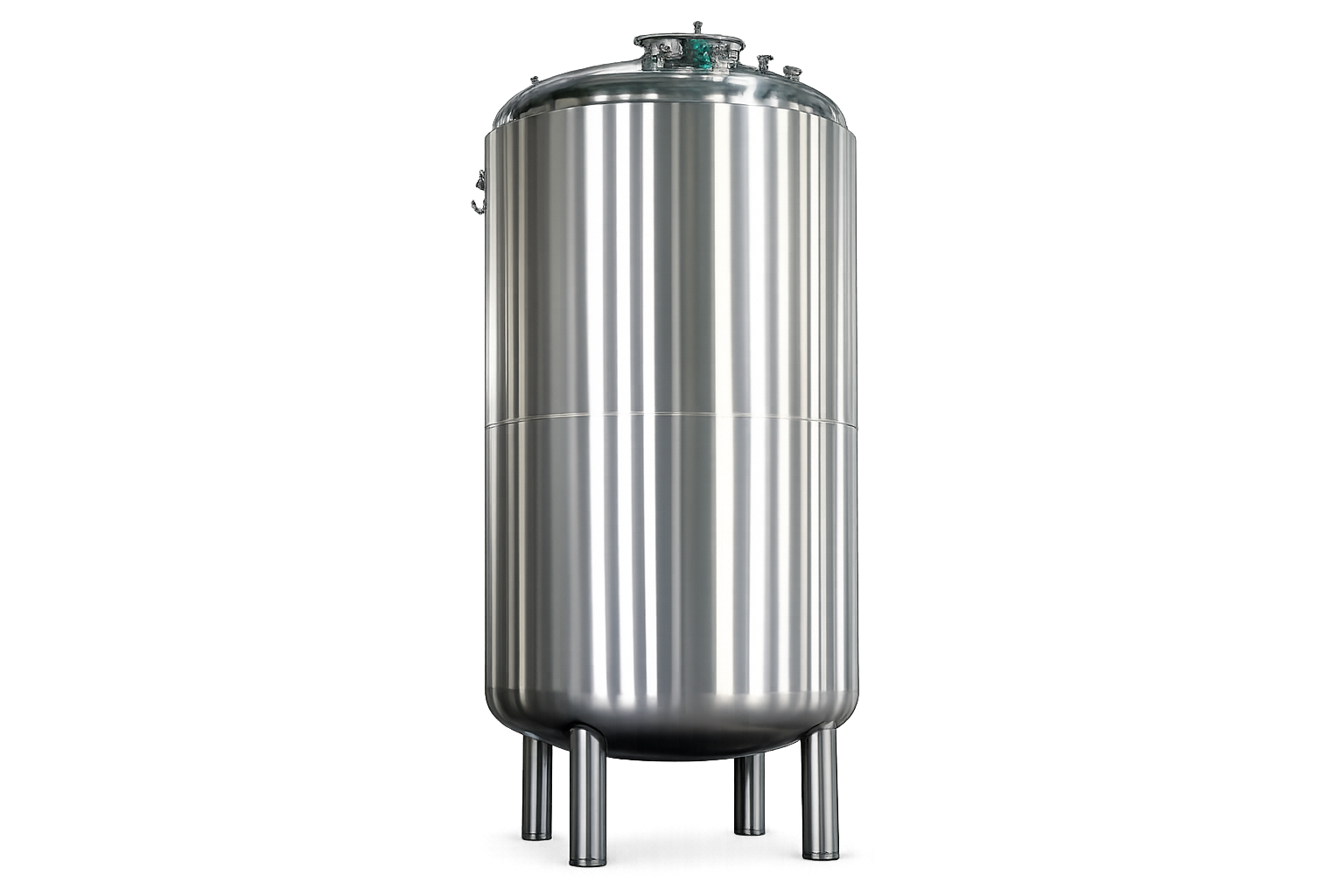
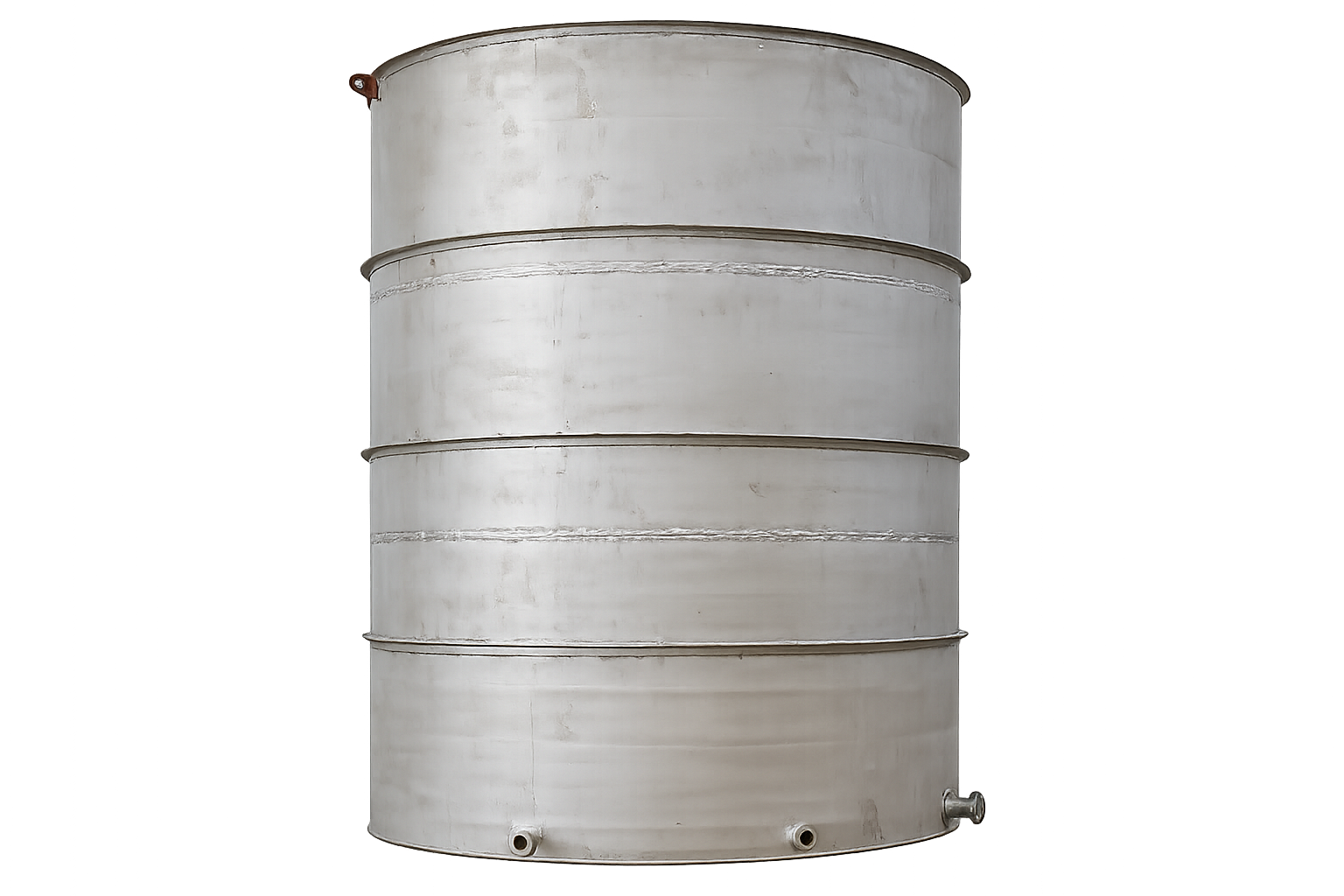
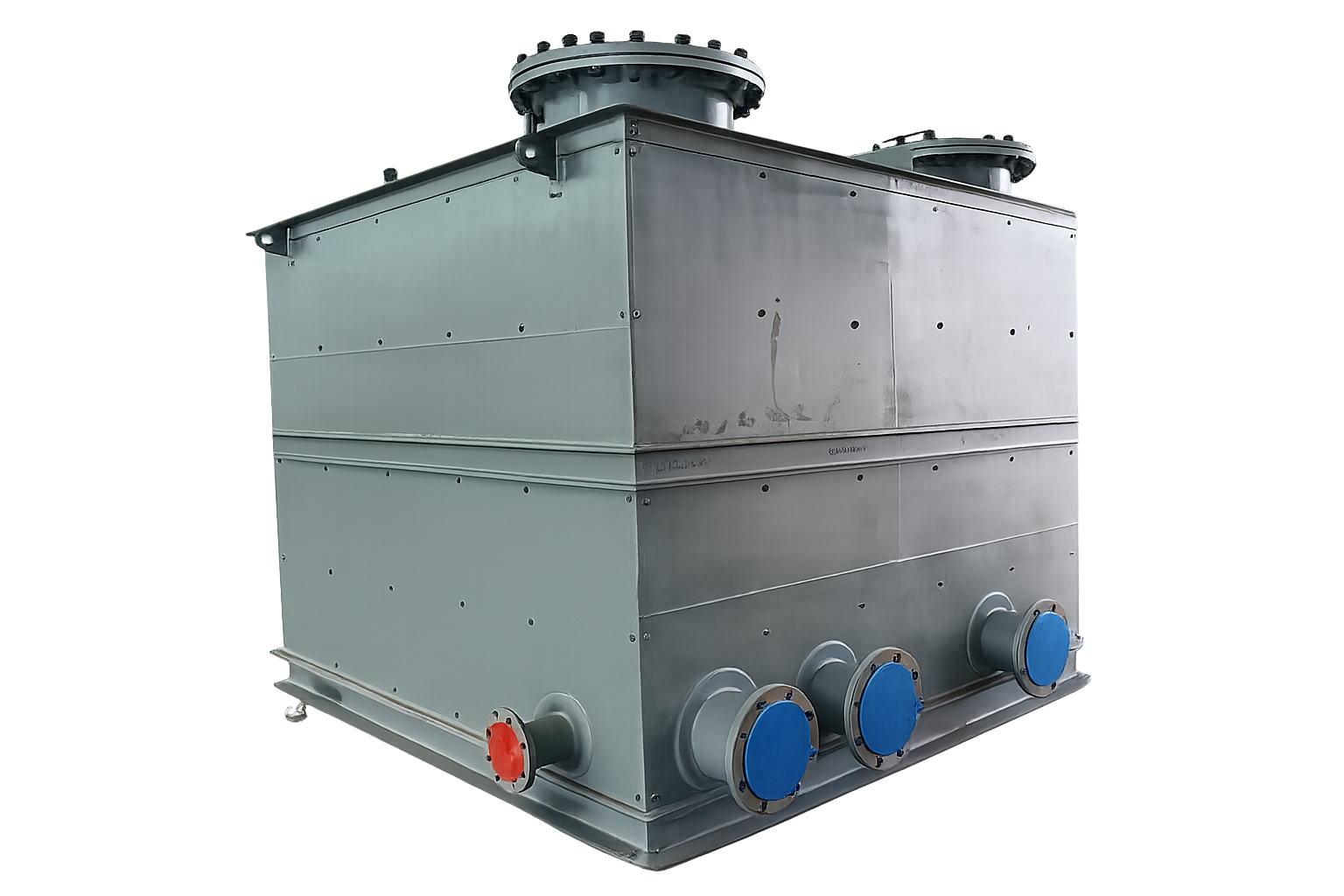
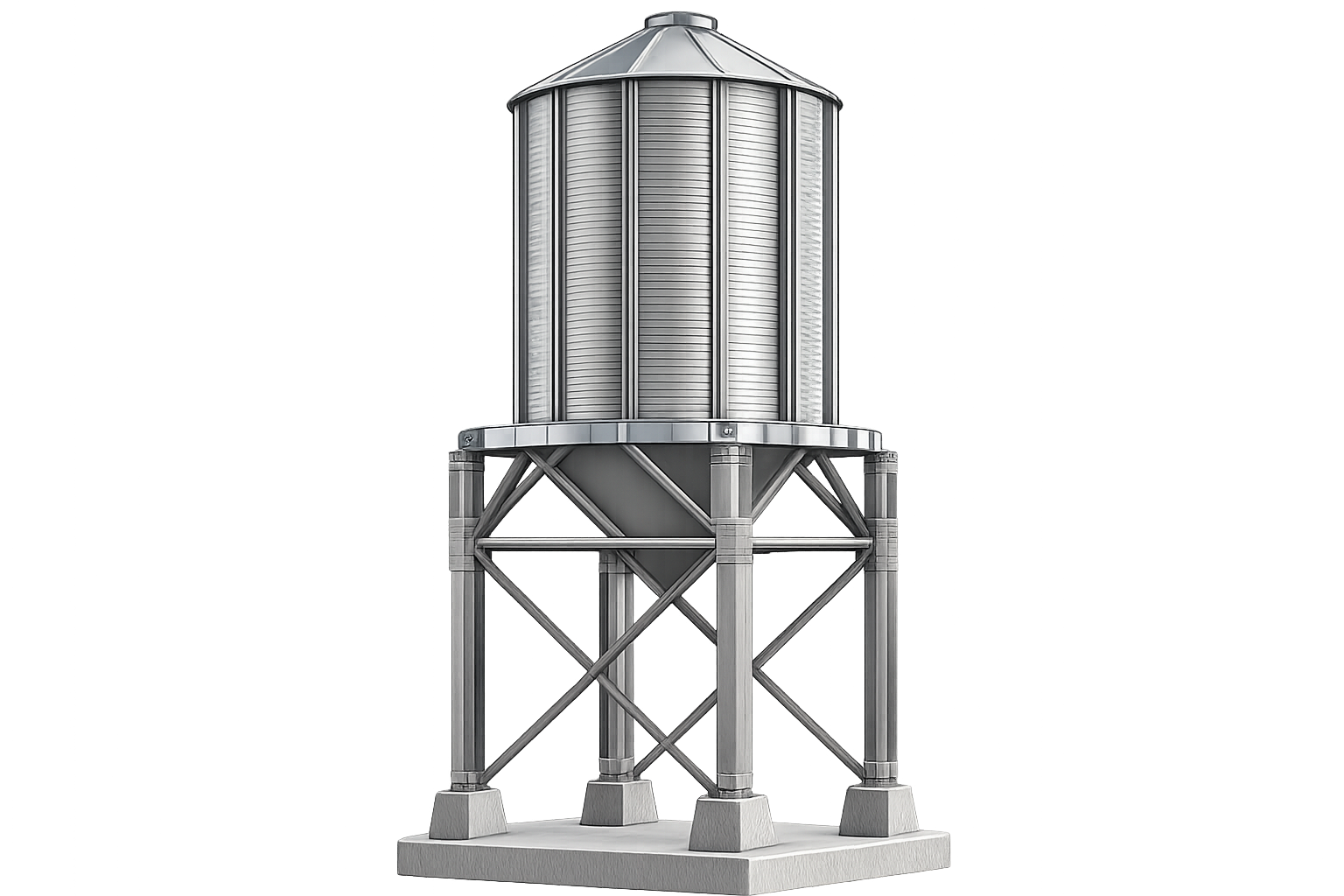
Plants need storage for solvents, acids, bases, intermediates and finished product. Liquid raw materials are held in storage tanks, with sizes chosen from batch consumption and delivery frequency. Powders may need hoppers or silos with suitable cone angles for reliable discharge. Square and rectangular tanks are popular for batch holding and mother-liquor collection where floor space is limited. See storage tanks, square tanks and silos.
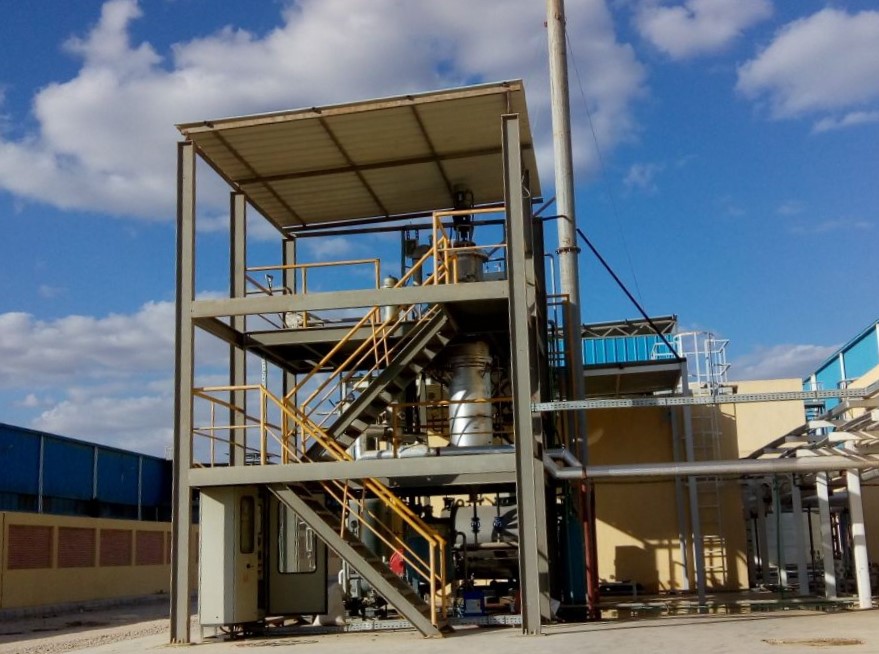
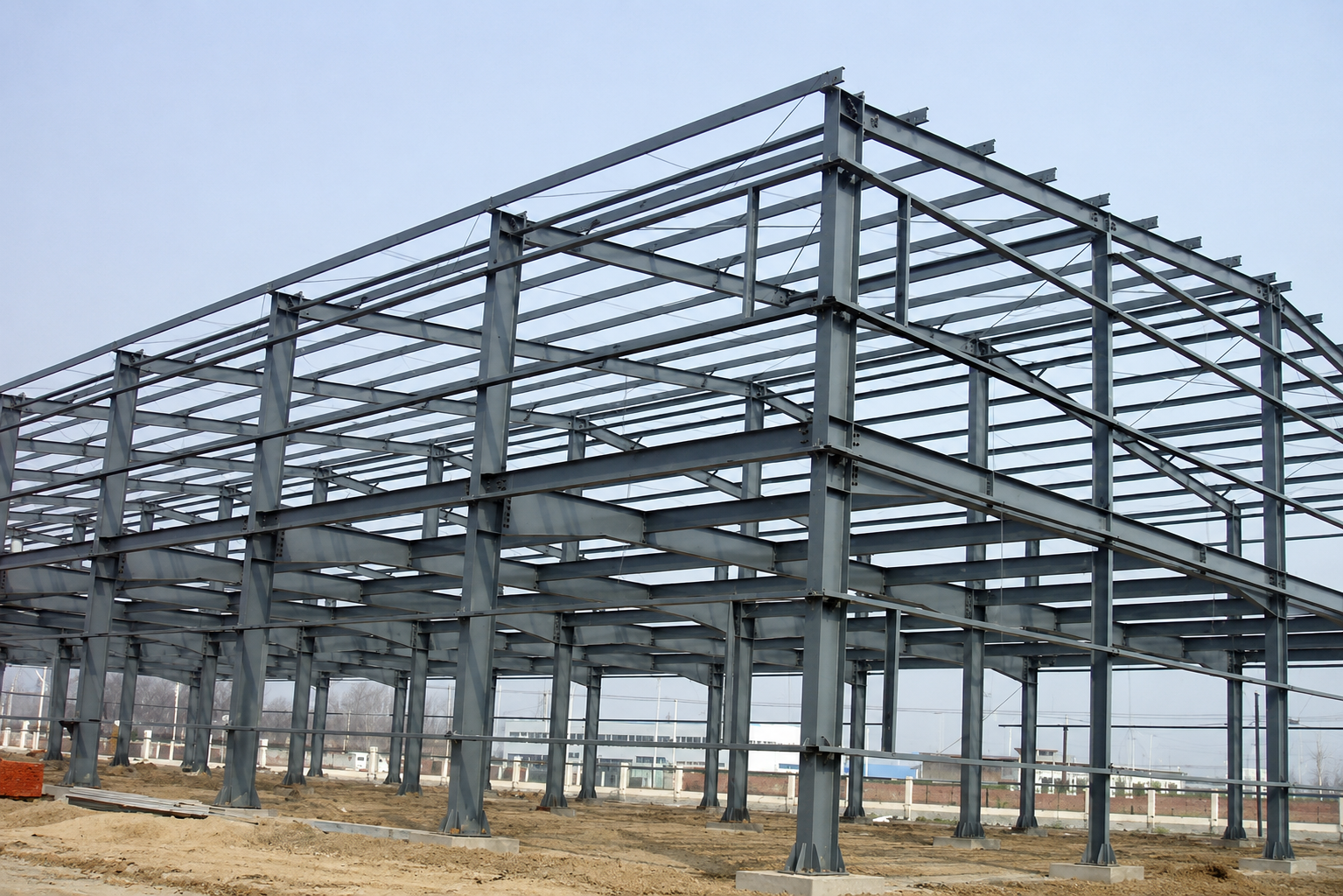
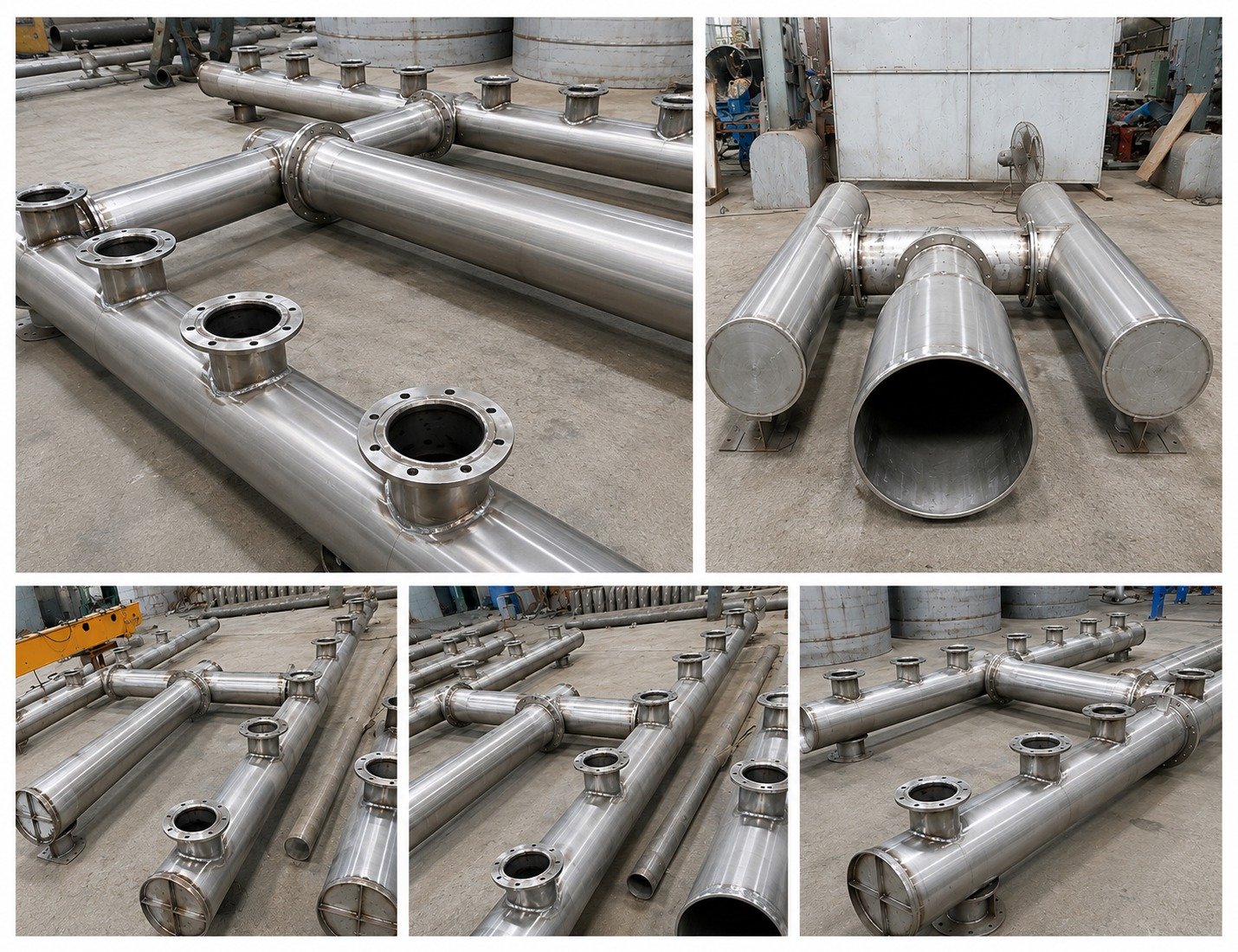
Piping connects the equipment and must be designed for the chemistry, pressure and cleanliness of each line. Fabricating spools in a workshop and erecting them on site reduces on-site welding and improves quality; see pipe spool fabrication. Pre-assembled units, such as a reactor skid with its condenser and receiver, speed up installation; see skid-mounted process equipment. Platforms and ladders give safe access to manways and instruments; see platforms and ladders.
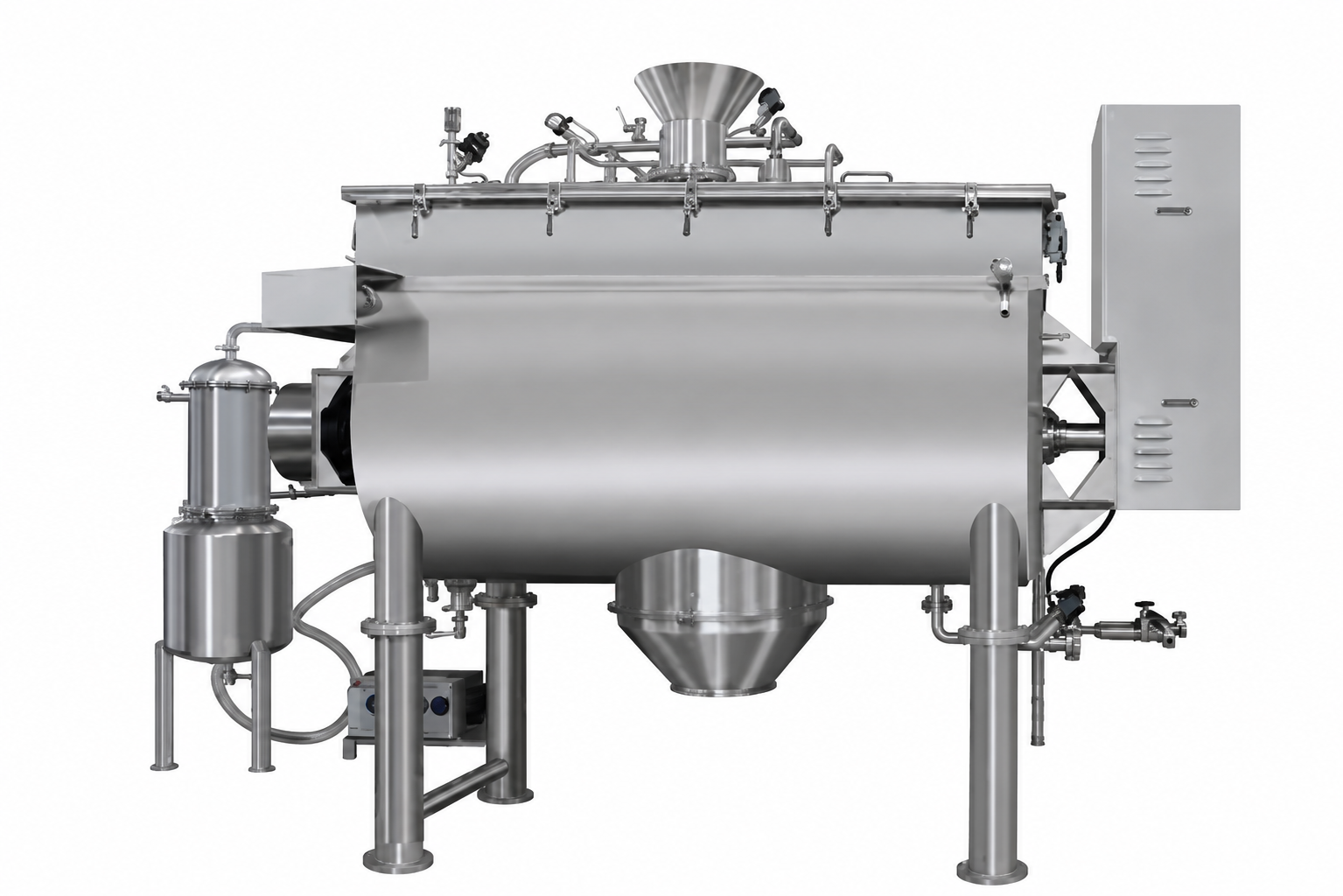
Dryer choice depends on how heat-sensitive the product is, how much solvent it holds and how it behaves as a powder. Vacuum tray dryers are simple and gentle, good for small batches and heat-sensitive materials, though loading and unloading is manual. Rotary vacuum dryers tumble the product for faster, more uniform drying, and suit medium to large batches. Fluid bed dryers give fast drying for granular, free-flowing material but need suitable particle size and dust control. Agitated Nutsche filter dryers dry directly after washing in the same vessel. Match the dryer with solvent recovery, because vapours from drying should be condensed and recovered where possible.
| Dryer | Best for | Limit |
|---|---|---|
| Vacuum tray dryer | Small batches, heat-sensitive solids | Manual handling, longer drying time |
| Rotary vacuum dryer | Medium to large batches, uniform drying | Possible attrition of fragile crystals |
| Fluid bed dryer | Free-flowing granules | Needs dust control and suitable particle size |
| Nutsche filter dryer | Filtration, wash and dry in one vessel | Batch limited by vessel size |
Read our GMP equipment design guide for details.
Process equipment cannot work without utilities, and utilities should be sized with the equipment list. A typical plant needs steam or hot oil for heating, chilled water and brine for cooling and condensing, vacuum for distillation and drying, nitrogen for inerting and blanketing, compressed air for instruments and pneumatic valves, and a reliable power supply with a standby generator. Also plan cooling towers, a scrubber for vent gases and an effluent system. Early utility load calculation avoids undersized boilers or chillers that limit production later.
Buying reactors, receivers, filters, columns, exchangers and tanks from one manufacturer reduces interface problems and simplifies documentation. Creative Engineering can supply the complete vessel and exchanger package for a multipurpose API plant, with GMP finish, code-stamped pressure parts and a single data book. Send your equipment list or process flow diagram through the contact page, or call +91 98251 38460. We respond within 24 hours. Also read how to choose a process equipment manufacturer in India and reactor price factors.
Reactors with condensers and receivers, filtration and drying equipment, solvent recovery columns, heat exchangers, storage tanks, vacuum and scrubber systems, and utilities.
SS 316L is the most common; Hastelloy or glass-lined vessels are used for strong acids and chlorides.
Nutsche filter dryers suit closed handling of potent or solvent-wet products, while centrifuge and dryer combinations suit higher throughput.
It reduces solvent purchase cost and waste, and helps meet environmental requirements.
Yes. We manufacture reactors, receivers, filters, columns, heat exchangers, tanks, skids and pipe spools in Ankleshwar.
The process flow diagram or equipment list, batch size, materials, design pressure and temperature, finish and documentation requirements.
It depends on the product list and batch sizes; most plants choose several reactors in a range of sizes so that different campaigns can run in parallel.
Creative Engineering, Ankleshwar, Gujarat designs and manufactures process equipment to ASME and IBR codes. Share your drawing or process data and our team will respond with a technical offer.



 Reactor
 High Pressure Vessel
 Skid Equipment
 Receiver
 Heat Exchanger
 Pressure Vessel
 Silo
 Solvent Stripper
 Pharma Equipments